
Where we train
Regenerative Medicine Course for Cincinnati Professionals
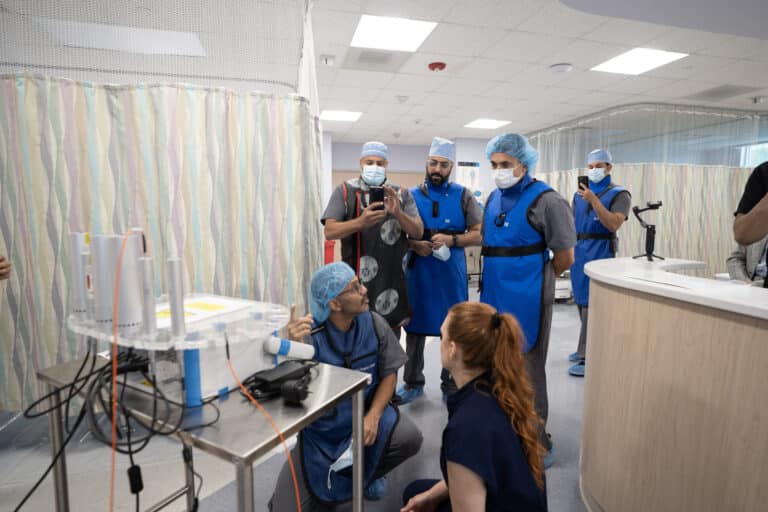
Private regenerative medicine training for licensed providers. It runs in Cincinnati, northern Kentucky and the Dayton corridor. You perform the procedures yourself, on a consenting patient. One instructor is there with you. Nobody else is in the room.

Live patients
Private training
Practicing clinicians
U.S. based, worldwide
Training in Cincinnati
The Cincinnati area runs well past the city line. Providers here practice across Hamilton, Butler, Warren and Clermont counties, in places like Mason, West Chester, Blue Ash and Anderson Township, and up I-75 toward Dayton, about an hour north. Northern Kentucky is just over the Ohio River from downtown, and a practice there is licensed in Kentucky, not Ohio.
Pick the format that suits your practice. We can send an instructor to you, to train you and your staff with your own equipment, travel included in the quote. Or you can train at an instructor’s own working practice. Both are private, both use a real, consenting patient, and both start with the scope settled before you book.
Who can train? Anyone legally able to provide the treatment in Ohio, or in Kentucky or Indiana for a practice across the state line. The Ohio section below gives the short version of Ohio’s rules and links to the full reading, license by license, sources included, and a question further down the page covers the other two states.

Local detail
Cincinnati at a glance.
Where the instructor lands, how far a Cincinnati session reaches on both sides of the river, and the health systems in the Tri-State.
Getting here
The instructor flies into Cincinnati/Northern Kentucky International Airport (CVG), which sits 13 miles south of downtown Cincinnati in Northern Kentucky. Source For a practice up the corridor near Dayton, Dayton International Airport (DAY) can be the better landing. Either way, travel and lodging sit inside the quote.
The area a Cincinnati session covers
Hamilton, Butler, Warren and Clermont counties in Ohio, which takes in Mason, West Chester, Fairfield, Hamilton, Blue Ash, Lebanon, Milford and Anderson Township, plus Dayton and Montgomery County to the north. Northern Kentucky and southeast Indiana belong to the same metro, but a practice there is licensed in Kentucky or Indiana. Nearby pages: Columbus, Indianapolis and Cleveland.
Uptown Cincinnati
The University of Cincinnati College of Medicine merged with the University of Cincinnati on April 27, 1896. UC Medical Center, on the Clifton Campus, describes itself as the region’s only academic medical center and only verified Level I adult trauma center. Cincinnati Children’s, founded in 1883 as a small hospital by three women, is a nonprofit, comprehensive pediatric health system. The Christ Hospital Health Network has its main hospital campus in Mt. Auburn.
North of the city and across the river
TriHealth, a full-service, not-for-profit health system, was formed in 1995 when Bethesda and Good Samaritan Hospital joined together. In Northern Kentucky, St. Elizabeth Healthcare describes itself as a Catholic healthcare ministry, founded with one small hospital in 1861. Toward Dayton, Wright State University Boonshoft School of Medicine trains through affiliations with eight major teaching hospitals in the region instead of a university hospital of its own.
Worth knowing
Daniel Drake received the charter for the Medical College of Ohio on January 19, 1819, the founding date of today’s UC College of Medicine. At its first commencement, on April 4, 1821, seven students received medical degrees. Source
The market
Greater Cincinnati in numbers.
A river and two state lines run through this market, so the figures below go county by county: four in Ohio, three in Kentucky, and Dayton up the road. The link after each figure shows where it comes from.
Eight counties in three states
The Ohio-Kentucky-Indiana Regional Council of Governments, OKI for short, describes its region as Hamilton, Clermont, Butler and Warren counties in Ohio; Boone, Campbell and Kenton counties in Kentucky; and Dearborn County in Indiana. It says it serves more than 2.1 million residents. Source One metro answers to three state governments, so your practice address settles which state’s rules apply before anything else is planned.
Four residents in five are on the Ohio side
As of July 2025 the Census Bureau estimates 838,418 residents for Hamilton County, 400,128 for Butler, 257,181 for Warren and 216,977 for Clermont. South of the river, Kenton County has 175,779, Boone 145,316 and Campbell 95,441. By our sums that is 1,712,704 in the four Ohio counties and 416,536 in the three Kentucky ones, or about 80 percent and 20 percent of the seven-county total.
The growth is at the edges
From the Census Bureau’s April 2020 base to its July 2025 estimate, Hamilton County grew 0.9 percent. Source Boone County grew 6.9 percent Source and Warren County 6.1 percent, Source about twice the 3.1 percent for the United States. Source The core county is nearly flat. The residents are being added farther out, on both sides of the river.
Boone County is the youngest of the seven
Boone County has the largest share of residents under 18, at 24.5 percent, and the smallest share 65 or older, at 16.3 percent. Source Clermont County has the largest share 65 or older, 20.3 percent. Source Hamilton County is close to the national figures: 21.9 and 18.1 percent, Source against 21.1 and 18.9 for the United States. Source Each figure is a share of the people living in a county, never a number of patients.
Hamilton County is the dense center
Hamilton County fits its residents into about 405 square miles of land, which the Census Bureau put at 2,048.9 people per square mile in 2020. Source The same measure was 836.7 in Butler County, 603.7 in Warren and 460.9 in Clermont. The four Ohio counties cover about 1,726 square miles between them, by our sum, and most of that land is outside Hamilton County. That is why we ask for the practice address before travel is planned.
Two bodies that stop at the river
The Academy of Medicine of Cincinnati describes itself as a not-for-profit, professional association, founded in 1857, for physicians who practice or live in Hamilton County, Ohio. On the other bank, the Northern Kentucky Health Department counts more than 400,000 people in the 836-square-mile, four-county region it serves. Source
Dayton is a second center up I-75
Montgomery County, home to Dayton, has 539,598 residents on about 461 square miles of land, and 20.2 percent of them are 65 or older. Source OKI’s eight counties do not include it, but a Cincinnati session does. Dayton International Airport describes itself as located near the crossroads of I-70 and I-75, Source and I-75 is the road down to Cincinnati.
Practices by type
In the Census Bureau’s County Business Patterns county file for 2023, Hamilton County has 429 offices of physicians, 84 offices of chiropractors and 96 offices of physical, occupational and speech therapists and audiologists, which the Census reports together. Source Physician offices outnumber chiropractic offices there about five to one. Physician offices elsewhere: 143 in Butler County, 118 in Warren, 39 in Clermont, and 103 in Kenton, 68 in Boone and 39 in Campbell across the river. Montgomery County, around Dayton, has 373, not far short of Hamilton. Every figure here counts business locations with paid employees. It does not count clinicians.
Local rules
What Cincinnati and Hamilton County ask of a practice.
Which procedures your license covers is up to the state that issued it, and Ohio’s answer is in the Ohio section below. This section leaves that alone. It lists the offices a Cincinnati practice meets when it leases a suite, picks a name or disposes of sharps, on either bank of the river, as of October 2026. Read it as a starting point only. It is not legal advice, so check each point with the office the row names.
The space: inspections, certificate, zoning
Cincinnati’s Buildings department says a Certificate of Occupancy is issued once all final inspections are approved. Source For zoning, the city says you can request a determination that your use complies by submitting a zoning verification application to its Permit Center. Source How we read it: these go with the suite and what it is used for, so ask the department before you move or build out.
Four health departments in one county
Hamilton County Public Health says it serves more than 497,000 county residents living outside the cities of Cincinnati, Norwood and Springdale, and that each of those three cities is served by its own health department. Source The Cincinnati Health Department, founded in 1826, runs its own environmental health licensing and inspections. How we read it: the department a practice answers to depends on which side of a city line it sits.
Infectious waste: local inspection, state registration
Hamilton County Public Health’s Waste Management Division says it conducts inspections to ensure proper management of infectious waste. Source Registration is with Ohio EPA, which classifies a generator as large when it produces 50 pounds or more of infectious waste in a calendar month and requires it to register within 30 days after that month ends. Source A small generator, under 50 pounds a month, must keep a monthly log of the amount generated. Source How we read it: a practice inside Cincinnati, Norwood or Springdale should ask its own city health department who inspects it.
Trade name or fictitious name
Business names in Ohio are a matter for the Secretary of State, whose office describes two filings. A trade name must be distinguishable and gives its owner exclusive use in Ohio once registered. A fictitious name is reported, need not be distinguishable and grants no exclusive rights. Source
South of the river, Kentucky offices
The Northern Kentucky Health Department says it is the local health department serving four counties in Kentucky: Boone, Campbell, Grant and Kenton. Source For a practice name, the Kentucky Secretary of State’s Certificate of Assumed Name form for business entities says a registration is effective for five years from the date it is filed with that office, and that an individual files with the county clerk. Source
Ohio rules
Ohio scope and law, in brief.
This is Ohio in brief, as of October 2026. For the full reading, license by license with every statute linked, go to the Ohio scope and law sections on our Columbus page. Our summary sits on the rules by state page. It is a starting point, not legal advice.
It is your responsibility to confirm the modality is legal in your state for your license. Do that before you book. The authority on your own scope is your licensing board, not us.
Physicians, NPs and PAs
The State Medical Board of Ohio licenses physicians. Source Ohio has reduced practice for nurse practitioners, according to the AANP. Source A certified nurse practitioner may practice only under a standard care arrangement with each collaborating physician or podiatrist. Source A physician assistant works under a supervision agreement Source and performs the services the supervising physician authorizes within that physician’s normal practice. Source
RNs, chiropractors and physical therapists
How we read the Nurse Practice Act: an RN’s part in a procedure starts from an authorized practitioner’s order. Source Ohio law does not permit a chiropractor to perform surgery, prescribe drugs, or administer any drug beyond the items it lists. Source How we read it: an injection course raises questions only the board can answer, so ask it in writing before you book. Injected drugs are not in Ohio’s definition of physical therapy. Source Check an injection course with the board first.
Stem cell law and Right to Try
We found no Ohio law written specifically for stem cell products as of September 2026. Take product questions to the State Medical Board of Ohio. Ohio’s Right to Try law covers a narrow case: investigational products for a patient with a terminal condition. Source The FDA’s rules apply in every state.
Formats and pricing
Two ways to train in Cincinnati, and both are private.
The hands-on work with a consenting patient is the same either way. What changes is whose room it is, and who from your practice is in it. Both prices are starting points: the quote depends on the course, how many people are training and how much of the curriculum is built around you.
At an instructor location
From $5,000
You come to us, at an instructor’s own working practice.
At your own practice
From $10,000
We come to you, anywhere in Ohio, with the instructor’s travel and lodging inside the quote. What on-site training includes.
Cancel or refund any time up to thirty days out. Inside thirty days, no refund.
On a refund, covering card processing and office costs.
To move your date, covering the travel that moves with it.
Questions about dates, format or fit? Talk to us.
Training courses we offer
Every course runs in Cincinnati.
The hands-on day is in person, at an instructor’s practice or inside yours.
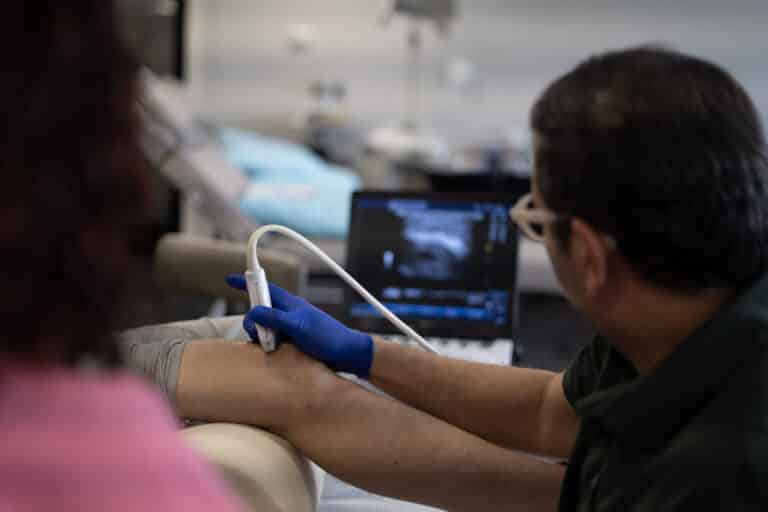
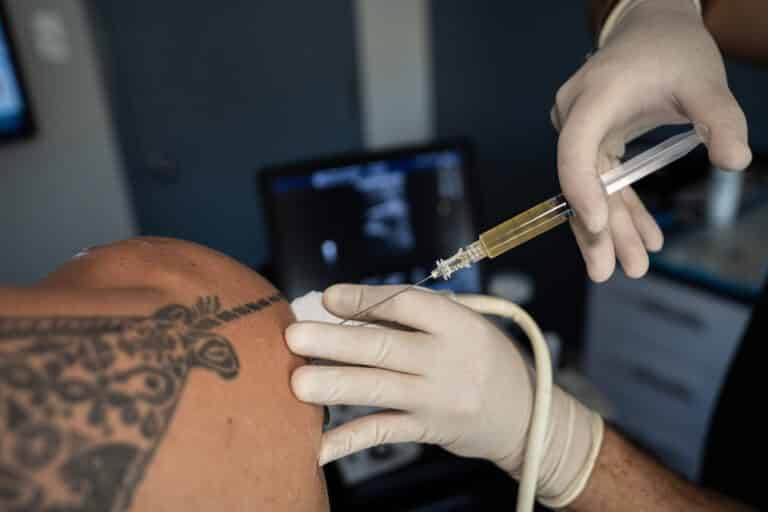
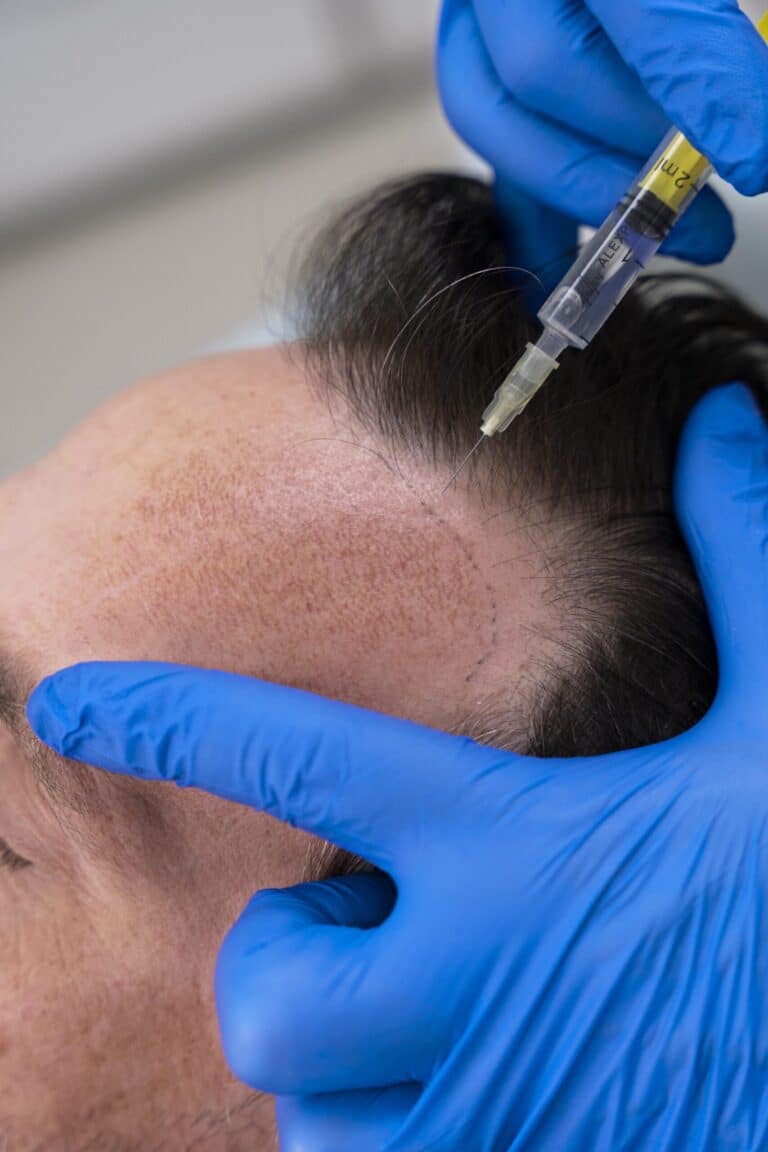




Common questions
What Cincinnati providers ask before they book.
How much does training in Cincinnati cost?
Training inside your own practice in Cincinnati starts at $10,000, with the instructor's travel and lodging included. Training at an instructor's location starts at $5,000. Both are starting points. The quote depends on the discipline, the instructor, how many people are training and how much of the curriculum is built around you.
My practice is in Northern Kentucky or southeast Indiana. Whose rules apply?
The rules of the state that licenses you. A practice across the river in Kentucky is licensed in Kentucky: the Kentucky Board of Medical Licensure licenses physicians and physician assistants there, and the Kentucky Board of Nursing oversees nurses. A practice in southeast Indiana is licensed in Indiana. Either way, the Ohio section above does not set your scope. Our reading of Kentucky and Indiana is on the rules by state page.
Is anything different for a Cincinnati practice than for one in Columbus or Cleveland?
Not on the Ohio side. Scope of practice and Ohio's laws come from the state and its licensing boards, so a practice in Hamilton County follows the same rules as one in Franklin or Cuyahoga County. The Ohio section higher on this page gives the short version, and our Columbus page has the full reading, license by license. Cross the river and the answer changes, because Kentucky licenses its own providers.
Does the instructor fly into CVG or Dayton?
CVG for most practices. The airport puts itself 13 miles south of downtown Cincinnati in Northern Kentucky, and its directions from the city run down I-71 or I-75 across the Ohio River. Source For a practice at the north end of the corridor, Dayton International (DAY) may be the shorter drive: its fact page places it 9 miles north of Dayton. Source Whichever it is, the instructor's travel and lodging sit inside the quote.
Do you come to Mason, West Chester, Milford or Dayton?
Yes. A Cincinnati session can run anywhere in Hamilton, Butler, Warren or Clermont County, and in Montgomery County around Dayton. Warren County alone is 401.43 square miles of land, Source so send the practice address with your request. Sessions are private, and we agree the plan with you before you book.
I'm not licensed in Ohio. Can I train in Cincinnati?
Yes, and the plan follows your license. Training inside your own practice runs under the license you already hold where you practice. Training at an instructor's location in Ohio is different: what you do hands on there depends on your Ohio licensure. Raise it when you request a date and we settle it with you before you book.
Request a date now
Tell us about your practice and when you'd like to train.
Ready to add PRP or another regenerative procedure in Cincinnati? A few quick questions, one screen at a time. Nothing here commits you to a date. A person reads every request and calls you back within one business day.
From the blog
Read it here, then do it in a course.

The role of growth factors in regenerative medicine: a clinical primer
Read the postPlatelet count is not the dose. A primer on the growth factors that do the work, why preparation…
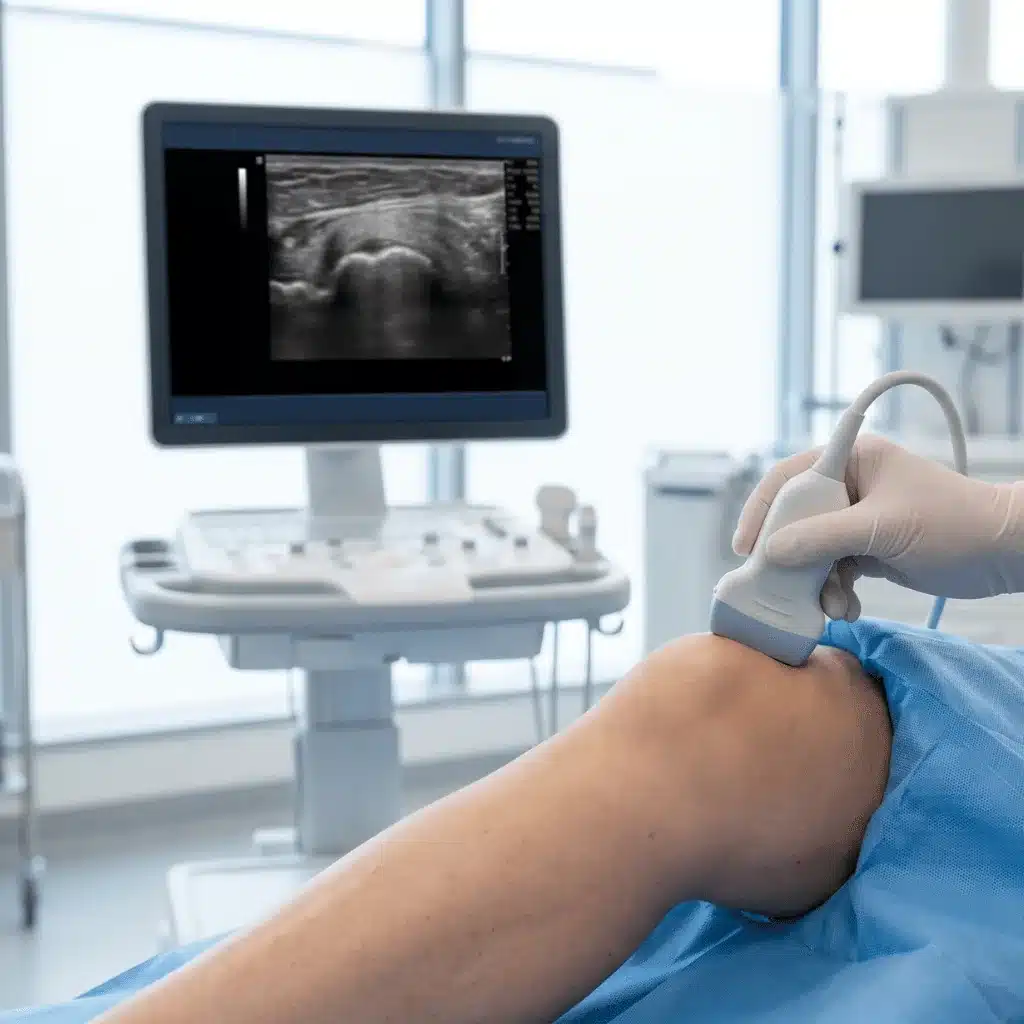
Ultrasound-guided injection techniques in regenerative medicine: why training matters
Read the postGuidance puts the needle where it belongs. It does not make you competent. What the accuracy evidence shows…
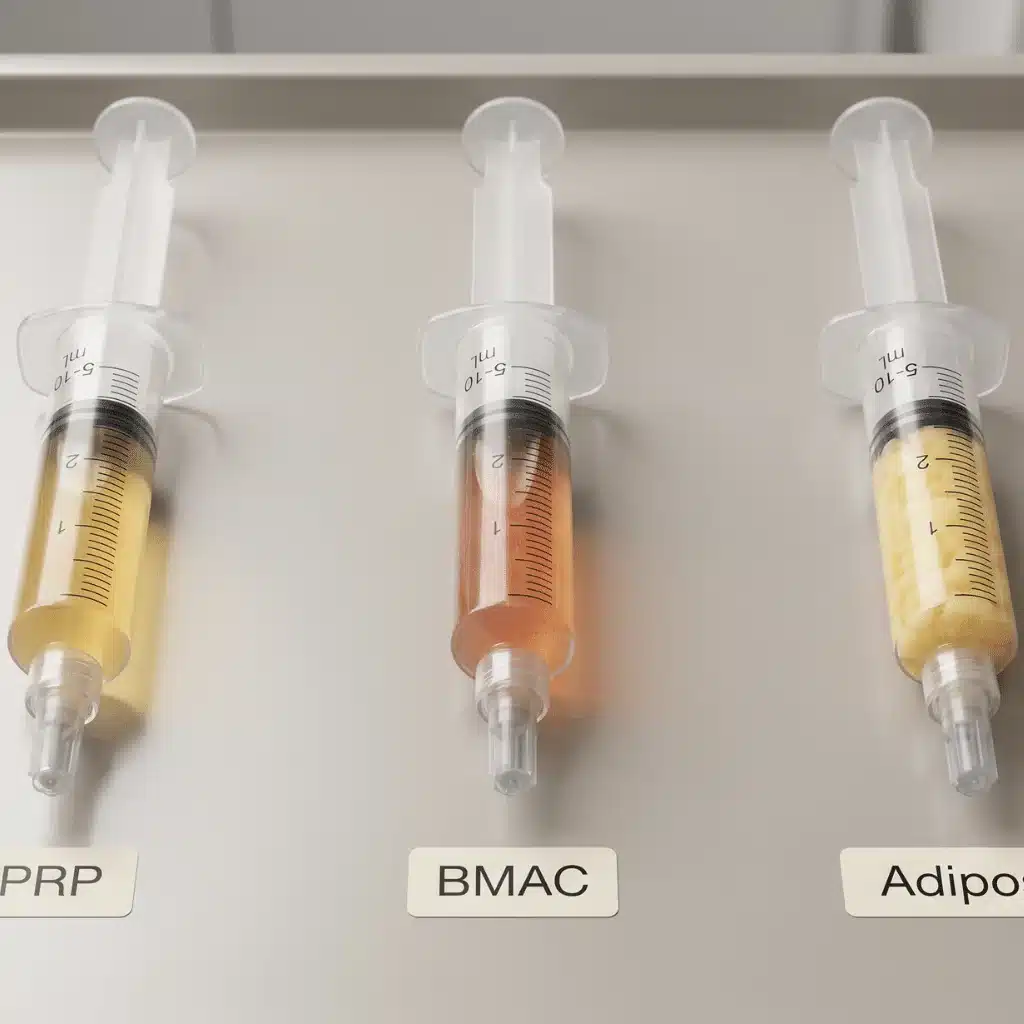
PRP vs. BMAC vs. adipose: comparing orthobiologic treatment options
Read the postPRP, BMAC and adipose are three different tools, not one product with three names. How to match modality…
Important information
Read this before you book.
Know what a course is not before you book. It won’t make you a specialist. It carries no CMEs, credit hours or accreditation, and it doesn’t cover your malpractice: you arrange that yourself. No one can promise you outcomes. It is education for licensed providers, not medical or legal advice, and some products and modalities discussed are not FDA approved or cleared for the uses discussed. The Certificate of Completion is not a license or a board certification, and it does not expand your scope of practice. Read the full notes.