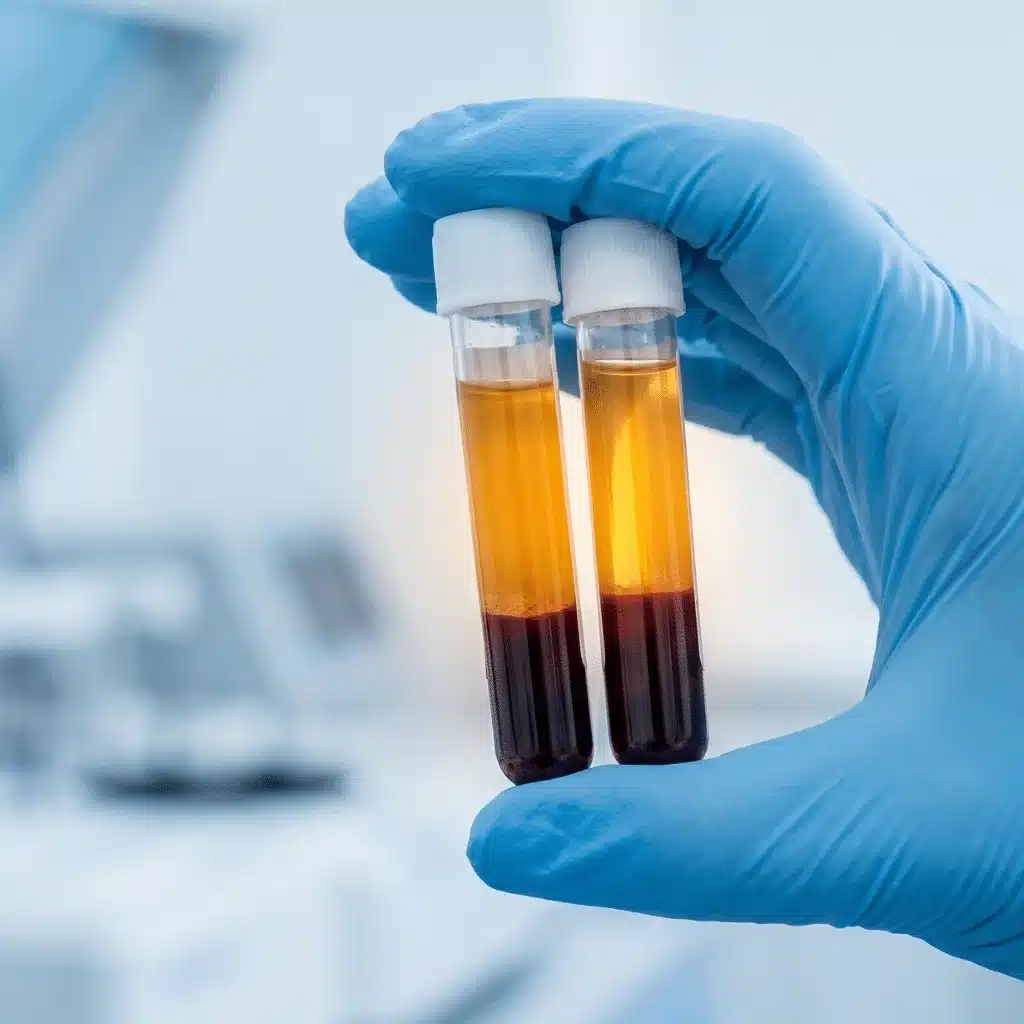
Growth factors are the signaling proteins that give platelet-rich plasma (PRP) and related biologic injections their mechanism of action. What those molecules do inside tissue, how preparation shapes their activity, and what the evidence actually says about the conditions they are used for matter more than most marketing suggests. This guide walks clinicians through the science, the regulatory reality, and the clinical evidence behind regenerative growth factor therapies.
In short: Growth factors in PRP, including PDGF, TGF-beta, VEGF, EGF, IGF-1, FGF, and HGF, coordinate inflammation, cell proliferation, angiogenesis, and tissue remodeling. PRP kits are FDA-cleared for bone graft handling; use for knee osteoarthritis, tendinopathy, hair restoration, and aesthetics is off-label. Current evidence is strongest for knee OA and androgenetic alopecia, mixed for tendinopathy, and emerging for aesthetics. Platelet count alone does not predict outcomes: functional platelet quality, donor biology, and preparation technique matter as much as dose. Becaplermin (recombinant PDGF-BB) is the only FDA-approved growth factor product for wound healing.
Important Disclaimer
Regenerative Medicine Academy (RMA) is an education company providing training for licensed clinicians. This article is educational content and does not constitute medical advice, legal counsel, or a guarantee of clinical outcomes. Techniques discussed may be used off-label and are subject to state and federal regulations. Clinicians are responsible for understanding FDA status, scope of practice, informed consent, and malpractice implications before implementing any technique in practice. Individual clinical judgment and patient-specific factors must guide all clinical decisions.
The questions patients actually ask
Patients walking into a regenerative medicine consultation rarely ask about MAPK pathways or alpha granule exocytosis. They ask whether the injection will help. They ask what makes the product in the centrifuge actually work. They ask why one of their friends got great results and another got nothing at all.
The honest answer starts with growth factors. These signaling proteins, packaged inside platelets, are the molecular engine behind PRP and several adjacent biologic therapies. When a clinician concentrates a patient’s own blood and injects it into a tendon, joint, or scalp, the bet is that these proteins will arrive in sufficient concentration and functional form. The goal is delivery at the right moment to steer local tissue toward repair.
The trickier truth is that the same preparation protocol can produce very different outcomes. The result depends on who the patient is, how the blood was handled, and which specific growth factors ended up active in the final product. This guide explains the biology, the preparation variables, the evidence by indication, and the regulatory framework clinicians need to counsel patients honestly.
What growth factors are and why they matter
Growth factors are endogenous signaling proteins made by the body to regulate cellular behavior. At sites of tissue injury, they bind to specific receptors on nearby cells and trigger internal programs for healing. Those programs include calling repair cells to the injury (chemotaxis), telling those cells to multiply (proliferation), building new blood vessels (angiogenesis), synthesizing collagen, and eventually remodeling the repaired tissue toward something closer to normal.
The body stores many of these proteins inside platelets. Platelet alpha granules contain platelet-derived growth factor (PDGF), transforming growth factor beta (TGF-beta), and vascular endothelial growth factor (VEGF). They also contain epidermal growth factor (EGF), insulin-like growth factor 1 (IGF-1), fibroblast growth factor (FGF), and hepatocyte growth factor (HGF). Several cytokines that modulate inflammation are stored in the same granules. When a platelet activates, it releases this payload into the surrounding tissue.
PRP therapy attempts to use this biology by concentrating autologous (the patient’s own) platelets and delivering them as a targeted payload. The underlying idea is reasonable: put the right signaling molecules in the right place at the right time and the body’s repair mechanisms do the rest. The complicated part is that the dose, the quality, and the timing of that delivery depend on a long list of variables. Understanding what growth factors are is step one in counseling patients accurately. They are not stem cells. They do not grow new tissue from nothing. They are repair-directing signals whose activity depends on patient biology and careful preparation.
Free mini course
The FDA rules behind this field, in a short, self-paced course. It costs nothing.
Get the free FDA courseThe growth factor roster in PRP
Several growth factors drive the repair cascade, and each one plays a distinct role. The table below summarizes the main proteins in PRP, the cells they act on, and what they contribute to regeneration. All entries are drawn from a 2026 review in Life that surveyed current evidence on PRP biology.
| Growth factor | Main target cells | Primary biological actions | Contribution to regeneration |
|---|---|---|---|
| PDGF (platelet-derived growth factor) | Fibroblasts, smooth muscle cells, mesenchymal progenitors | Proliferation, chemotaxis, extracellular matrix production | Initiates tissue repair and granulation tissue formation |
| TGF-beta (transforming growth factor beta) | Fibroblasts, chondrocytes, immune cells | Regulates collagen synthesis, controls inflammation | Coordinates transition from inflammation to remodeling |
| VEGF (vascular endothelial growth factor) | Endothelial cells, pericytes | Induces angiogenesis, increases vascular permeability | Improves oxygenation and nutrient supply to healing tissue |
| EGF (epidermal growth factor) | Epithelial cells, keratinocytes, fibroblasts | Drives re-epithelialization and cell migration | Accelerates wound closure |
| IGF-1 (insulin-like growth factor 1) | Myoblasts, fibroblasts, osteoblasts | Stimulates protein synthesis, cell proliferation | Supports muscle, bone, and connective tissue repair |
| FGF (fibroblast growth factor) | Fibroblasts, chondrocytes, endothelial cells | Drives fibroblast proliferation and angiogenesis | Facilitates connective tissue repair |
| HGF (hepatocyte growth factor) | Epithelial and mesenchymal cells | Modulates cell motility; anti-fibrotic effects | Encourages organized repair and reduces scarring |
The key clinical insight is that these proteins are not interchangeable. PDGF recruits repair cells to the injury. VEGF builds the blood supply those cells need to survive. TGF-beta oversees the matrix rebuilding phase. EGF closes the surface. Each factor works within a narrow concentration window. Too little, and the signal fails to launch repair. Too much, and the signal becomes noisy. Evidence suggests that above a biological saturation point, additional growth factor activity does not improve outcomes and may impair the coordinated response. When patients ask what PRP actually does, the answer is that it delivers a coordinated team of signaling proteins. Each protein has a specific job. A preparation that under-delivers or over-delivers on any of them can change the clinical result.
How growth factors work inside cells
Growth factors do their work at the cell surface. They bind to receptor tyrosine kinases or other specific receptors and trigger signaling cascades inside the cell. The two main cascades are the MAPK pathway, which drives cell proliferation and survival, and the PI3K/AKT pathway, which governs cell growth, metabolism, and collagen synthesis. TGF-beta works through Smad-dependent and Smad-independent pathways that regulate fibroblast behavior and matrix deposition.
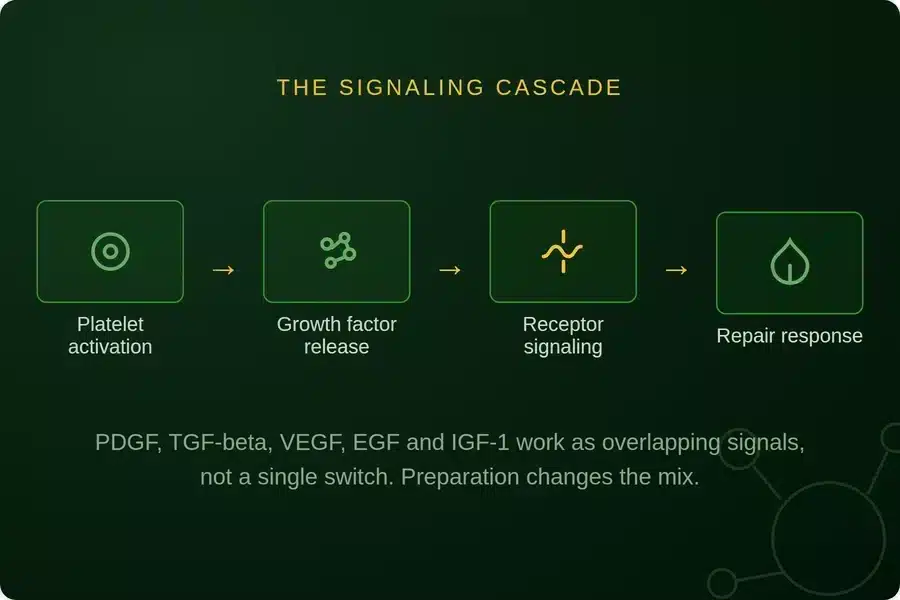
You do not need the full signaling diagram to understand the clinical point. Growth factors bind to the outside of repair cells and flip the right internal switches. Those switches tell the cell to multiply, move, secrete collagen, or build new blood vessels. When the signal is clean and appropriately dosed, the repair program runs as it should. When the signal is disordered, repair can stall or tip toward scar.
TGF-beta is a good example of signal context mattering. At physiological concentrations and proper timing, it orchestrates orderly matrix remodeling. When overactivated or sustained too long, it can push tissue toward fibrosis instead of functional repair. This is one reason why simply injecting more growth factor is not necessarily better.
Why preparation matters more than most marketing admits
PRP is not a standardized drug. It is an autologous biologic whose final composition varies with donor biology and with processing technique. Two preparations with identical protocol sheets can produce different growth factor profiles depending on the patient, the day, and the details of how the blood was handled.
The 2026 review cited above has reshaped how the field discusses PRP quality. The platelet itself is not the drug. It is the delivery system. What matters is the integrity of the platelet and the bioactivity of its cargo. A preparation with fewer but functionally competent platelets can outperform one with a higher platelet count of exhausted or senescent cells.
Several donor-level variables shape growth factor yield. Platelet function declines with age, which can reduce the cargo delivered. Chronic hyperglycemia, dyslipidemia, and insulin resistance generate oxidative stress. That stress pushes platelets toward premature and disorganized release. Systemic inflammation marked by high IL-6 or TNF-alpha alters the cytokine and growth factor balance in the final product. Sex hormone status appears to matter as well, with some reports linking lower estradiol to lower PDGF-BB levels.
Processing variables matter just as much. High centrifugation forces can rupture platelet membranes and cause premature degranulation. That leaves the preparation rich in empty shells rather than intact loaded platelets. Activation method changes the release curve. Thrombin produces a rapid burst of growth factor exocytosis, while calcium chloride produces a slower and more sustained release that may better match the tempo of physiological repair. Endogenous activation, where platelets meet collagen in the tissue itself, produces the most gradual release. Time delays between draw and activation, along with temperature drift during processing, also accelerate platelet metabolic decay.
What this means in practice: The quality of a PRP injection begins before the needle enters the skin. Patient selection matters. A patient with uncontrolled diabetes or active systemic inflammation may deliver a biologically different product than a healthier patient on the same protocol. Counseling patients about metabolic optimization, NSAID timing, and realistic expectations is a clinical variable, not a checkbox.
Leukocyte content: the LR-PRP versus LP-PRP question
One of the more debated preparation choices is whether to include leukocytes (white blood cells) in the final product. Leukocyte-rich PRP (LR-PRP) contains more neutrophils and can increase matrix metalloproteinase activity and catabolic cytokines. Leukocyte-poor PRP (LP-PRP) minimizes that inflammatory burden.
A 2022 double-blind randomized controlled trial in the American Journal of Sports Medicine compared three intra-articular injections of LR-PRP versus LP-PRP for knee osteoarthritis in 192 patients. IKDC scores at 2, 6, and 12 months did not differ significantly between groups. Systematic reviews have reported comparable clinical outcomes between the two preparations overall, with adverse reactions such as knee pain or swelling slightly more frequent with LR-PRP.
For tendinopathy and other soft tissue applications, the clinical tradition favors LP-PRP on the reasoning that additional neutrophil-driven inflammation is counterproductive at already-inflamed tissue. Current evidence supports this preference for rotator cuff tendinopathy, though head-to-head trials remain limited.
PRP versus PRF: delivery matters as much as payload
Platelet-rich fibrin (PRF) is a second-generation platelet concentrate prepared without anticoagulants. The result is a fibrin clot that entraps platelets, leukocytes, and growth factors in a three-dimensional scaffold. That matrix releases growth factors gradually over days to weeks, compared with the more immediate burst release of liquid PRP.
Systematic review work comparing PRF with PRP for periorbital rejuvenation has associated PRF with improvements in skin texture, wrinkles, and crepiness, and PRP with stronger evidence for pigmentation concerns. Framing the two as different delivery systems (PRP for rapid bolus, PRF as a sustained-release scaffold) gives patients a more accurate picture of what each product offers.
The evidence by indication
Clinical outcome data for growth factor-based regenerative injections vary considerably by condition. The following sections summarize what the strongest current evidence actually supports and where it does not.
Knee osteoarthritis
The deepest evidence base sits in knee osteoarthritis, where PRP is used off-label for symptom management. A 2025 systematic review and meta-analysis in the Journal of Orthopaedic Surgery and Research pooled 11 randomized trials covering 1,023 patients. The combination of PRP plus hyaluronic acid was superior to PRP alone on WOMAC total scores, with a mean difference of 1.77 points lower with the combination. VAS pain scores and Lequesne index scores also favored the combination approach.
A 2025 analysis in Frontiers in Physiology found that the number of PRP injections administered predicted pain outcomes, with patients receiving more injections more likely to achieve meaningful pain relief, while symptom duration and body mass index predicted knee function outcomes.
A 2024 prospective study followed 253 knee OA patients with Kellgren-Lawrence grades 1 to 3. Higher platelet concentration correlated with superior outcomes on KOOS subscales and IKDC scores at 2, 6, and 12 months. This supports a dose-response relationship within the range studied. The broader literature suggests that above a biological saturation point, additional concentration stops adding benefit.
What this means in practice: For knee OA, PRP appears to provide modest symptom relief in a meaningful proportion of appropriately selected patients. Combination protocols may outperform PRP alone. The AAOS 2021 knee OA clinical practice guideline includes PRP as a limited recommendation based on low-quality studies with consistent findings, which is a meaningful distinction from a conditional or moderate-evidence endorsement.
Tendinopathy
Tendinopathy is the indication where evidence is most mixed. Mechanistically the story is attractive. PRP’s growth factors should stimulate tenocyte proliferation, collagen synthesis, and matrix remodeling. Clinically the picture is less clean.
Recent systematic reviews have pooled randomized trials in rotator cuff tendinopathy. The pooled results are mixed, and PRP use here is off-label. Some reviews report less pain and better function with PRP in the short term (under 12 months), while corticosteroids tend to work faster in the first weeks. Benefits beyond 12 months were less well demonstrated. Retear rates and functional outcomes tended toward similarity with controls.
The contradictory signal comes from broader tendinopathy reviews where PRP’s effect size is comparable to saline and other controls. Clinicians should not present PRP as definitively superior to saline injection for tendinopathy as a class. For rotator cuff specifically, short-term benefit is supported. For chronic tendinopathy generally, evidence is mixed.
Androgenetic alopecia
PRP has become a common off-label tool for male and female pattern hair loss. The growth factor rationale is clear. PDGF promotes angiogenesis around hair follicles. VEGF improves nutrient delivery. IGF-1 supports follicle cell survival. EGF drives keratinocyte proliferation. FGF supports follicular regeneration. PRP also appears to activate beta-catenin signaling and support anti-apoptotic pathways that extend follicular activity.
A 2024 systematic review in the Journal of Cosmetic Dermatology reviewed 8 randomized trials and 1 cohort study in 291 men with androgenetic alopecia. Six trials reported a statistically significant increase in hair density with PRP. Five reported a significant increase in hair count. Limitations included moderate risk of bias, heterogeneity across protocols, and small sample sizes.
Early randomized data comparing PRP with growth factor concentrate, a newer formulation that isolates growth factors from the platelet fraction, suggest the platelet-bound delivery system may be refinable, though the evidence is preliminary and protocols vary.
PRP is a reasonable off-label option for appropriately selected patients with mild to moderate androgenetic alopecia, often in combination with topical minoxidil. Clinicians should counsel patients that evidence is encouraging but not uniform, that protocols vary, and that multiple sessions are typically needed.
Skin rejuvenation and aesthetic applications
In aesthetic dermatology, PRP is used off-label with the aim of stimulating collagen and elastin production, supporting skin elasticity, and improving photoaged skin. Growth factors appear to enhance fibroblast activity and may reduce melanogenesis through EGF’s effects on tyrosinase. The antioxidant profile of PRP may also reduce free radical damage from chronic sun exposure.
Small trials of PRP in aesthetic dermatology report improvement in skin appearance. The evidence is early, the samples are small, the protocols differ from trial to trial, and the use is off-label.
Recombinant growth factor products are beginning to appear in aesthetic trials as well. Early randomized work on topical recombinant PDGF-BB after radiofrequency microneedling has reported short-term outcomes favoring the PDGF arm over standard petrolatum-based aftercare. This is an early signal that isolated recombinant growth factors may carve out a distinct aesthetic role alongside autologous PRP.
Bone and periodontal applications
The one FDA-approved growth factor therapy sits in this category. Becaplermin (recombinant PDGF-BB, marketed as Regranex) is approved for diabetic neuropathic ulcers of the lower extremity. Recombinant PDGF-BB is also approved in periodontal and orthopedic bone grafting applications under different brand names. Bone morphogenetic proteins, particularly rhBMP-2, are FDA-approved for specific spinal fusion, tibial fracture, and sinus and alveolar bone augmentation indications.
Evidence for BMP products in terms of superiority over conventional bone grafting remains inconclusive for some indications. The clinical case is strongest in patients with compromised healing capacity, where de novo bone formation under conventional grafting is less reliable.
FDA status and the regulatory map
Clinicians offering growth factor therapies need a clear-eyed understanding of the regulatory map. The shortest accurate summary is this: one growth factor product has disease-specific FDA approval. PRP systems are cleared as devices, not approved as drugs for any indication. Exosomes have no FDA-approved therapeutic products.
Becaplermin (Regranex) is the only recombinant growth factor approved by the FDA for a specific wound healing indication. The International Working Group on the Diabetic Foot’s current guideline conditionally recommends against growth factor therapy as an adjunct for diabetic foot ulcers, citing low-quality evidence. This creates a genuine clinical tension: an FDA-approved indication paired with a conditional guideline recommendation against use. Clinicians who consider Regranex should document clinical reasoning and discuss the evidence honestly with patients.
PRP preparation systems are 510(k)-cleared for bone graft handling. This means the FDA reviewed the device for substantial equivalence to a predicate device used in bone graft preparation. It does not mean that PRP has been approved for knee osteoarthritis, tendinopathy, hair restoration, aesthetic indications, or any other specific disease. All of those uses are considered off-label. Off-label use is legal and common, but it requires clear patient communication. Clinicians must inform patients that the use is off-label, that the FDA has not reviewed safety and efficacy data for that specific indication, that evidence is mixed, and that outcomes are not guaranteed. Documentation of that conversation belongs in every chart.
Exosomes deserve particular care. These extracellular vesicles, which cells use to shuttle proteins and RNA to other cells, have attracted substantial research interest for their potential as next-generation delivery vehicles. The FDA has not approved any exosome product for human therapeutic use. The agency has issued consumer alerts about unapproved stem cell and exosome products and continues to take enforcement action against clinics marketing them as treatments. Clinicians interested in the science should treat exosomes as investigational. They should not market or offer exosome products as clinical therapies outside an authorized clinical trial pathway.
Growth Factor Concentrate is a newer autologous formulation that isolates growth factors from the platelet fraction. It is not a separately FDA-approved category and falls under the same off-label framing as PRP. Clinicians offering it should disclose that it is an investigational variation within the autologous blood product space.
Patient selection and realistic expectations
Growth factor-based therapies work best when applied to the right patient, at the right stage of disease, with clear expectations. Absolute or strong contraindications include blood clotting disorders and active anticoagulant therapy in many cases. Severe thrombocytopenia that limits growth factor delivery, active systemic infection, malignancy at or near the injection site, and severe uncontrolled systemic disease are also disqualifying.
A 2025 expert consensus on PRP indications and contraindications offered nuanced guidance on several questions that come up in practice. Thrombocytopenia above 50,000 per cubic millimeter was not considered an absolute contraindication by the consensus group. Monoclonal gammopathy of undetermined significance (MGUS) was not considered a contraindication either. These are fine-grained distinctions that many general sources get wrong. They matter for patients who might otherwise be excluded on a conservative reading.
Relative contraindications include pregnancy and lactation, active NSAID use in the period leading up to the procedure, poorly controlled diabetes, and metabolic syndrome. The NSAID question is a good example of where clinical judgment carries weight. Theoretical reasoning supports a washout period before PRP. Human outcome data specifically tying a particular washout duration to better clinical results are limited. Decisions should reflect the patient’s clinical situation and the reason they are taking NSAIDs in the first place. Clinicians should consult current guidance and their own clinical judgment rather than applying a blanket rule.
Systematic review of PRP-related adverse events has identified possible postoperative infection, inflammation, allergic reaction, and nodule formation. The most commonly reported adverse event was postoperative infection, most often linked to contamination during blood collection or processing. Good sterile technique, trained operators, and appropriate patient selection remain the primary safety levers.
What this means in practice: The best candidate is a patient whose diagnosis matches the evidence base, whose comorbidities are controlled, and who enters the procedure with calibrated expectations. The worst fit is a patient who arrives expecting a cure from one injection and whose underlying condition places them outside the evidence envelope.
Fictional case example: when donor biology meets clinical decision-making
The following is a fictional composite scenario created for educational purposes. It does not describe a real patient.
A 52-year-old recreational tennis player presents to a sports medicine clinic with bilateral knee osteoarthritis after reading extensively about PRP. Her imaging shows Kellgren-Lawrence grade 2 changes in the medial compartment. She has type 2 diabetes with a hemoglobin A1C of 8.4 percent, a body mass index of 32, and takes ibuprofen most days for knee pain.
Her clinician explains that PRP is used off-label for knee osteoarthritis and that evidence supports modest benefit in appropriately selected patients. The clinician also notes that her own biology is likely to influence the quality of the PRP she produces. Hyperglycemia and oxidative stress can impair platelet function, which may reduce the growth factor payload actually delivered. Chronic NSAID use may further blunt platelet responsiveness.
Rather than proceeding directly to injection, the clinician recommends a short window of metabolic optimization. The patient works with her primary care physician to tighten glycemic control and transitions to acetaminophen plus a brief supervised exercise program. She returns six weeks later with an A1C of 7.6 percent and has been off ibuprofen for several days. The clinician proceeds with a series of ultrasound-guided PRP injections spaced weeks apart. Informed consent includes the off-label status, the range of possible outcomes, and the evidence limitations.
The clinical lesson is not about the result. It is that the injection went into a patient who had been optimized and counseled first.
Key lesson for clinicians: Donor biology is a variable you can sometimes influence. When metabolic and medication variables are modifiable, addressing them before the injection is part of the procedure, not an administrative formality.
Frequently asked questions
Are growth factor injections the same as stem cell therapy?
No. Growth factors are signaling proteins released from platelets. Stem cells are living cells capable of differentiating into other cell types. PRP does not contain meaningful numbers of stem cells. Products marketed as stem cell therapies are a separate regulatory category, and many such products offered outside clinical trials are unapproved. Patients should understand which category of biologic they are actually receiving.
How many PRP injections are typically needed?
Evidence suggests that more than one injection usually outperforms a single injection, particularly for knee osteoarthritis. A 2025 analysis found that patients receiving more injections were more likely to achieve meaningful pain relief than those receiving fewer. Specific plans depend on the indication, the patient, and the clinician’s judgment, and protocols vary across the literature.
Does a higher platelet count always mean a better PRP injection?
Not necessarily. Evidence supports a dose-response relationship within a biologically active window. Above an apparent saturation threshold, additional concentration does not improve outcomes. Functional platelet quality, donor biology, and preparation technique matter as much as the raw count.
Why do two patients sometimes get very different results from the same PRP protocol?
Donor biology and processing details both influence the final growth factor payload. Age, metabolic status, systemic inflammation, hormone levels, and even time of day can shift platelet function. Centrifugation handling, activation method, temperature, and delay between draw and injection all change the product. PRP is not a standardized drug, which is why experienced clinicians pay attention to both patient optimization and preparation discipline.
Do I need to stop NSAIDs before PRP?
Many clinicians recommend a washout period before PRP, based on theoretical concerns that NSAIDs impair platelet function. Human outcome data directly tying a specific washout duration to better clinical results are limited. The decision should reflect the patient’s clinical situation and the reason they are taking NSAIDs. Shared decision-making with the patient and, when relevant, their prescriber is more useful than a blanket rule.
Is PRP safe for patients on anticoagulants?
Active anticoagulant therapy is generally considered a relative or absolute contraindication, depending on the agent, the indication, and the injection site. Bleeding risk is one concern. Impaired platelet function is another. Clinicians should assess the risk-benefit carefully and often coordinate with the prescribing physician before proceeding.
What about exosomes? I see them advertised online.
Exosomes are extracellular vesicles that carry growth factors and other signaling molecules. The science is interesting, and research is active. However, there are no FDA-approved exosome products for human therapeutic use. The FDA has issued public safety alerts about unapproved exosome products. Any clinical use outside an authorized trial pathway is investigational and unapproved. Patients considering exosome-marketed products should ask for the FDA-issued Investigational New Drug number and confirm the study is registered.
Key takeaways
- Growth factors in PRP, including PDGF, TGF-beta, VEGF, EGF, IGF-1, FGF, and HGF, coordinate inflammation, cell proliferation, angiogenesis, and tissue remodeling through distinct but overlapping signaling pathways.
- PRP kits are FDA-cleared for bone graft handling. Use for knee osteoarthritis, tendinopathy, hair restoration, and aesthetic indications is off-label, and patients must be informed of that status.
- Becaplermin (recombinant PDGF-BB) is the only FDA-approved growth factor product for a specific wound healing indication. The current IWGDF guideline nonetheless recommends against its use in diabetic foot ulcers, illustrating the tension clinicians must navigate.
- Platelet count alone does not predict outcomes. Functional platelet quality, donor biology, preparation technique, and activation method all shape the final growth factor payload.
- Evidence is strongest for PRP in knee osteoarthritis, with combination protocols often outperforming monotherapy, and in androgenetic alopecia. Evidence is mixed for tendinopathy and emerging for aesthetic skin rejuvenation.
- Leukocyte-rich and leukocyte-poor PRP produce comparable overall outcomes in knee osteoarthritis, with LR-PRP carrying a mildly higher short-term adverse reaction profile; LP-PRP is often preferred for tendinopathy.
- Exosomes have no FDA-approved therapeutic products and should be discussed as investigational, not offered as treatments.
- Patient selection and metabolic optimization before injection are real clinical variables that influence both the quality of the biologic and the likelihood of benefit.
RMA Disclosure
Regenerative Medicine Academy (RMA) is an education company that provides clinician training in some of the techniques discussed in this article. This content is educational and does not constitute a claim of clinical superiority, a guarantee of outcomes, or a substitute for individual clinical judgment.
Train for the science, not just the syringe
Growth factor biology is the engine beneath every regenerative injection. Counseling patients honestly requires clinicians who understand both the science and the regulatory map. If you are ready to deepen your procedural skills and clinical reasoning, explore RMA’s hands-on regenerative medicine training courses with practicing clinician instructors: the introductory PRP course for musculoskeletal work and PRP for aesthetics and hair loss for the aesthetic side. Structured e-learning coursework supports licensed clinicians building these competencies, and related reading is in the PRP preparation post. Evidence-based practice starts with understanding what you are actually delivering. Ask about dates and fit.
The course that goes with this post
Advanced PRP for Musculoskeletal Injuries
For providers already injecting: concentration targets, leukocyte choices, volume and site by joint, and ultrasound guided approaches, with an instructor beside you.
Starting at $5,000 at an instructor’s clinic, or $10,000 inside your practice.
Important information
Education, not medical advice
Regen Med Academy provides education and training for licensed healthcare providers. Everything on this site is for educational purposes only. It is not medical advice, not a treatment recommendation, and not an offer to treat. Providers are responsible for practicing within the scope of their own license and their own state law.
Where a course can run
Courses are taught only in states where the modality is legal for the license you hold. State law in this field changes, sometimes more than once a year. Our reading of each state, with its sources and the date we checked, is on the rules by state page. It is a starting point, not legal advice. It is your responsibility to confirm the modality is legal in your state for your license. Do that before you book. The authority on your own scope is your licensing board, not us. State medical board contact details are published by the Federation of State Medical Boards.
Training on live patients
Procedures performed during training are performed on consenting patients, by licensed providers, under supervision. Participation is voluntary and outcomes vary.
Products and modalities
Some products and modalities discussed in these courses are not FDA approved or cleared for the uses described. Regen Med Academy does not manufacture, sell or endorse any product, and does not approve or clear any product. The FDA publishes guidance for patients and providers on regenerative medicine therapies.
What a certificate is, and is not
Regen Med Academy does not offer CMEs, credit hours or accreditation of any kind. What you receive is a Certificate of Completion. It records that you attended and performed the procedures under supervision. It is not a license, not a board certification, and it does not expand your scope of practice.
Coverage is yours to arrange
You are responsible for your own malpractice coverage. We will help you work out what to ask your carrier, and we recommend getting the answer in writing. Regen Med Academy does not provide, arrange or extend coverage to trainees, and nothing on this page is legal advice or an assurance of coverage.