
Where we train
Regenerative Medicine Course for Dallas Professionals
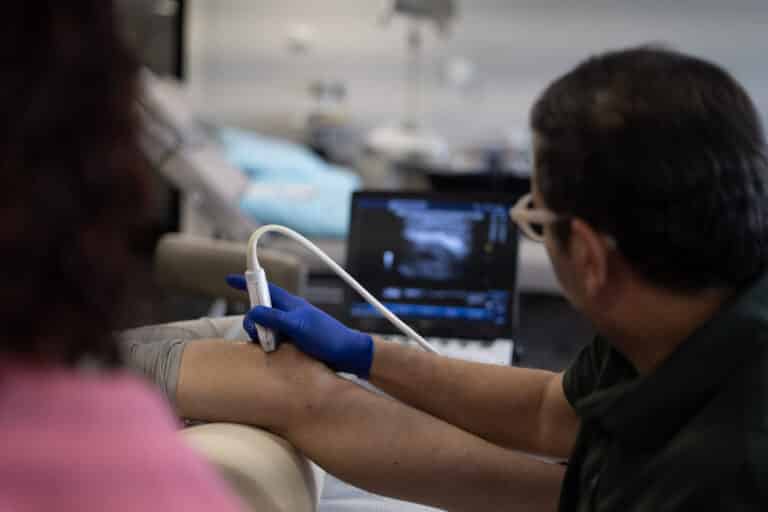
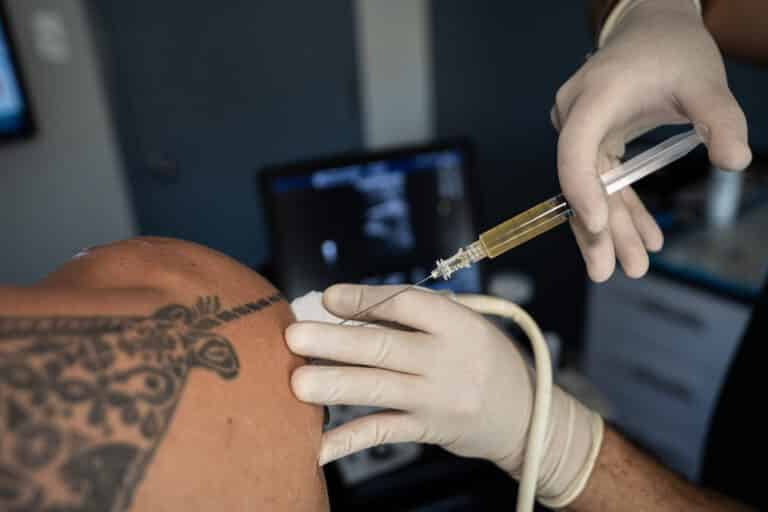
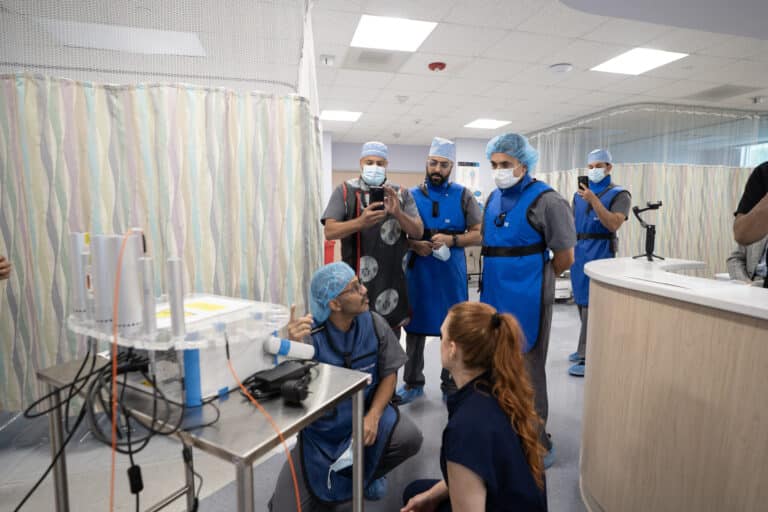
Hands-on regenerative medicine training for licensed providers across Dallas, Fort Worth and North Texas. You draw, you prep and you inject, on a consenting patient. One instructor stands beside you. And the room is a working practice: an instructor’s, or your own.

Live patients
Private training
Practicing clinicians
U.S. based, worldwide
Training in Dallas
Providers who ask us about Dallas practice all over North Texas, in Dallas, Collin, Denton and Tarrant counties. Plano, Frisco, Irving, Arlington and Fort Worth sit inside the same metro, and Denton is a short run up I-35E. Waco, down I-35, and Tyler, off I-20 to the east, are each about 100 miles out.
You can train two ways. An instructor travels to your practice and teaches you and your team on your own equipment, with travel included in the quote. Or you go to an instructor’s own working practice and train there. Both are private, both are on real, consenting patients, and the scope is agreed before you book.
Who can train? Anyone legally able to provide the treatment in Texas. Your license draws that line, and Texas draws it one way for physicians and another for NPs, PAs, nurses, chiropractors and physical therapists. The two sections below lay it out, with the statute for each.

Local detail
Dallas at a glance.
Where the instructor flies in, the part of North Texas a Dallas session covers, and the hospitals and schools around it.
Getting here
For a session inside your practice, the instructor flies into Dallas Fort Worth International Airport (DFW) or Dallas Love Field (DAL), whichever is closer to you. Travel and lodging are inside the quote.
The area a Dallas session covers
Dallas, Collin, Denton and Tarrant counties, and Rockwall, Kaufman or Ellis if you practice there. That takes in Plano, Frisco, McKinney, Allen, Richardson, Garland, Irving, Grand Prairie, Arlington, Southlake, Denton and Fort Worth. Practices in other parts of Texas have their own pages: Houston, Austin and San Antonio.
Health systems in Dallas
Dallas providers practice alongside UT Southwestern Medical Center, whose medical school started in 1943 as Southwestern Medical College, the 68th medical school in the United States; Parkland Health, which describes itself as one of the largest public hospital systems in the country; Baylor Scott & White Health, a not-for-profit system with flagship academic medical centers in Dallas, Fort Worth and Temple; and Texas Health Resources, in its own words a faith-based, nonprofit health system, with more than 420 access points across North Texas.
Fort Worth and Tarrant County
On the Fort Worth side, JPS Health Network is the Tarrant County Hospital District, governed by a board of managers that the Tarrant County Commissioners Court appoints. UNT Health Fort Worth is home to the Texas College of Osteopathic Medicine, chartered in 1966, which took its first class of 20 students in 1970. The university took the name UNT Health Fort Worth in July 2025.
Worth knowing
Parkland Health first opened its doors in 1894. Today it is the primary teaching hospital for UT Southwestern, a Level I trauma center, and home to what it calls the first verified burn center in North Texas. Source
Texas scope
What each Texas license allows.
In Texas, as everywhere, your license decides what you do hands on. Below is how Texas law reads for each license we train, as of October 2026, with the statute or board page linked. Read it as a starting point, not legal advice.
It is your responsibility to confirm the modality is legal in your state for your license. Do that before you book. The authority on your own scope is your licensing board, not us.
Physicians, MD and DO
Texas physicians are licensed by the Texas Medical Board. A Texas physician may delegate to “a qualified and properly trained person acting under the physician’s supervision” any medical act that a reasonable and prudent physician would find within the scope of sound medical judgment to delegate. Source The state’s investigational stem cell law is written around the physician: the treatment must be administered directly by a physician certified by an institutional review board, overseen by that board, and given at a licensed hospital, a licensed ambulatory surgical center or a medical school. Source
Nurse practitioners
Texas has restricted practice for nurse practitioners, according to the AANP. Source The Texas Medical Board says APRNs need delegated authority from a licensed physician to provide the medical aspects of patient care, and prescribing needs a prescriptive authority agreement with that physician. The delegating physician must adequately supervise but does not need to be physically present at all times. Except in the settings the board lists, one physician may delegate to no more than seven full-time equivalent APRNs and PAs. Source
Physician assistants
The Texas Physician Assistant Board decides who is eligible for licensure and regulates physician assistants under Chapter 204 of the Occupations Code, the Physician Assistant Licensing Act. A physician may delegate to a PA, “acting under adequate physician supervision,” the act of prescribing or ordering a drug or device through a prescriptive authority agreement. Source Physicians must register every PA they supervise before the PA starts working for them, the Texas Medical Board says. Source
Registered nurses
The Texas Nursing Practice Act counts as professional nursing the “administration of a medication or treatment as ordered by a physician, podiatrist, or dentist,” along with acts a physician delegates under the sections it names. It also says professional nursing does not include “acts of medical diagnosis or the prescription of therapeutic or corrective measures.” Source How we read it: an RN’s hands-on part starts from a physician’s order or delegation, and the decision to do the procedure is not the RN’s. Specific procedures are a question for the Texas Board of Nursing.
Chiropractors
Texas lets a chiropractor examine and evaluate the spine and musculoskeletal system and perform “nonsurgical, nonincisive procedures, including adjustment and manipulation.” The same section says chiropractic does not include incisive or surgical procedures, or prescribing controlled substances, dangerous drugs or any other drug that requires a prescription. Its definition of an incisive procedure leaves out one use of a needle: drawing blood for diagnostic testing. Source How we read it: an injection course is not something that section spells out, so take the question to the Texas Board of Chiropractic Examiners before you book.
Physical therapists
Texas physical therapists are licensed through the Executive Council of Physical Therapy and Occupational Therapy Examiners, home of the Board of Physical Therapy Examiners. The Practice Act describes the practice as measuring or testing the function of the musculoskeletal, neurological, pulmonary or cardiovascular system, rehabilitative treatment, and consultative, educational or advisory services. A physical therapist may treat a patient without a referral for no more than 30 consecutive calendar days, under the conditions the Act sets. Source How we read it: the Act does not name injections, so check any injection course with the board first.
Texas law
The Texas rules that touch regenerative medicine.
State law in this field changes, sometimes more than once a year. Our reading of each state, with its sources and the date we checked, is on the rules by state page. It is a starting point, not legal advice.
HB 177 (2015), adult stem cells in health care
Since September 1, 2015, anyone using adult stem cells in health care in Texas must use adult stem cells that are properly manufactured and stored, and may only use them in a clinical trial approved by the FDA. A hospital may use adult stem cells in a procedure if a physician there finds the use appropriate, the patient consents in writing, those two requirements are met, the manufacturing satisfies the FDA’s current good manufacturing practices, and appropriate state and federal guidelines are followed. Source
HB 810 (2017), investigational stem cell treatment
A patient with a severe chronic disease or terminal illness listed in state rules, attested to by the treating physician, may access an investigational stem cell treatment: an adult stem cell treatment under investigation in a clinical trial and not yet FDA approved for general use. The physician must first consider the FDA approved options with the patient, find them unavailable or unlikely to alleviate the condition’s significant impairment or severe pain, and recommend or prescribe a specific class of the treatment in writing. The patient signs a written informed consent. Treatment is given only by an IRB-certified physician, under IRB oversight, at a licensed hospital, a licensed ambulatory surgical center or a medical school. Source
IRB records and reports to the Texas Medical Board
The institutional review board overseeing an investigational stem cell treatment keeps a record on each patient, documenting each treatment and its effects, and sends the Texas Medical Board an annual report of its findings with no patient identifying information. Source Under the board’s rule, each report covers September 1 to August 31, must reach the board before the end of the calendar year, and names the physicians the IRB certified. Source
HB 3148 (2019), registry and homologous use
HB 3148 added a state investigational stem cell registry that lists each physician who administers an investigational stem cell treatment under the law. It also says the law may not be read to stop a physician from using adult stem cells for their intended homologous use when the cells come from an FDA registered manufacturer and are commercially available, or to require an IRB to oversee treatment with adult stem cells registered by the FDA for their intended homologous use. Source
Federal rules still apply
Texas law sits on top of federal law, not in place of it. The FDA’s rules for human cells, tissues, and cellular and tissue-based products apply in every state. Our summary is in the federal section of the rules by state page.
Your boards in Texas
Texas Medical Board, Texas Board of Nursing, Texas Physician Assistant Board, Texas Board of Chiropractic Examiners and the Texas Board of Physical Therapy Examiners.
Formats and pricing
Two ways to train in Dallas, and both are private.
The hands-on work with a consenting patient is the same either way. What changes is whose room it is, and who from your practice is in it. Both prices are starting points: the quote depends on the course, how many people are training and how much of the curriculum is built around you.
At an instructor location
From $5,000
You come to us, at an instructor’s own working practice.
At your own practice
From $10,000
We come to you, anywhere in Texas, with the instructor’s travel and lodging inside the quote. What on-site training includes.
Cancel or refund any time up to thirty days out. Inside thirty days, no refund.
On a refund, covering card processing and office costs.
To move your date, covering the travel that moves with it.
Questions about dates, format or fit? Talk to us.
Training courses we offer
Every course runs in Dallas.
The hands-on day is in person, at an instructor’s practice or inside yours.




Common questions
What Dallas providers ask before they book.
How much does training in Dallas cost?
Training inside your own practice in Dallas starts at $10,000, with the instructor's travel and lodging included. Training at an instructor's location starts at $5,000. Both are starting points. The quote depends on the discipline, the instructor, how many people are training and how much of the curriculum is built around you.
Do the Texas adult stem cell laws cover PRP?
The Texas statutes behind HB 177, HB 810 and HB 3148 are written for adult stem cells, and none of their sections mentions platelet-rich plasma. Whether a particular product or procedure falls under them is a question for your counsel and your board, not us. Our reading of all three laws, with sources, is on the rules by state page.
Can a Texas NP or PA do the hands-on part?
Within the authority your physician delegates, yes. Texas NPs and PAs provide the medical side of patient care under delegation from a licensed physician, with prescribing run through a prescriptive authority agreement. Bring your agreement and your delegating physician's details when we plan, and we fit the hands-on plan to them before you book.
I'm not licensed in Texas. Can I train in Dallas?
Say so when you request a date. When the instructor comes to you, you train in your own practice under the license you hold there. When you travel to an instructor's practice in Texas, your hands-on part depends on whether you are licensed in Texas, and we agree the plan with you before you book.
Request a date now
Tell us about your practice and when you'd like to train.
Ready to add PRP or another regenerative procedure in Dallas? A few quick questions, one screen at a time. Nothing here commits you to a date. A person reads every request and calls you back within one business day.
From the blog
Read it here, then do it in a course.
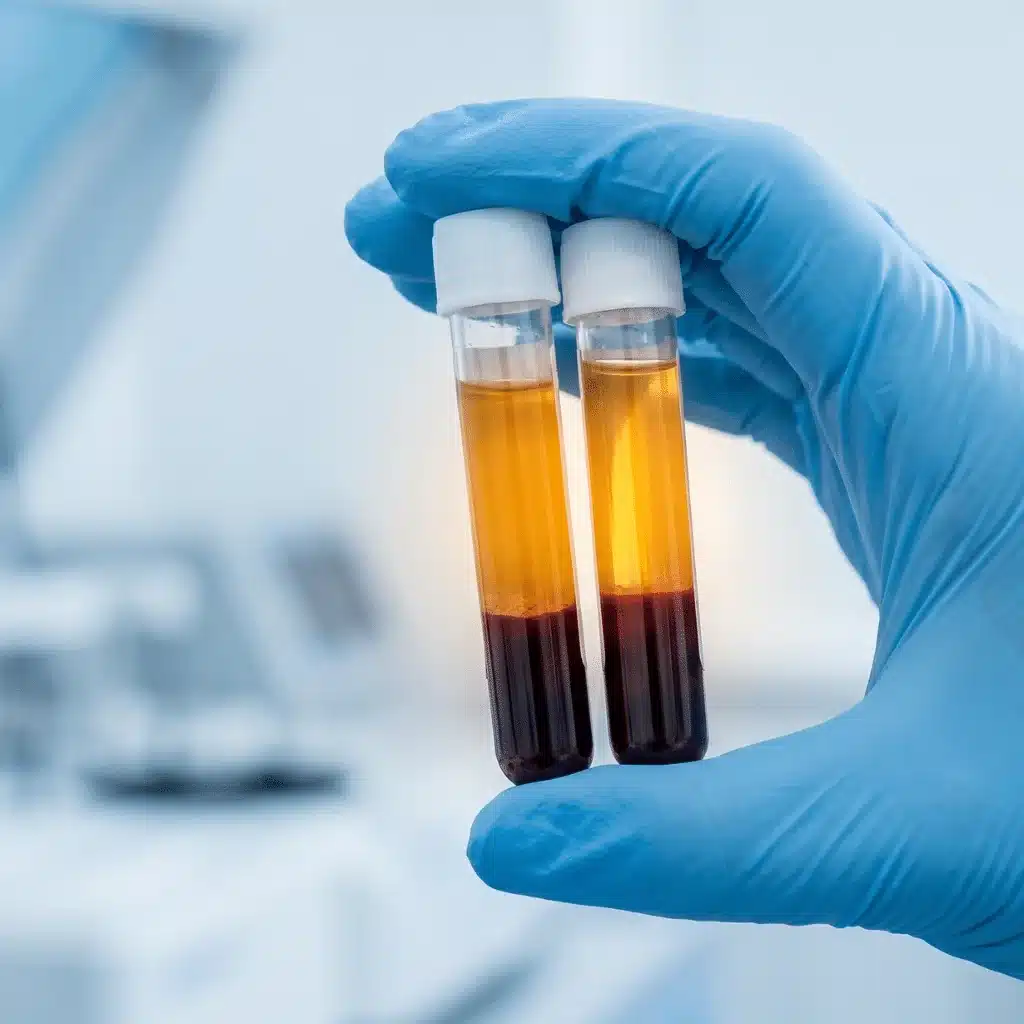
The role of growth factors in regenerative medicine: a clinical primer
Read the postPlatelet count is not the dose. A primer on the growth factors that do the work, why preparation…
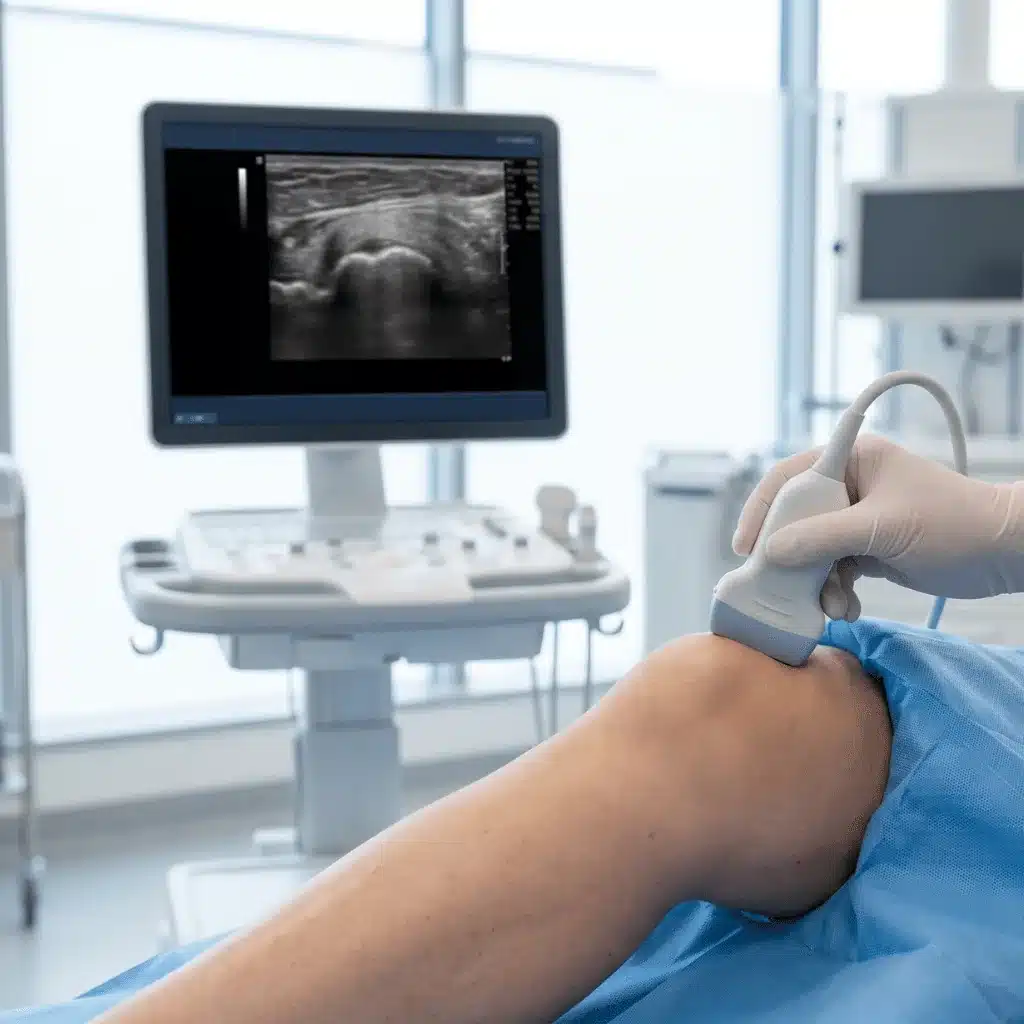
Ultrasound-guided injection techniques in regenerative medicine: why training matters
Read the postGuidance puts the needle where it belongs. It does not make you competent. What the accuracy evidence shows…
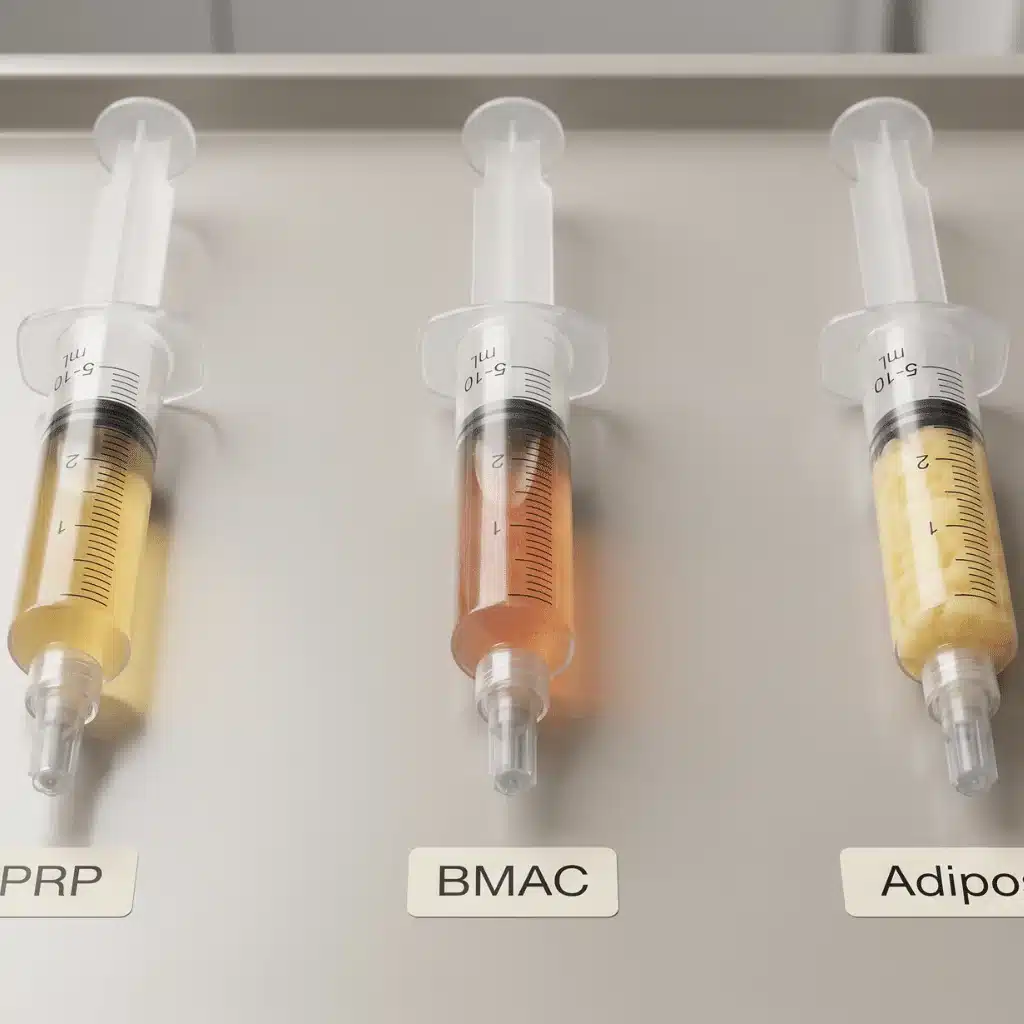
PRP vs. BMAC vs. adipose: comparing orthobiologic treatment options
Read the postPRP, BMAC and adipose are three different tools, not one product with three names. How to match modality…
Important information
Read this before you book.
Know what a course is not before you book. It won’t make you a specialist. It carries no CMEs, credit hours or accreditation, and it doesn’t cover your malpractice: you arrange that yourself. No one can promise you outcomes. It is education for licensed providers, not medical or legal advice, and some products and modalities discussed are not FDA approved or cleared for the uses discussed. The Certificate of Completion is not a license or a board certification, and it does not expand your scope of practice. Read the full notes.