
Where we train
Regenerative Medicine Course for Washington, D.C. Professionals
Hands-on regenerative medicine training for licensed providers in Washington DC. We cover Northern Virginia and the Maryland suburbs too. It’s private. You’re hands on a consenting patient, with one instructor right beside you.

Live patients
Private training
Practicing clinicians
U.S. based, worldwide
Training in Washington DC
Around Washington, practices sit in the District itself or just over its lines: Bethesda, Silver Spring and the rest of Montgomery County, Prince George’s County to the east, and Arlington, Alexandria and Fairfax County across the Potomac. Baltimore is about an hour up I-95, and Fredericksburg about an hour south when the traffic allows.
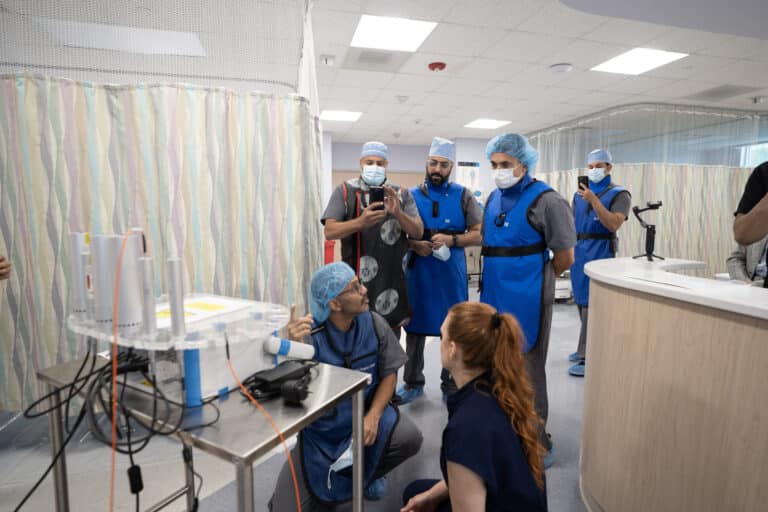
Training runs one of two ways. The instructor comes to your practice and works with you and your staff on your own equipment, with travel counted in the quote, or you train at an instructor’s own working practice. Both are private sessions on a real patient who has consented, with the scope agreed before you book.
Who can train? Anyone legally able to provide the treatment in the District. For a practice inside the District, that turns on how the D.C. Code defines your license. For one in Maryland or Virginia, it turns on that state’s law. The two sections below cover the District, with every source linked.

Local detail
Washington, DC at a glance.
Where the instructor lands, the area a Washington session covers, and the medicine around the capital.
Getting here
For training inside your practice, the instructor flies into Ronald Reagan Washington National Airport (DCA) or Washington Dulles International Airport (IAD), both run by the Metropolitan Washington Airports Authority, or into BWI Thurgood Marshall Airport (BWI) when your practice sits toward Baltimore, with travel and lodging included in the quote.
The area a Washington session covers
The whole District, plus Montgomery and Prince George’s counties in Maryland and Arlington, Fairfax and Loudoun counties and the city of Alexandria in Virginia. That takes in Bethesda, Rockville, Silver Spring, College Park, McLean, Tysons, Reston and Leesburg. Practices north toward Annapolis are on the Baltimore page, and farther up I-95 is Philadelphia.
Medical schools in the District
Washington providers practice alongside three medical schools. The GW School of Medicine and Health Sciences, founded in 1824, calls itself the 11th oldest medical school in the country and the first in the nation’s capital. Georgetown University School of Medicine has taught medicine since 1851, in the Jesuit tradition. Howard University College of Medicine, founded in 1868, trains physicians to provide care in medically underserved communities.
Hospitals around the capital
Children’s National Hospital, on Michigan Avenue NW, describes itself as the Washington, D.C., region’s only standalone children’s hospital. In Northern Virginia, Inova is a nonprofit healthcare provider whose hospitals include Inova Fairfax, Inova Alexandria, Inova Fair Oaks, Inova Loudoun and Inova Mount Vernon. The National Institutes of Health keeps its main campus in Bethesda, Maryland.
Worth knowing
Howard University Hospital opened in the fall of 1975, replacing the Freedmen’s Hospital, which dates to around 1862. The hospital says that, together with the Howard University health science colleges, it trains more than 20 percent of the nation’s African American health professionals. Source
D.C. scope
What each license allows in the District.
The District writes its health professions into one section of the D.C. Code, and the definition of your license there decides what you do hands on. This is our reading for each license we train, as of October 2026, with the code or rule linked. None of it is legal advice.
It is your responsibility to confirm the modality is legal in your state for your license. Do that before you book. The authority on your own scope is your licensing board, not us.
Physicians, MD and DO
The District’s Board of Medicine regulates the practice of medicine, MD and DO, along with physician assistants and several other professions. Source The D.C. Code defines the practice of medicine broadly: suggesting, recommending, prescribing or administering any form of treatment, operation, drug, medicine, manipulation, electricity, or physical or mechanical treatment, for the prevention, diagnosis, correction or treatment of a disease, ailment, injury, condition or defect. Source Only licensed or registered physicians and licensed hospitals may hold a District tissue bank license. Source
Nurse practitioners
The District has full practice for nurse practitioners, according to the AANP. Source D.C. Law 25-191 repealed the code section on APRN collaboration, effective July 19, 2024. Source The code defines advanced practice registered nursing to include selecting, administering and dispensing therapeutic measures. Source It lets an APRN “initiate, monitor, and alter drug therapies” and “initiate appropriate therapies or treatments,” with further functions within the APRN’s specialty set by the Mayor’s rules. Source
Physician assistants
The D.C. Code defines physician assistant practice as “the performance, in collaboration with a licensed physician or osteopath, of acts of medical diagnosis and treatment, prescription, preventive health care, and other functions which are authorized by the Board of Medicine.” Source The Board of Medicine regulates PAs. Source How we read it: a PA’s hands-on work runs in collaboration with a physician and inside what the board authorizes, so bring your collaboration terms to the planning call.
Registered nurses
The Board of Nursing’s rules describe RN practice to include “the provision of regimens requested, ordered or prescribed by authorized health care providers.” An RN may take on an activity outside traditional nursing training only when, among other conditions, it is not prohibited, the RN has documented evidence of current competency, the practice setting has policies and procedures to support it, and a reasonable and prudent nurse in that setting would do it. Source How we read it: an RN needs an order, documented competency and a practice policy before taking on a new procedure, and the Board of Nursing settles the close calls.
Chiropractors
Chiropractic in the District is regulated by the Board of Acupuncture, Chiropractor and Naturopathic Physicians. The D.C. Code says chiropractic “does not include the use of drugs or surgery but may include ancillary procedures such as dry needling in accordance with the rules and requirements promulgated by the Mayor.” Source How we read it: dry needling has a path under the District’s rules, and injecting a drug does not. Confirm with the board before you book.
Physical therapists
The D.C. Code defines physical therapy as “the independent evaluation or treatment of human disability, injury, or disease through the specific scientific application of physical measures to secure the functional rehabilitation of the human body,” and includes the ability to order imaging as part of evaluation. Source Physical therapists are regulated by the Board of Rehabilitative Therapies. How we read it: the definition rests on physical measures and names no injections, so ask the board before booking an injection course.
D.C. law
The District rules that touch regenerative medicine.
State law in this field changes, sometimes more than once a year. Our reading of each state, with its sources and the date we checked, is on the rules by state page. It is a starting point, not legal advice.
Tissue bank license law (Code 7-1541.03)
No one may operate a tissue bank in the District of Columbia without a valid license. Licenses go only to persons licensed or registered as physicians, or to persons licensed to operate hospitals, and the Mayor may deny, suspend or revoke one after notice and hearing. Source The code defines a tissue bank as a facility for the recovery, screening, testing, processing, storage or distribution of tissue, provided the facility is accredited by the American Association of Tissue Banks. Source
No stem cell specific law
We found no District law written specifically for stem cell products, as of September 2026. Professional licensure, the tissue bank law and federal law govern instead, and the FDA says it regulates regenerative medicine products. Source
Federal rules still apply
District law sits on top of federal law, not in place of it. The FDA’s rules for human cells, tissues, and cellular and tissue-based products apply in the District just as they do in every state. Our summary is in the federal section of the rules by state page.
Your boards in the District
Board of Medicine, Board of Nursing, Board of Acupuncture, Chiropractor and Naturopathic Physicians and Board of Rehabilitative Therapies, all part of DC Health.
Formats and pricing
Two ways to train in Washington, DC, and both are private.
The hands-on work with a consenting patient is the same either way. What changes is whose room it is, and who from your practice is in it. Both prices are starting points: the quote depends on the course, how many people are training and how much of the curriculum is built around you.
At an instructor location
From $5,000
You come to us, at an instructor’s own working practice.
At your own practice
From $10,000
We come to you, anywhere in the District, with the instructor’s travel and lodging inside the quote. What on-site training includes.
Cancel or refund any time up to thirty days out. Inside thirty days, no refund.
On a refund, covering card processing and office costs.
To move your date, covering the travel that moves with it.
Questions about dates, format or fit? Talk to us.
Training courses we offer
Every course runs in Washington, DC.
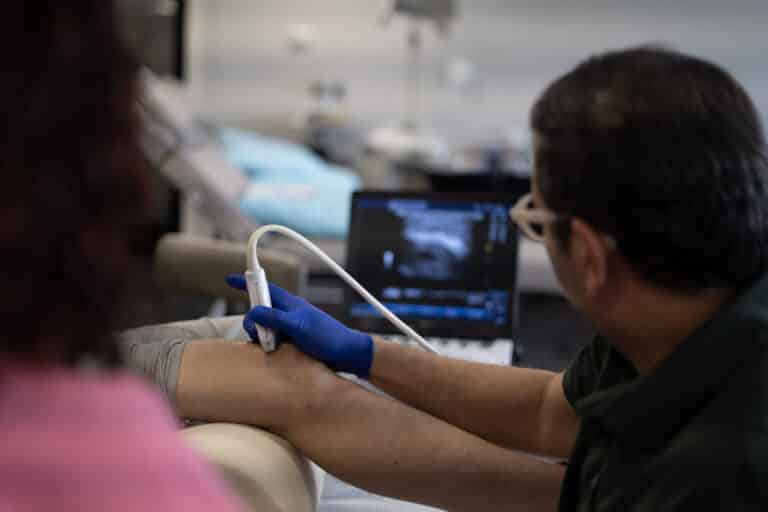
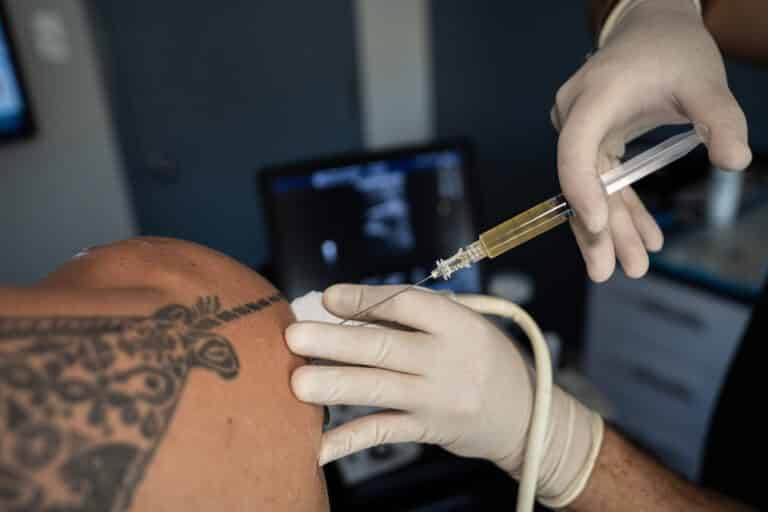
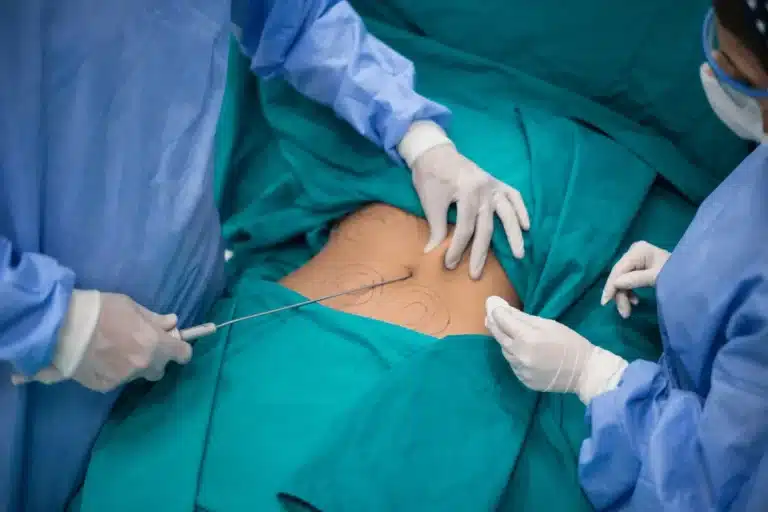
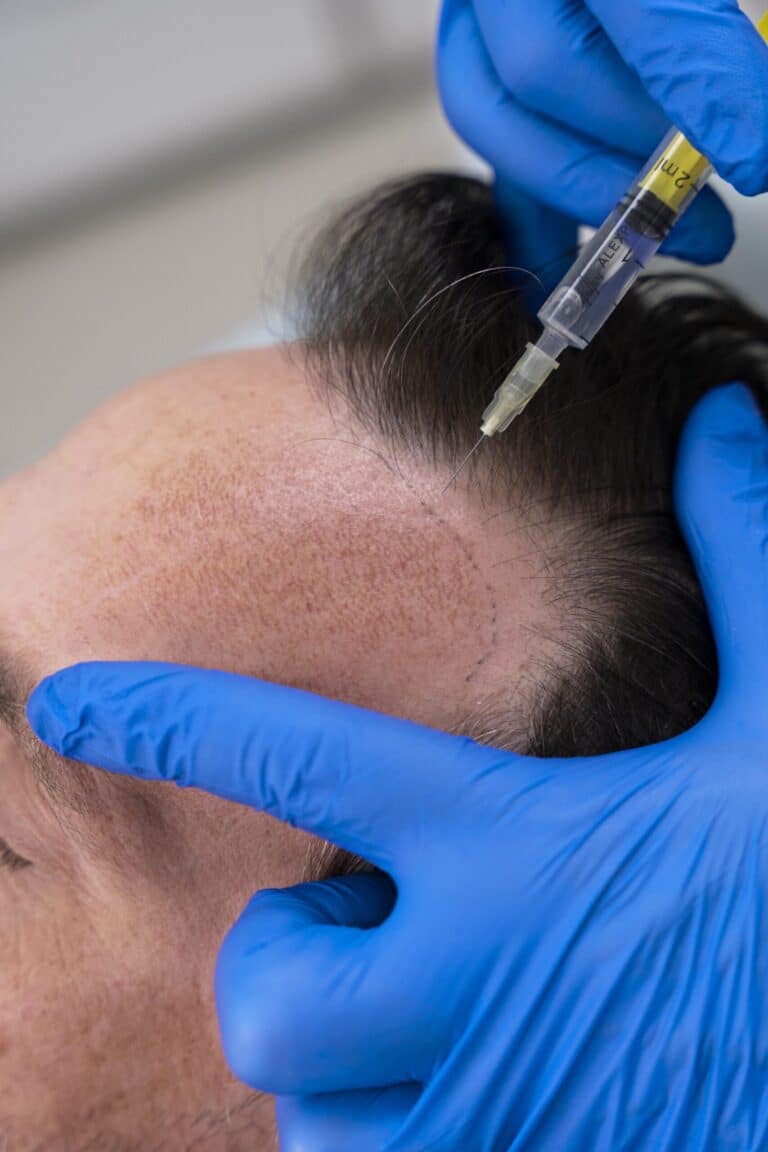
The hands-on day is in person, at an instructor’s practice or inside yours.



Common questions
What Washington, DC providers ask before they book.
How much does training in Washington, DC cost?
Training inside your own practice in Washington, DC starts at $10,000, with the instructor's travel and lodging included. Training at an instructor's location starts at $5,000. Both are starting points. The quote depends on the discipline, the instructor, how many people are training and how much of the curriculum is built around you.
Does the District have a stem cell law?
We found no District law written specifically for stem cell products as of September 2026. The closest is the tissue bank law: only licensed physicians and hospitals may hold a District tissue bank license, and the facility must be accredited by the American Association of Tissue Banks. Your license and federal rules cover the rest. Whether a product or a storage setup falls under the tissue bank law is a question for your counsel and your board. Our reading of the District, with sources, is on the rules by state page.
Can a D.C. NP or PA do the hands-on part?
Within your District scope, yes. Nurse practitioners have full practice here, and the code section on APRN collaboration was repealed in 2024. A physician assistant works in collaboration with a physician, inside what the Board of Medicine authorizes. Tell us your arrangement when we plan the session, and the hands-on plan follows it before you book.
I'm not licensed in the District. Can I train in Washington, DC?
Let us know when you ask for a date. When the instructor comes to you, you train in your own practice under the license you hold there, whether that is in Maryland, Virginia or anywhere else. When you go to an instructor's practice, your hands-on role depends on your licensure where that practice is, and we agree it with you before you book.
Request a date now
Tell us about your practice and when you'd like to train.
Ready to add PRP or another regenerative procedure in Washington DC? A few quick questions, one screen at a time. Nothing here commits you to a date. A person reads every request and calls you back within one business day.
From the blog
Read it here, then do it in a course.
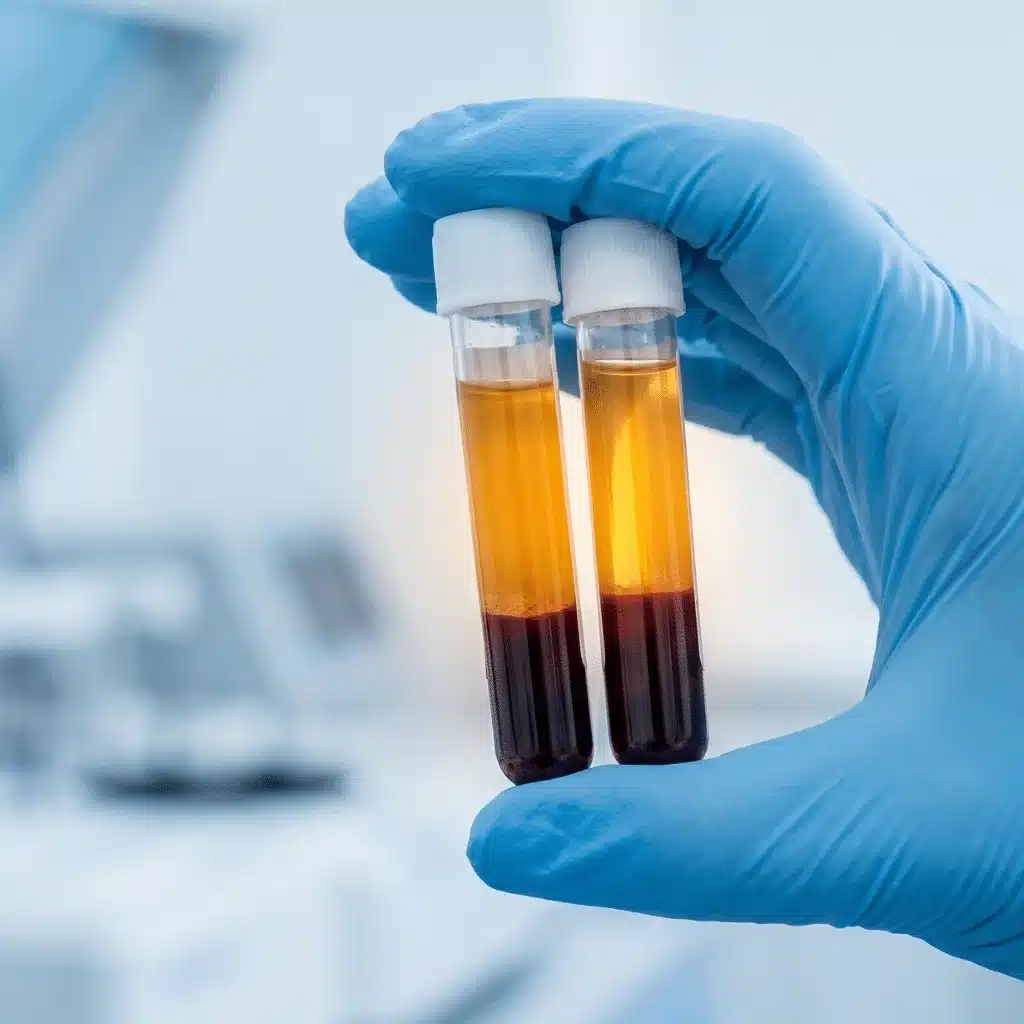
The role of growth factors in regenerative medicine: a clinical primer
Read the postPlatelet count is not the dose. A primer on the growth factors that do the work, why preparation…
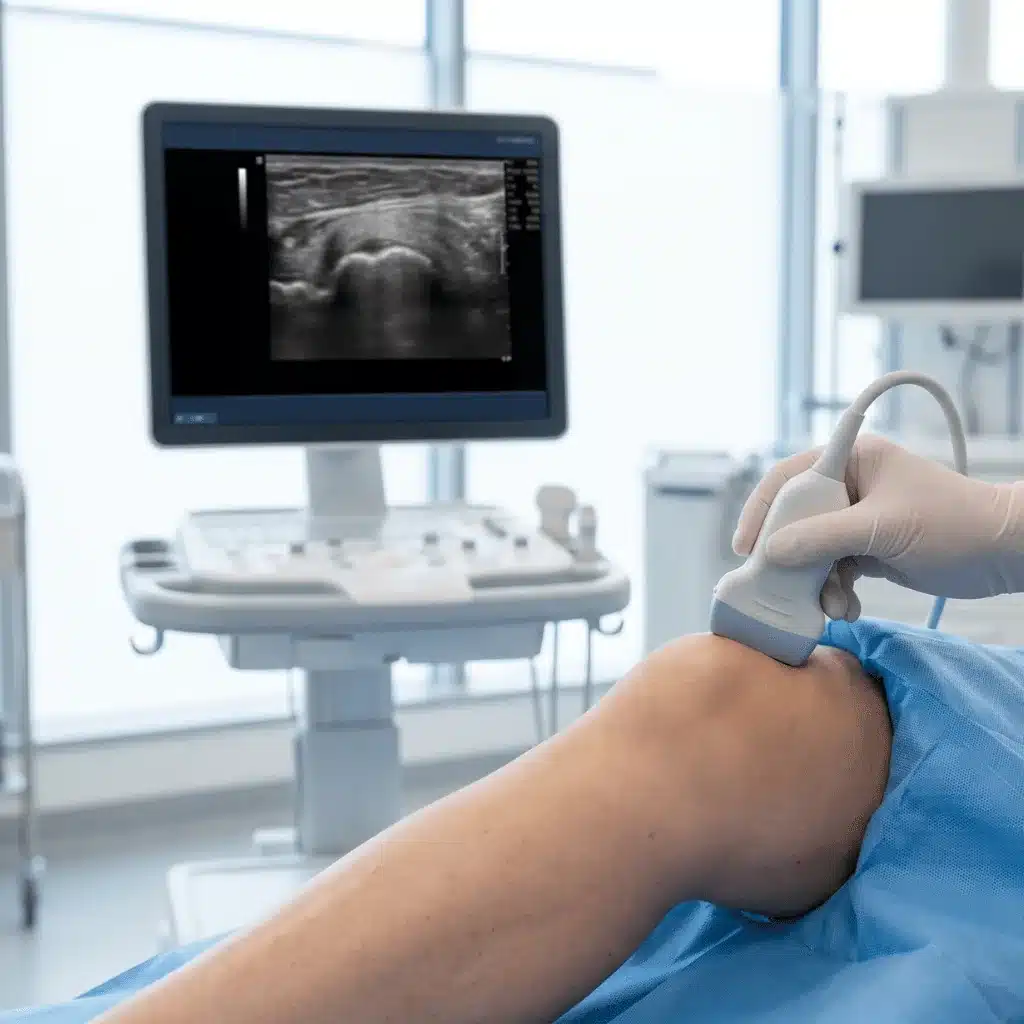
Ultrasound-guided injection techniques in regenerative medicine: why training matters
Read the postGuidance puts the needle where it belongs. It does not make you competent. What the accuracy evidence shows…
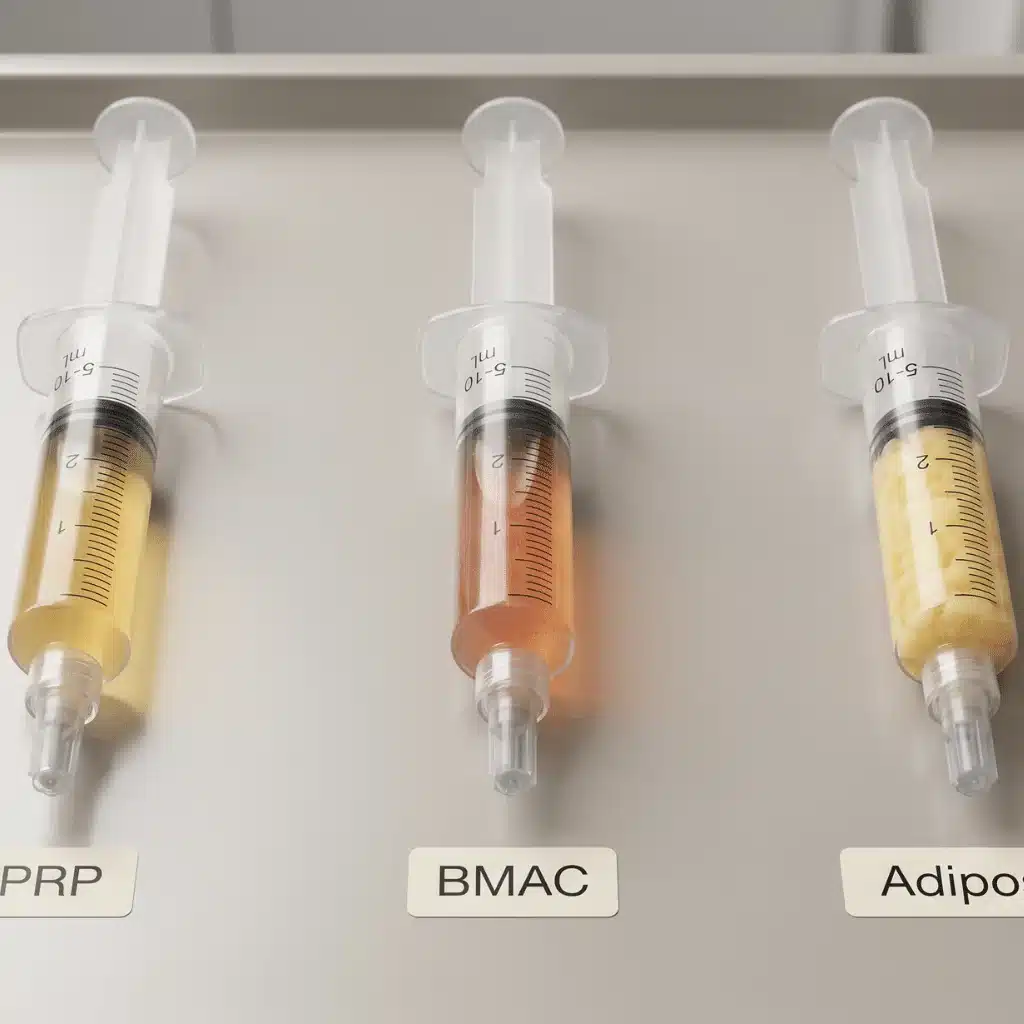
PRP vs. BMAC vs. adipose: comparing orthobiologic treatment options
Read the postPRP, BMAC and adipose are three different tools, not one product with three names. How to match modality…
Important information
Read this before you book.
Know what a course is not before you book. It won’t make you a specialist. It carries no CMEs, credit hours or accreditation, and it doesn’t cover your malpractice: you arrange that yourself. No one can promise you outcomes. It is education for licensed providers, not medical or legal advice, and some products and modalities discussed are not FDA approved or cleared for the uses discussed. The Certificate of Completion is not a license or a board certification, and it does not expand your scope of practice. Read the full notes.