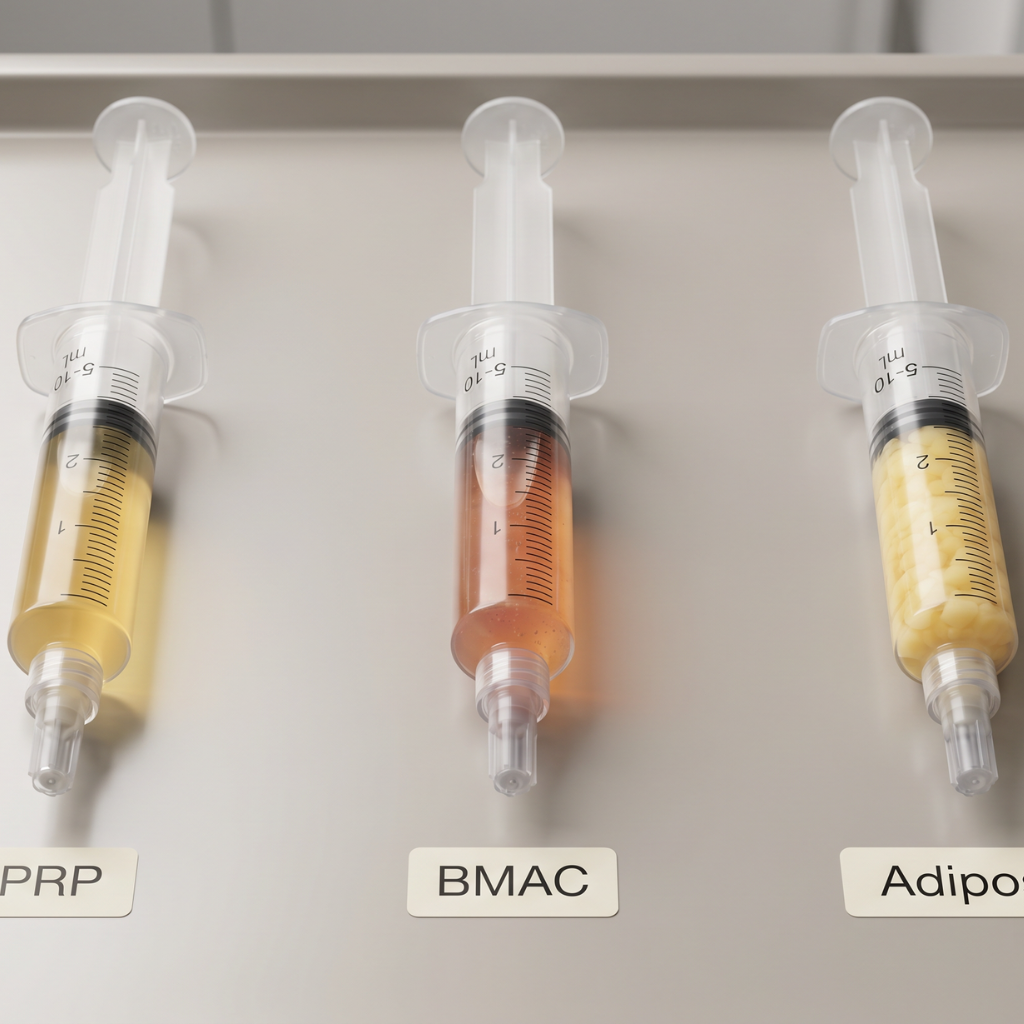
Autologous orthobiologics have moved from a single-modality conversation to a comparison-driven one. Clinicians routinely choose between platelet-rich plasma (PRP), bone marrow aspirate concentrate (BMAC), and adipose-derived products for the same patient and the same joint. The choice matters, because these three modalities differ in source tissue, cellular composition, regulatory pathway, invasiveness, evidence base, and cost. This guide walks through the comparison in a way that helps clinicians match modality to indication rather than fit every patient to a single tool.
TLDR: PRP, BMAC, and adipose-derived products are the three most commonly used autologous orthobiologics, and they are not interchangeable. PRP is the least invasive, has the broadest evidence base, and is the lowest-cost option. BMAC and adipose-derived products contain mesenchymal-type cells in addition to growth factors, are more invasive to harvest, and are more expensive. All three are used largely off-label for musculoskeletal indications, and all three are overwhelmingly cash-pay. Direct head-to-head comparative data are limited but growing, and no single modality is “best” across the board. The right choice depends on indication, patient factors, clinician training, and regulatory framing. Individual results vary.
Important Disclaimer
Regenerative Medicine Academy (RMA) is an education company providing training for licensed clinicians. This article is educational content only and does not constitute medical, legal, business, tax, or financial advice, nor a guarantee of clinical or financial outcomes. Platelet-rich plasma (PRP), bone marrow aspirate concentrate (BMAC), and adipose-derived products are subject to FDA regulation, state scope-of-practice rules, and professional society standards. Many uses discussed are off-label; enzymatically digested stromal vascular fraction (SVF) is considered a drug by the FDA and requires pre-market approval. Clinicians are responsible for verifying FDA device and biologic status, state scope-of-practice requirements, informed consent obligations, malpractice coverage, corporate-practice-of-medicine rules, and applicable advertising laws (FDA, FTC, and state) before performing any orthobiologic procedure. Comparative clinical and outcome data are heterogeneous; individual results vary. Consult qualified legal, compliance, and medical professionals before acting.
Walk into three different orthobiologic clinics and you are likely to hear three different answers to the same clinical question. One will recommend PRP. Another will recommend BMAC. A third will recommend adipose-derived treatment. Each clinician will have a clinical rationale, a marketing position, and a preferred protocol. The patient, meanwhile, has to decide based on advertising language that often blurs the distinctions the FDA draws between these products.
The right way to think about PRP, BMAC, and adipose-derived products is as three genuinely different tools, each with real strengths and real limitations. When a practice offers all three, and knows when to use each, patients get better matched care and the practice builds defensible clinical judgment. When a practice reaches for the same tool every time, or markets “stem cell therapy” as a generic brand that covers everything from plasma to fat, the result is blurred consent, uneven outcomes, and regulatory exposure.
This guide walks through the comparison: the vocabulary, the biology, the harvesting and processing differences, the shared regulatory framing, the published evidence, patient selection, cost, safety, and the training implications. The thread running through it is simple: match the modality to the patient, match the language to the regulation, and do not collapse these three products into a single story.
Vocabulary discipline: what these words actually mean
Before any comparison, the terms need to be clean. The research and regulatory worlds draw sharp lines here, and marketing language often blurs them in ways that create problems later.
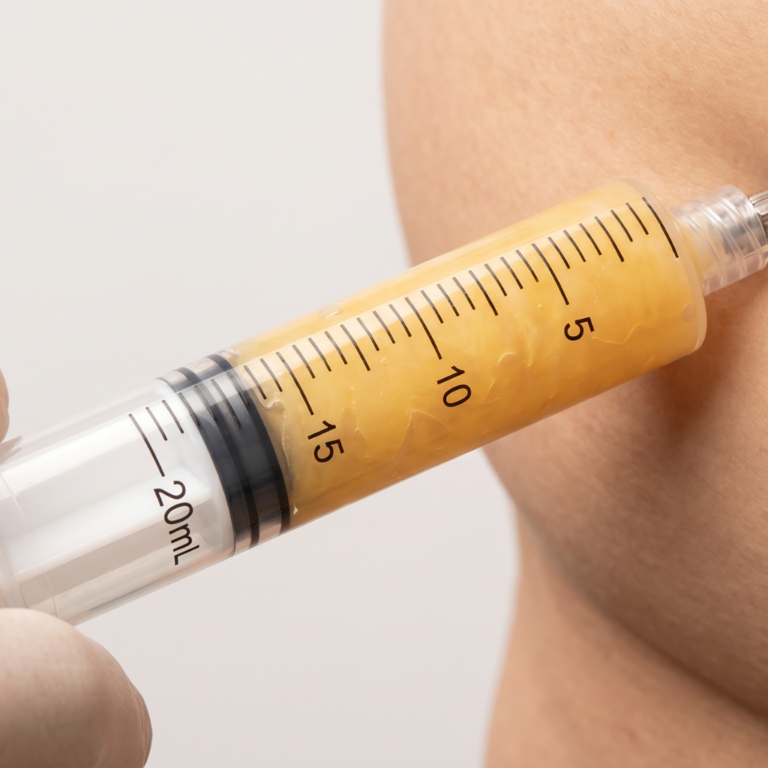
Platelet-rich plasma is a concentrated platelet preparation from autologous whole blood. It contains platelets and the growth factors they release, including platelet-derived growth factor, transforming growth factor-beta, vascular endothelial growth factor, epidermal growth factor, and insulin-like growth factor-1. PRP does not contain nucleated stem cells.
Bone marrow aspirate concentrate is the product produced when bone marrow aspirate, usually drawn from the iliac crest, is concentrated by centrifugation. The resulting concentrate contains platelets and growth factors, a population of mesenchymal stromal cells (often abbreviated as MSCs), hematopoietic stem cells, and a variety of other nucleated cells and cytokines. The MSC concentration in bone marrow aspirate is small to begin with, typically on the order of 0.01 to 0.02 percent of total cells, so concentration is the point of BMAC processing.
Adipose-derived products span a gradient. Autologous fat graft is fat moved from one site to another in the same patient. Microfat and nanofat are mechanically processed adipose preparations used mostly in aesthetic applications. Microfragmented adipose tissue, or MFAT, is fat that has been broken down into smaller clusters through a closed-system mechanical device without enzymes. Stromal vascular fraction, or SVF, is an enzymatically or mechanically prepared cell-rich fraction containing adipose-derived stem cells (ADSCs). Culture-expanded ADSCs are a purified, expanded cell product.
Clinicians sometimes use “stem cell therapy” as a generic label for any of these products. That habit is both clinically imprecise and regulatorily risky. PRP has no stem cells. BMAC has MSCs at low concentration. MFAT contains ADSCs within preserved perivascular niches. SVF is a cell-rich fraction. Each of these sits in a different FDA regulatory box, and conflating them is one of the most common marketing mistakes in this field.
What this means in practice: use the specific term for the specific product. “PRP,” “BMAC,” “MFAT,” and “SVF” are not interchangeable, and collapsing them into “stem cell therapy” will attract attention from regulators who pay very close attention to how these products are described.
Comparative biology, in plain language
The three modalities differ at every level: source tissue, cellular composition, mechanism of action, and typical delivery volume. The table below summarizes the practical differences.
| Property | PRP | BMAC | MFAT and adipose-derived |
| Source tissue | Peripheral blood | Bone marrow (usually iliac crest) | Subcutaneous fat |
| Stem cells present | None; platelets and growth factors only | Mesenchymal stromal cells at low percentage of total marrow cells | Adipose-derived stem cells within preserved perivascular niche |
| Primary proposed mechanism | Growth-factor signaling and modulation of inflammation | Growth factors plus paracrine signaling from mesenchymal cells, with modest cell engraftment | Paracrine signaling from adipose-derived cells and structural matrix support |
| Typical injection volume | Small, often in the range of several milliliters | Moderate, often larger than PRP and usually in the tens of milliliters | Variable, typically moderate |
| Activation often used | Sometimes, with calcium chloride or in-situ collagen | Generally not added | Generally not added |
It is worth pausing on one marketing claim that appears often in industry literature: that MFAT contains roughly 100 times more “stem cells” than BMAC. That figure is vendor-published and should be treated with healthy skepticism. Peer-reviewed yield comparisons show MFAT does contain more mesenchymal-type cells per unit volume than unconcentrated bone marrow, but the specific multiplier depends on the preparation method, the patient, and the counting methodology, and the clinical implications are not established. The most defensible framing is that MFAT has a higher mesenchymal cell density than BMAC, not a specific headline multiple.
Harvesting and processing: the practical differences
If biology sets the theoretical distinction between these modalities, harvesting and processing set the practical one. A clinician decides which modality to offer in part based on what they can safely and reproducibly perform in their setting.
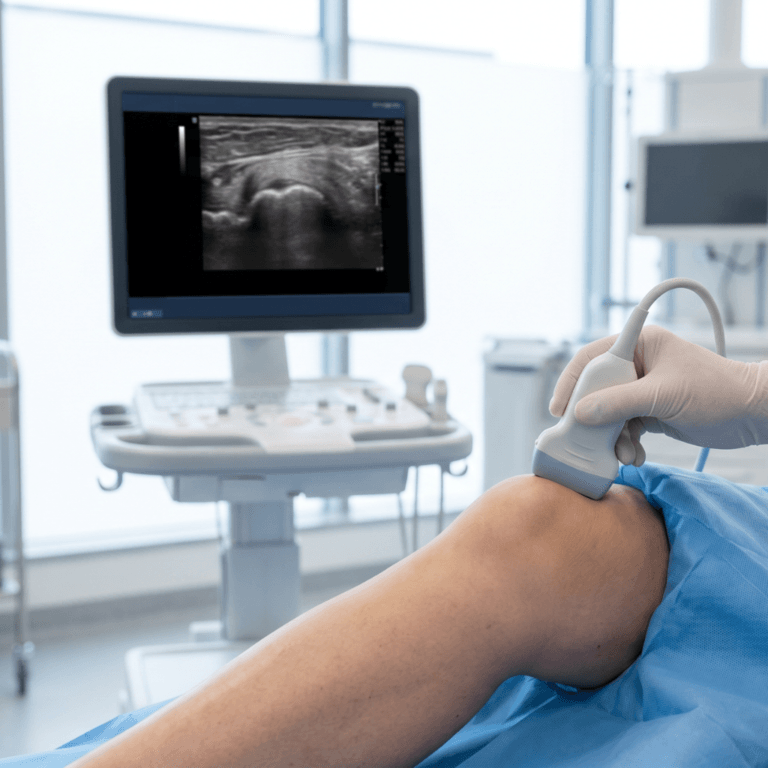
PRP harvest is the least invasive. A peripheral venipuncture yields 30 to 60 mL of blood, which is processed by single or double centrifugation to produce a platelet concentrate. Operator skill is relatively low, though accuracy at the injection site matters enormously, which is why ultrasound-guided musculoskeletal injections are the standard of practice. Total procedure time is commonly 45 to 75 minutes, most of which is intake, draw, processing, and education rather than the injection itself.
BMAC harvest is moderately invasive. The posterior iliac crest is the most common donor site, with the Hernigou zone model guiding entry-point selection. Aspirated volumes vary widely in published protocols, from tens to more than a hundred milliliters. Small-volume aspirations at each entry point matter because aspirating too much bone marrow at a single site causes peripheral blood dilution and reduces mesenchymal cell concentration. Whether to use single-level or multi-level aspiration remains debated in the literature; 2024 evidence suggests single-level aspiration may yield higher purity of CD105+/CD73+/CD90+ mesenchymal cells with better osteoblastic differentiation, while other studies favor small-volume multi-aspiration for higher concentration. Processing is single-spin density gradient centrifugation. Different concentration systems enrich mesenchymal cells at different rates; one published comparison showed roughly 11-fold and 5.6-fold enrichment versus unconcentrated marrow for two commonly used systems. Operator skill is moderate to high because bone aspiration anatomy and needle handling are not forgiving of imprecision.
Adipose harvest is moderately invasive and uses a different skill set entirely. Under tumescent anesthesia, adipose tissue is aspirated from the abdomen, flanks, thighs, or similar donor site. Typical harvest volumes for regenerative use range from 60 to 250 mL. Processing depends on the intended product: decantation and washing for simple fat grafting, centrifugation for Coleman structural grafts, mechanical emulsification for nanofat, or a closed-system device for MFAT. Enzymatic digestion to produce SVF is a Section 351 drug-manufacturing step and is not legal in-clinic absent a registered Investigational New Drug application. Operator skill is high because liposuction technique, tumescent pharmacology, and processing system competence all have to come together.
The table below summarizes the operational comparison.
| Step | PRP | BMAC | Adipose and MFAT |
| Donor site | Antecubital vein | Posterior iliac crest most common | Abdomen, flanks, thighs |
| Anesthesia | Topical plus venipuncture | Local; conscious sedation often used | Tumescent local anesthesia |
| Invasiveness | Lowest | Moderate | Moderate |
| Volume aspirated | 30 to 60 mL blood | Tens to more than 100 mL marrow | 60 to 250 mL lipoaspirate |
| Processing | Single or double centrifugation | Single-spin density gradient | Mechanical fragmentation, decantation, or centrifugation |
| Total procedure time | Approximately 45 to 75 minutes | Approximately 60 to 90 minutes | Approximately 60 to 120 minutes |
| Operator skill required | Low to moderate | Moderate to high | High |
The shared regulatory framing
All three modalities sit under the same FDA framework, and the compliant language is similar across them. PRP preparation systems are 510(k)-cleared as Class II devices for tissue handling in the context of autologous bone graft; clinical injection uses are off-label. BMAC concentration systems are FDA-cleared as devices for bone marrow concentration; clinical injection for specific musculoskeletal indications is off-label. MFAT devices, such as the Lipogems system, are 510(k)-cleared for tissue handling in general orthopedic, arthroscopic, and several other specialty applications; use for specific named indications remains off-label pending approved labeling.
Clinic-prepared enzymatic SVF is the outlier. The FDA has long treated enzymatically digested SVF as a drug, and two federal appellate courts have now affirmed that position: the Eleventh Circuit in U.S. v. US Stem Cell Clinic (2021) and the Ninth Circuit in U.S. v. California Stem Cell Treatment Center (2024). In both decisions, the courts rejected the arguments that SVF is not a drug and that clinic-prepared SVF qualifies for the same-surgical-procedure exception. Clinicians offering SVF outside a registered IND are operating in a space the FDA and two circuits have said is not legal. Culture-expanded ADSCs or MSCs are also regulated as biologic drugs under Section 351 of the Public Health Service Act and are investigational only absent FDA approval. The FDA’s patient and consumer information on regenerative medicine therapies is the cleanest patient-facing summary of this regulatory posture and names orthopedic indications explicitly among those not approved.
What this means in practice: all three mainstream modalities (PRP, BMAC, MFAT) require the same language discipline. Describe the device as FDA-cleared or 510(k)-cleared, describe the specific clinical use as off-label, and do not imply FDA approval for a named condition.
What the published evidence actually says: knee osteoarthritis
Knee osteoarthritis is the most actively studied orthobiologic indication and the best place to compare modalities with real data.
A randomized controlled trial published in Medicina in 2021 assigned 175 patients with Kellgren-Lawrence grade II to IV knee OA to BMAC, PRP, or hyaluronic acid. BMAC produced better clinical improvements at 12 months than either PRP or hyaluronic acid, and PRP outperformed hyaluronic acid. This is one of the few direct head-to-head RCTs comparing these modalities, and it is widely cited despite being a single-study signal rather than a settled conclusion.
A 2024 Bayesian network meta-analysis of 48 studies covering more than 9,000 knees evaluated intra-articular options for knee OA at minimum six-month follow-up. Both PRP and BMAC produced significant pain and function improvements versus placebo. The surface under the cumulative ranking curve (SUCRA) ordering placed PRP near the top, BMAC next, hyaluronic acid lower, corticosteroid below that, and placebo last. One caveat is worth noting: BMAC was represented in only about 2.5 percent of the underlying studies, which limits confidence in its relative ranking compared to PRP’s much larger evidence base. Network meta-analyses are a useful synthesis tool but have meaningful limitations, particularly when the underlying studies differ in preparation protocols, patient selection, and outcome measures. The practical takeaway is that PRP and BMAC both show benefit versus placebo in aggregate and that neither can be declared definitively superior for knee OA in the current evidence.
A 2025 systematic review of intra-articular orthobiologic injections for hip OA reported that hyaluronic acid, PRP, BMAC, MFAT, and mesenchymal cell-based injections all show promising short-term results across validated outcome measures, with durability beyond one year still requiring more rigorous RCTs.
Retrospective comparisons of MFAT versus BMAC in knee OA have generally shown equivalent results between the two modalities. A prospective randomized trial protocol from the Filardo group in Bologna was released in 2025 to directly compare BMAC and MFAT, and its results will be worth watching.
Mayo Clinic’s 2025 position on PRP and BMAC for knee OA notes that BMAC has not consistently shown superior benefit over PRP in the studies to date, and emphasizes the heterogeneity of the PRP literature. Some trials labeled “PRP” used products concentrated to only 1.5 to 2 times baseline platelet levels, which many authors would not consider therapeutic PRP at all. That observation matters because it shapes how any single trial should be interpreted: the label on the tube is not the same as the dose delivered.
Professional society guidance is a useful anchor for patients asking what “the field” recommends. The American Academy of Orthopaedic Surgeons clinical practice guideline for management of knee osteoarthritis (nonarthroplasty) evaluates PRP and other injectable options and is a primary reference for clinicians discussing evidence strength with patients. For broader systematic reviews across orthobiologic injections and for keeping pace with new network meta-analyses, the Cochrane Library and the PubMed database of biomedical literature remain the most reliable starting points.
What this means in practice: the honest answer when a patient asks which modality is “best” for their knee OA is that PRP and BMAC both show meaningful benefit versus placebo, that MFAT appears comparable to BMAC in retrospective comparisons, that head-to-head randomized data are limited, and that no modality can be honestly described as definitively superior.
Matching modality to indication: a framework, not a formula
Even without definitive head-to-head evidence, clinicians can make reasoned choices based on the biology, invasiveness, cost, and the pattern of published results.
For mild to moderate knee osteoarthritis or early tendinopathy, PRP is often the first-line orthobiologic because it is the least invasive, the lowest cost, and has the broadest evidence base across indications. For moderate to severe knee or hip OA, or for partial tendon tears where MSC-containing products may offer a stronger regenerative signal, BMAC or MFAT are reasonable considerations. For patients with BMI or medical considerations that make bone marrow aspiration undesirable, MFAT may be a better match because adipose is more accessible in higher volume. For aesthetic volumization and soft-tissue augmentation, microfat and nanofat remain the standard tools. For hair-related aesthetic applications, PRP is the most established orthobiologic, with microfat emerging in certain protocols.
One practical overlay: each modality has medication and patient-factor sensitivities worth reviewing during intake. PRP response can be blunted by NSAIDs in the peri-procedural window. BMAC yield can be reduced by inhaled steroids, fluoroquinolones, and statins, and declines with patient age. MFAT yield and tissue character can be affected by elevated BMI, diabetes, prior radiotherapy, and certain medications such as tamoxifen; the highest-yield donor site in younger patients is often the abdomen above Scarpa’s fascia, while elderly patients may yield relatively more in the thighs or arms. These are not absolute contraindications. They are planning factors that shape patient selection and consent.
Cost and access: the cash-pay reality
All three modalities are essentially cash-pay for musculoskeletal indications. Medicare covers PRP only for chronic non-healing diabetic wounds under defined conditions. Commercial payers generally classify all three as investigational for musculoskeletal use. BMAC and MFAT are generally not covered for MSK indications.
Published price ranges illustrate the ordinary shape of the market. A nationwide pricing study of U.S. orthopedic hospitals placed PRP session pricing between roughly $350 and $2,815, with a median near $800. BMAC session pricing commonly falls in the $2,500 to $7,500 range, though practice-level variation is wide. MFAT session pricing typically falls in the $3,500 to $8,000 range. These are published industry and practice ranges, not recommendations, and individual pricing should reflect fully loaded costs, market position, and honest informed financial consent.
The cash-pay dynamic matters for patient selection and conversation. A patient weighing PRP versus MFAT is weighing not just biology but a significant cost difference, and the conversation needs to be honest about the size of the delta, the strength of the evidence for their specific indication, and the realistic probability of response.
Safety profile, compared directly
Safety across the three modalities is broadly favorable, with the important note that adverse events are often under-reported in this literature and that ascertainment methods vary across studies.
PRP has the lowest invasiveness and the lowest mechanical risk profile. Common events are transient post-injection soreness, mild swelling, and local bruising. Serious events are very rare when sterile technique and appropriate patient selection are used.
BMAC introduces the risks of bone aspiration: iliac crest soreness for a week or two after the procedure, rare hematoma, and very rare neurovascular injury or infection. The technique requires familiarity with aspiration anatomy, and the literature supports adequate needle-handling training before independent practice.
Adipose harvest carries the risks of liposuction, most notably the pharmacologic risk of local anesthetic systemic toxicity. Tumescent lidocaine plasma peaks are delayed, typically 12 to 14 hours after infiltration, so LAST risk persists after the case ends. Drug-drug interactions, particularly with CYP3A4 inhibitors such as sertraline and certain benzodiazepines, can shift the safety window. Donor-site findings include bruising, numbness, and contour irregularities that are typically mild and self-limited, along with rare serious events such as fat embolism and abdominal perforation.
Across all three, because the products are autologous, allergic and rejection risks are minimal.
Training implications: what a full-modality practice looks like
The training barrier rises with the modality. A practice offering only PRP needs venipuncture, centrifugation, and injection technique, with ultrasound skill for musculoskeletal targets. A practice adding BMAC needs bone aspiration technique, anatomic landmarking, decisions about single-level versus multi-level aspiration, and sedation considerations. A practice adding adipose-based work needs tumescent pharmacology, liposuction skill, processing system competence, and the regulatory fluency to keep SVF-related marketing on the right side of a pair of federal appellate rulings.
The payoff of full-modality training is clinical flexibility. A clinician who can perform all three confidently can match modality to indication and patient factors rather than offering the same product to everyone who walks in. Clinicians building that breadth can explore RMA’s hands-on MSK and orthobiologic curriculum for procedural depth across PRP, BMAC, and adipose-based techniques. Didactic foundations for biology, regulation, and preparation science are covered in RMA e-learning modules. Clinicians whose practice extends into aesthetic applications of adipose products will often benefit from aesthetic regenerative medicine coursework. The full catalog is organized through the RMA homepage for clinicians comparing tracks.
A composite clinical vignette: one patient, three reasonable answers
The following is a fictional composite based on patterns described in the published literature. It does not describe a real patient.
A 62-year-old former runner presents with bilateral medial-compartment knee osteoarthritis, Kellgren-Lawrence grade II on the right and grade III on the left. Conservative care has plateaued. Imaging shows moderate cartilage loss without meniscal fragmentation. BMI is 29. The patient is on a statin and an SSRI. She is a good candidate for orthobiologic treatment and asks which option she should choose.
A practice that offers only PRP will recommend PRP, supported by the strength of the PRP literature in mild-to-moderate OA and the lower cost. A reasonable clinical case.
A practice that offers only BMAC will recommend BMAC, supported by the direct RCT signal favoring BMAC at 12 months and the stronger biological rationale for the more advanced grade III knee. A reasonable clinical case.
A practice that offers MFAT will recommend MFAT, supported by equivalence data versus BMAC in retrospective comparisons and the growing prospective evidence for knee OA. A reasonable clinical case.
The most honest version of the conversation is the one in which the clinician lays out all three options, explains the evidence strength and cost for each, discusses the invasiveness trade-offs, acknowledges the head-to-head gap, and helps the patient choose based on her values and constraints. That conversation is only possible in a practice where the clinician can legitimately perform all three procedures, or refer for the ones they cannot.
Common pitfalls when comparing and marketing these modalities
A few patterns drive most of the problems practices run into when they work across these three modalities.
The first is over-claiming superiority. Head-to-head RCT evidence is limited. Framing any single modality as “the best” or “the next generation” is both clinically inaccurate and a marketing overreach that regulators and plaintiff attorneys find easy to cite.
The second is conflating products. Using “stem cell therapy” as an umbrella label that covers PRP, BMAC, and adipose-based products is both clinically imprecise and a specific pattern the FDA has warned against. PRP is not stem cell therapy.
The third is over-promising regeneration. The honest framing of these modalities is symptom support with possible tissue effects that are heterogeneous across the published literature. Language that implies cartilage regrowth, tissue regeneration, or cure is not defensible and is not supported by the imaging and outcome data.
The fourth is offering enzymatic SVF as a clinical service. Two federal appellate courts have now rejected the legal arguments that underpin that offering. Clinicians who continue to offer SVF-based treatments outside a registered IND are operating in a legal posture that the FDA has said repeatedly is not legal, and the 2024 Ninth Circuit ruling has extended that posture across additional geography.
The fifth is implying insurance coverage for MSK use of these products. Outside the narrow Medicare wound-care exception for PRP, these modalities are cash-pay. Insurance-based marketing is both factually wrong and a source of patient complaint.
Frequently asked questions from clinicians
Is one modality definitively better than the others for knee osteoarthritis?
No. A 2024 Bayesian network meta-analysis ranked PRP near the top, BMAC next, and hyaluronic acid and corticosteroid below both, with all three superior to placebo. A 2021 randomized trial favored BMAC over PRP and hyaluronic acid at 12 months. Retrospective comparisons place MFAT and BMAC at roughly equivalent performance for knee OA. Head-to-head data across all three modalities remain limited. The honest framing is that PRP and BMAC both show benefit versus placebo in aggregate, no modality can be described as definitively superior, and patient-level selection should reflect indication severity, patient factors, invasiveness tolerance, and cost.
How should we choose between BMAC and MFAT for a patient who is a good candidate for either?
Consider patient factors first. Patients with bone marrow quality concerns (advanced age, certain medications, prior chemotherapy or radiation) may be better served by MFAT. Patients with elevated BMI, diabetes, or specific medication profiles that affect adipose yield may be better served by BMAC. Practice factors matter too: BMAC requires bone aspiration skill; MFAT requires liposuction skill and tumescent pharmacology competence. Either way, transparent informed consent about the off-label status, the evidence base, and the cost is essential.
Is SVF a legal option for in-clinic treatment?
Not outside a registered Investigational New Drug application. The FDA has classified enzymatically digested SVF as a drug, and two federal appellate courts have affirmed that position: the Eleventh Circuit in 2021 and the Ninth Circuit in 2024. Mechanically prepared SVF-like products are in a more ambiguous regulatory space, and the status of a specific mechanical method depends on its exact processing steps. Clinicians considering any SVF-related service should consult counsel and confirm the FDA framing for the specific system.
What should we charge for each modality?
Pricing should reflect fully loaded costs, local market, and positioning rather than a single national benchmark. Published ranges place PRP roughly $350 to $2,815 per session with a median near $800, BMAC commonly $2,500 to $7,500, and MFAT commonly $3,500 to $8,000. Transparent written pre-procedure pricing disclosure is both good consumer practice and useful compliance hygiene.
How do we train a practice to offer all three?
Plan on a progression. PRP is usually the entry modality because it is the least invasive and the lowest skill barrier. BMAC is typically added next, with structured training in bone aspiration technique, Hernigou zone anatomy, and concentration system operation. Adipose-based work is often the highest-barrier addition because it requires tumescent pharmacology, liposuction skill, processing competence, and particular attention to the regulatory boundary between MFAT and SVF. Programs that cover all three in one curriculum are more efficient than piecing training together from separate sources.
How should we talk to patients who have already had an unsuccessful treatment elsewhere?
Start by reviewing the prior workflow. Ask about the specific product, dose and preparation where known, imaging guidance at the injection site, medication use around the procedure, and post-procedure instructions. Many apparent failures reflect preparation or delivery gaps rather than the underlying modality. A candid conversation about what is known, what is uncertain, and what response factors look like helps the patient decide whether a second attempt with the same modality, a switch to a different modality, or a different path altogether is appropriate.
Can we market these as “stem cell therapy”?
Not for PRP, which contains no stem cells. For BMAC and MFAT, the more precise terms (“bone marrow aspirate concentrate,” “microfragmented adipose tissue,” or equivalent) are both clinically accurate and regulatorily safer. “Stem cell therapy” as a generic marketing label is a pattern the FDA has specifically warned against, and clinicians should pair any use of “stem cell” language with clear off-label framing and precise product identification.
Key takeaways
- PRP, BMAC, and adipose-derived products are three genuinely different modalities with different biology, different invasiveness, different cost structures, and different regulatory framing.
- PRP contains no stem cells. BMAC and MFAT contain mesenchymal-type cells at different densities. SVF is a drug per FDA and two federal appellate courts.
- All three mainstream modalities are used largely off-label for musculoskeletal indications, and all three are overwhelmingly cash-pay.
- Head-to-head evidence is growing. PRP and BMAC both show benefit versus placebo in aggregate. Retrospective MFAT versus BMAC comparisons show roughly equivalent results. Definitive superiority has not been established.
- Match modality to indication and patient factors rather than fitting every patient to one tool.
- Training barriers rise from PRP to BMAC to adipose-based work, and full-modality practices need structured curricula across all three.
- Avoid conflating products under the “stem cell therapy” label, avoid claims of cartilage regeneration, and avoid implying insurance coverage for MSK use.
RMA Disclosure
Regenerative Medicine Academy (RMA) is an education company that provides clinician training in some of the techniques discussed in this article. This content is educational and does not constitute a claim of clinical superiority, a guarantee of outcomes, or a substitute for individual clinical judgment.
Clinicians evaluating a single-modality or multi-modality orthobiologic service line can explore hands-on procedural curricula, didactic foundations, and aesthetic-focused programs through RMA. The course catalog is organized to support either depth in a single modality or breadth across PRP, BMAC, and adipose-based techniques, depending on your practice goals.