
Where we train
Regenerative Medicine Training in Baltimore, Maryland
PRP and regenerative medicine training for licensed providers in Baltimore and across Maryland. It’s private and hands-on, on a live consenting patient.

Live patients
Private training
Practicing clinicians
U.S. based, worldwide
Training in Baltimore
Around Baltimore, training reaches the city and the counties that surround it: Baltimore County from Towson to Owings Mills, Howard County around Columbia and Ellicott City, Anne Arundel down to Annapolis, and Harford to the northeast. Frederick is about an hour west on I-70, and the Washington suburbs are about an hour south.
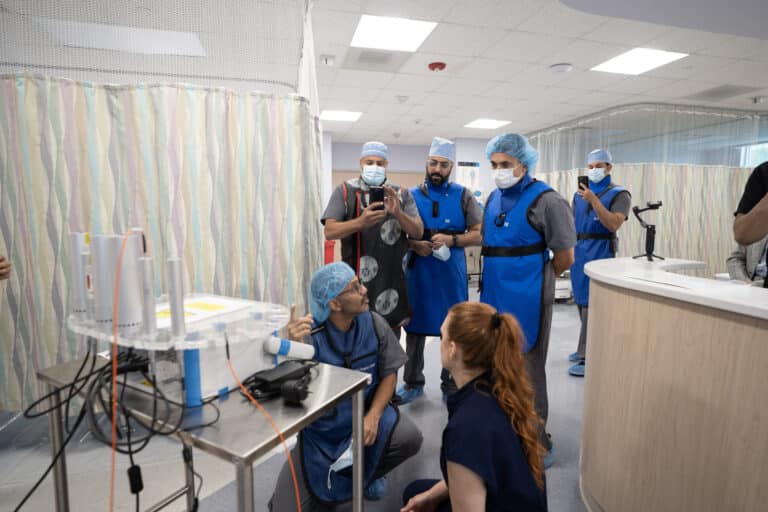
You choose where the training happens. The instructor can come to your practice and teach you and your staff on the equipment you use every day, with travel in the quote, or you can come to an instructor’s own working practice. Both are private, with a real and consenting patient, and the scope is fixed before you book.
Who can train? Anyone legally able to provide the treatment in Maryland. Each license has its own definition in the Health Occupations Article, and the state adds its own tissue bank rules. The two sections below cover both, with the sources linked.

Local detail
Baltimore at a glance.
Where the instructor lands, the counties a Baltimore session covers, and the medicine that grew up here.
Getting here
For training inside your practice, the instructor flies into BWI Thurgood Marshall Airport (BWI), or, for practices closer to Washington, into Ronald Reagan Washington National Airport (DCA). Travel and lodging are covered in the quote.
The area a Baltimore session covers
Baltimore City and Baltimore, Howard, Anne Arundel, Harford and Carroll counties: Towson, Owings Mills, Columbia, Ellicott City, Glen Burnie, Annapolis, Bel Air and Westminster, with Frederick to the west. Montgomery and Prince George’s practices are covered on the Washington, DC page, and those up I-95 on the Philadelphia page.
Johns Hopkins and the University of Maryland
Baltimore providers practice alongside Johns Hopkins Medicine, headquartered in Baltimore, which unites the Johns Hopkins University School of Medicine with The Johns Hopkins Hospital and Health System and counts six academic and community hospitals. The University of Maryland School of Medicine was chartered in 1807 as the first public medical school in the United States, and in 1823 became the first US public medical school to open a teaching hospital. The University of Maryland Medical Center, founded nearly 200 years ago by the school’s physician faculty, calls itself Maryland’s academic medical center and runs Downtown and Midtown campuses.
Across the region
MedStar Health, a not-for-profit, community-based system based in Columbia, has 10 hospitals and more than 300 other care locations across Maryland, Virginia and Washington, D.C. At the University of Maryland Medical Center, the R Adams Cowley Shock Trauma Center describes itself as the nation’s first and only integrated trauma hospital.
Worth knowing
R Adams Cowley, whose name is on the Shock Trauma Center, is described there as the father of trauma care, who gave the world the concept of the Golden Hour. Source
Maryland scope
What each Maryland license allows.
The Health Occupations Article gives each Maryland license its own definition, and that definition is what decides your hands-on role. We set out our reading for every license we train below, as of October 2026, with the statute or regulation linked. It is where to start, not legal advice.
It is your responsibility to confirm the modality is legal in your state for your license. Do that before you book. The authority on your own scope is your licensing board, not us.
Physicians, MD and DO
The Maryland Board of Physicians licenses physicians and other health care providers, physician assistants among them. Source Maryland law defines practicing medicine to include engaging in medical diagnosis, treatment or surgery, and diagnosing, treating, preventing, prescribing for or removing a physical, mental or emotional ailment by appliance, test, drug, operation or treatment. Source Outside hospitals, correctional and public health settings, a patient care team physician may not delegate medical acts under collaboration agreements to more than eight physician assistants at one time. Source
Nurse practitioners
Maryland has full practice for nurse practitioners, according to the AANP. Source State law defines NP practice to include the authority to “prescribe drugs” and to “perform diagnostic, therapeutic, or corrective measures.” Source An applicant for initial NP certification who has not been certified before must name, on the application, a mentor who will consult and collaborate with the applicant for 18 months from the date the Board of Nursing receives it. Source How we read it: a new NP should bring the mentor into the plan for any procedure learned in training.
Physician assistants
A Maryland physician assistant practices under a collaboration agreement with a physician or group of physicians, and may start only after giving the Board of Physicians notice of the executed agreement. The agreement describes the PA’s qualifications, any practice specialty and the settings where the PA will work, and “may include provisions limiting the physician assistant’s scope of practice, specifying office procedures, or otherwise detailing the practice of the physician assistant.” It stays at the practice setting. Source How we read it: read your own agreement for procedure limits before you book.
Registered nurses
Registered nurses are licensed by the Maryland Board of Nursing. Maryland’s definition of practicing registered nursing includes the “execution of therapeutic regimen, including the administration of medication and treatment.” Source How we read it: an RN carries out a regimen that a prescriber has ordered, and does not choose the procedure. For a particular injection, ask the Board of Nursing before you book.
Chiropractors
Maryland defines practicing chiropractic as using “a drugless system of health care based on the principle that interference with the transmission of nerve impulses may cause disease.” The same definition says it “does not include the use of drugs or surgery, or the practice of osteopathy, obstetrics, or any other branch of medicine.” Source How we read it: that language rules out injecting a drug. Take any other question to the State Board of Chiropractic Examiners.
Physical therapists
Maryland’s definition of practicing physical therapy excludes taking X rays, using radioactive substances, and using electricity for cauterization or surgery. Source The Board of Physical Therapy Examiners regulates dry needling, defined as inserting “one or more solid needles” into muscle and related tissues. Source A PT needs at least 80 hours of instruction, 40 of them hands-on under a licensed practitioner’s supervision, and two years of physical therapy practice before dry needling in Maryland. Source How we read it: the rules speak to solid needles only, not to injecting a substance.
Maryland law
The Maryland rules that touch regenerative medicine.
State law in this field changes, sometimes more than once a year. Our reading of each state, with its sources and the date we checked, is on the rules by state page. It is a starting point, not legal advice.
Right to Try, individualized treatments
Maryland’s Right to Try law, as it reads now, covers individualized investigational treatments: a drug, biological product or device “that is unique to and produced exclusively for use by an individual based on the genetic profile of the individual,” including individualized gene therapy, antisense oligonucleotides and individualized neoantigen vaccines. An eligible patient has a life-threatening or severely debilitating illness attested by the treating physician, has considered the other options the FDA has approved, and has given informed consent. Source A manufacturer operating within an eligible facility may provide the treatment without compensation, or require the patient to pay the costs of making it. Source
Tissue bank permits (COMAR 10.50.01)
Maryland’s rules define a tissue bank as “an establishment that obtains, stores, processes, distributes, or sells human blood or other human tissue for use in the human body.” Source A person must hold a permit from the Secretary before operating a tissue bank in Maryland, or representing or servicing in Maryland a tissue bank located in or outside the state. Source How we read it: a practice that stores or sells tissue products should ask the Office of Health Care Quality, which inspects under these rules, whether a permit applies. Source
No stem cell specific law
We found no Maryland law written specifically for stem cell products, as of September 2026. Licensure, the tissue bank rules above and federal law govern instead, and the FDA says it regulates regenerative medicine products. Source
Federal rules still apply
Maryland law sits on top of federal law, not in place of it. The FDA’s rules for human cells, tissues, and cellular and tissue-based products apply in every state. Our summary is in the federal section of the rules by state page.
Formats and pricing
Two ways to train in Baltimore, and both are private.
The hands-on work with a consenting patient is the same either way. What changes is whose room it is, and who from your practice is in it. Both prices are starting points: the quote depends on the course, how many people are training and how much of the curriculum is built around you.
At an instructor location
From $5,000
You come to us, at an instructor’s own working practice.
At your own practice
From $10,000
We come to you, anywhere in Maryland, with the instructor’s travel and lodging inside the quote. What on-site training includes.
Cancel or refund any time up to thirty days out. Inside thirty days, no refund.
On a refund, covering card processing and office costs.
To move your date, covering the travel that moves with it.
Questions about dates, format or fit? Talk to us.
Training courses we offer
Every course runs in Baltimore.
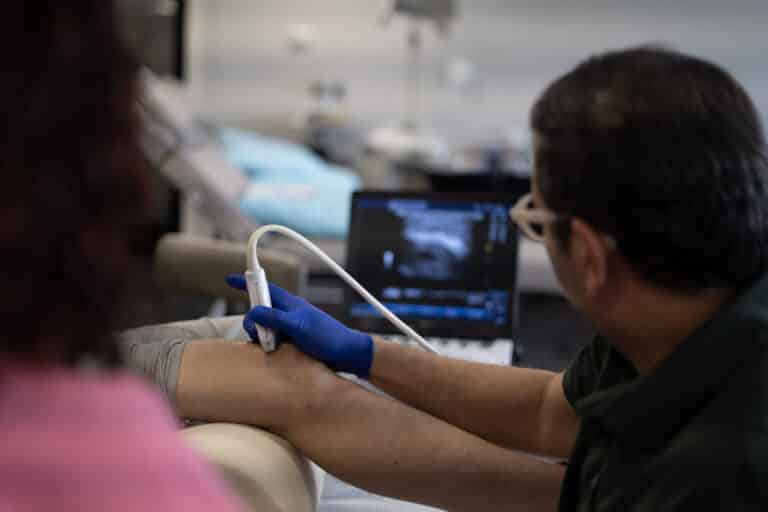
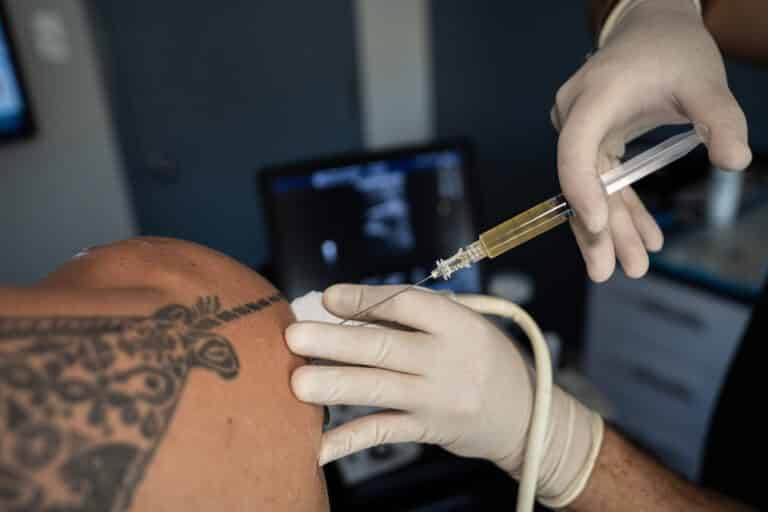
The hands-on day is in person, at an instructor’s practice or inside yours.



Common questions
What Baltimore providers ask before they book.
How much does training in Baltimore cost?
Training inside your own practice in Baltimore starts at $10,000, with the instructor's travel and lodging included. Training at an instructor's location starts at $5,000. Both are starting points. The quote depends on the discipline, the instructor, how many people are training and how much of the curriculum is built around you.
Does Maryland's Right to Try law cover regenerative treatments?
Read it narrowly. As written now, it covers individualized investigational treatments, made for one person from that person's genetic profile, provided by a manufacturer operating within an eligible facility to a patient with a life-threatening or severely debilitating illness. Whether a product you have in mind fits that, or fits the tissue bank rules, is a question for your counsel and your board, not us. The rules by state page has our full reading.
Can a Maryland NP or PA do the hands-on part?
Within your Maryland scope, yes. Nurse practitioners have full practice in Maryland, with a mentor for the first 18 months after initial certification. A physician assistant works under a collaboration agreement, which can limit procedures. Bring the agreement, or your mentor's name, to the planning call, and the hands-on plan is set around it before you book.
I'm not licensed in Maryland. Can I train in Baltimore?
Mention it when you ask for a date. Training inside your own practice runs under the license you already hold where you practice. Training at an instructor's practice depends on whether you are licensed in the state where that practice is, and we sort that out with you before you book.
Request a date now
Tell us about your practice and when you'd like to train.
Ready to add PRP or another regenerative procedure in Baltimore? A few quick questions, one screen at a time. Nothing here commits you to a date. A person reads every request and calls you back within one business day.
From the blog
Read it here, then do it in a course.
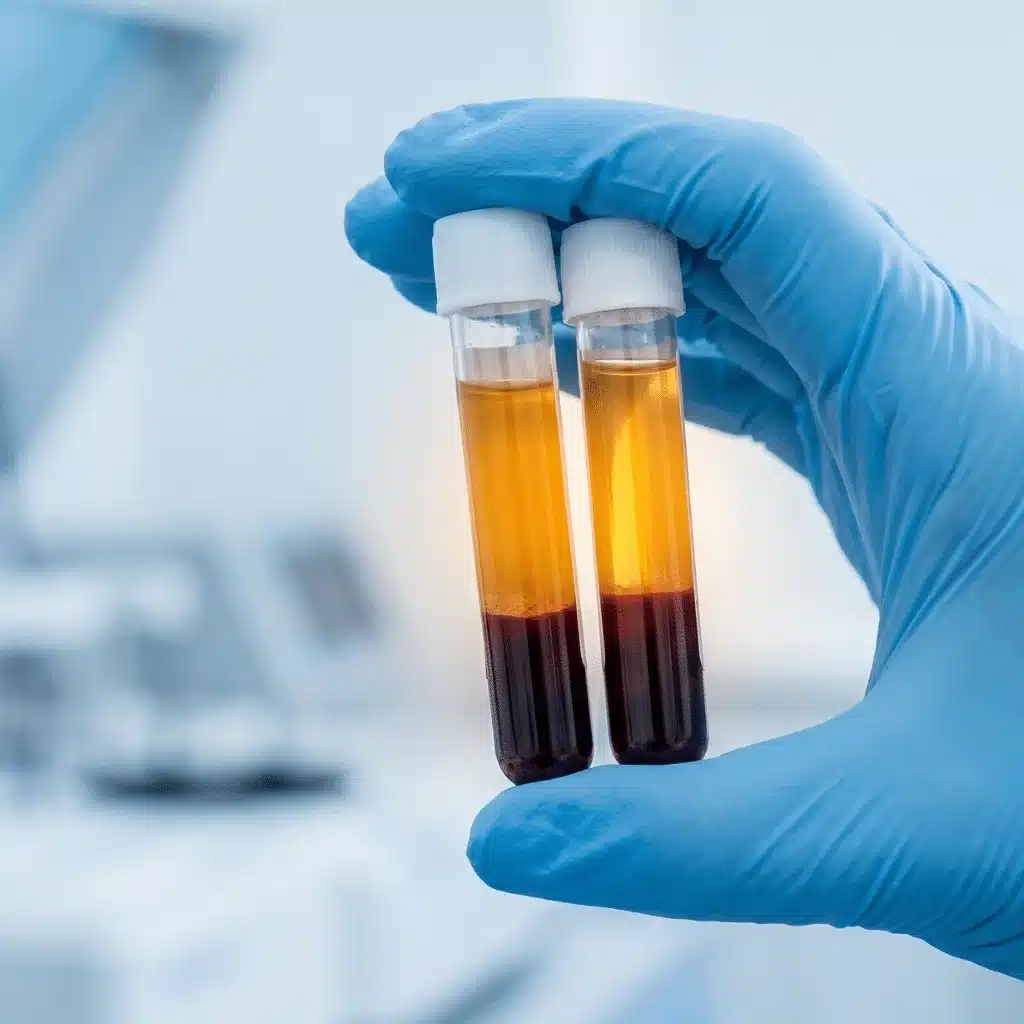
The role of growth factors in regenerative medicine: a clinical primer
Read the postPlatelet count is not the dose. A primer on the growth factors that do the work, why preparation…
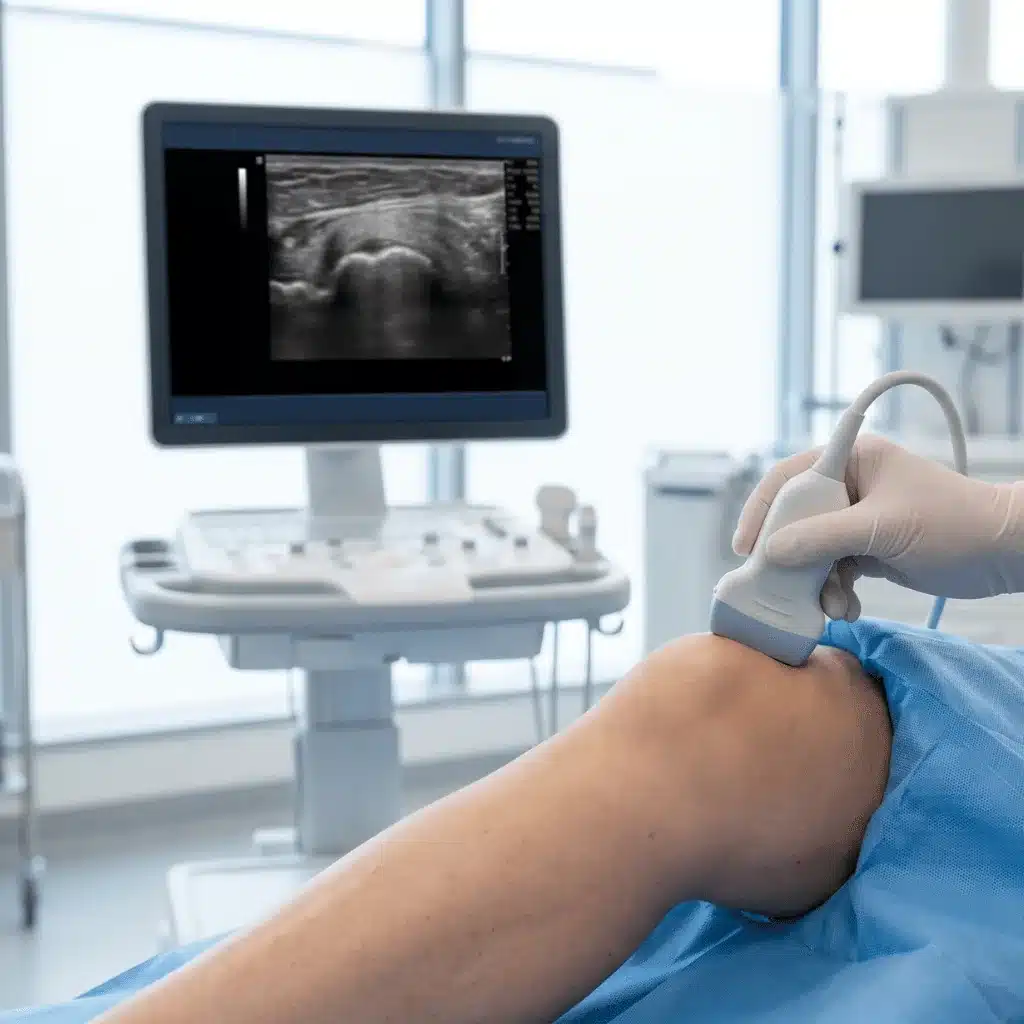
Ultrasound-guided injection techniques in regenerative medicine: why training matters
Read the postGuidance puts the needle where it belongs. It does not make you competent. What the accuracy evidence shows…
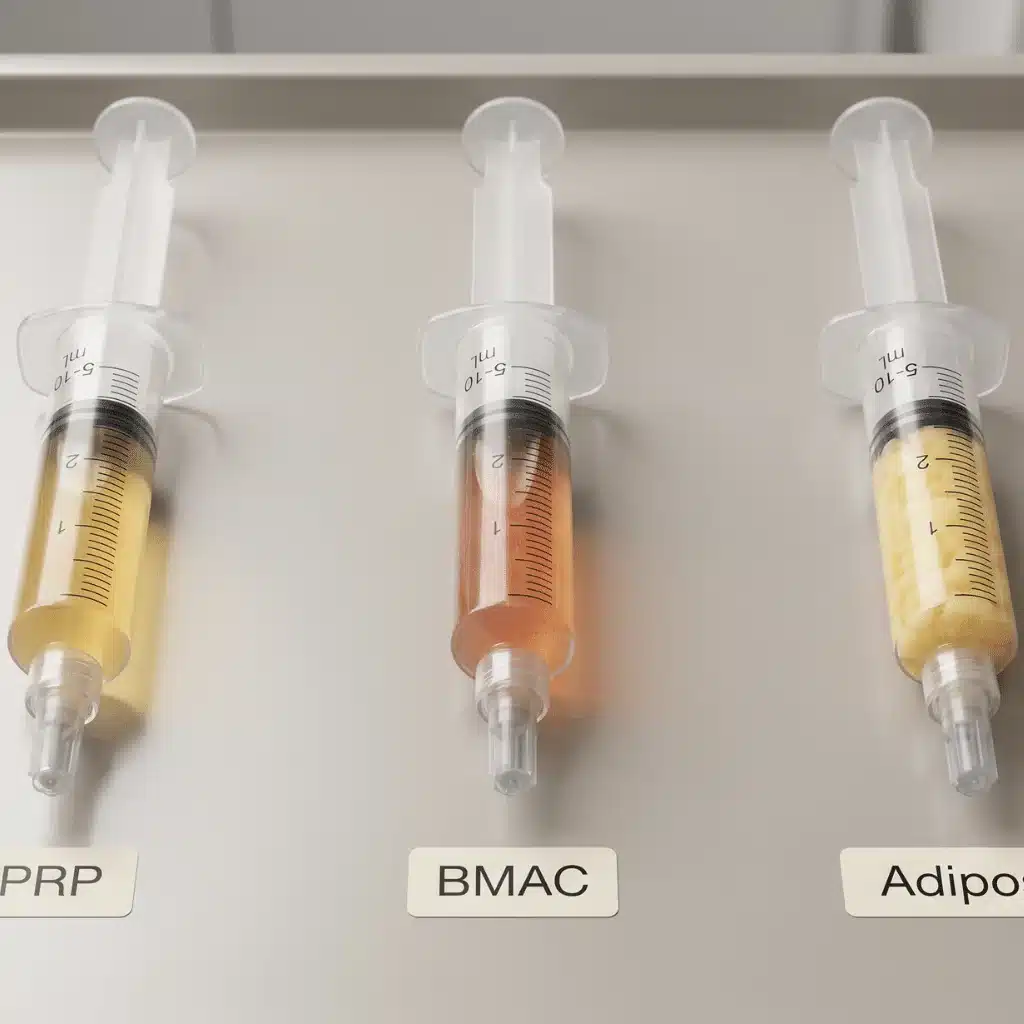
PRP vs. BMAC vs. adipose: comparing orthobiologic treatment options
Read the postPRP, BMAC and adipose are three different tools, not one product with three names. How to match modality…
Important information
Read this before you book.
Know what a course is not before you book. It won’t make you a specialist. It carries no CMEs, credit hours or accreditation, and it doesn’t cover your malpractice: you arrange that yourself. No one can promise you outcomes. It is education for licensed providers, not medical or legal advice, and some products and modalities discussed are not FDA approved or cleared for the uses discussed. The Certificate of Completion is not a license or a board certification, and it does not expand your scope of practice. Read the full notes.