
Where we train
Regenerative Medicine Course for New York Professionals
Private, hands-on regenerative medicine training for licensed providers in New York City, Long Island and Westchester. We also cover the New Jersey and Connecticut suburbs. Hands on a consenting patient, with one instructor beside you. How much you perform depends on your license, the state and the patient’s consent.

Live patients
Private training
Practicing clinicians
U.S. based, worldwide
Training in New York
A New York session can be in any of the five boroughs, on Long Island or in Westchester. Nassau and Suffolk run east from Queens, and Westchester starts where the Bronx ends. Practices across the Hudson in northern New Jersey and up the shore in Fairfield County, Connecticut, are within reach too, though they work under their own state’s rules, not New York’s.
You can train two ways. The instructor travels to your practice and teaches you and your staff on your own equipment, with travel built into the quote. Or you go to an instructor’s own working practice and train there. Both are private, the patient is real and has consented, and we agree the scope with you before you book.
Who can train? Anyone legally able to provide the treatment in New York. Here that turns on your license, and on how the state handles the tissue products you plan to use. The two sections below lay out both, with the law linked line by line.

Local detail
New York at a glance.
Where the instructor lands, the ground a New York session covers, and the health systems across the city.
Getting here
For training inside your practice, the instructor flies into John F. Kennedy International Airport (JFK) or LaGuardia Airport (LGA), or into Newark Liberty International Airport (EWR) for practices on the New Jersey side, whichever lands closest to your door. The Port Authority of New York and New Jersey runs all three, and the instructor’s travel and lodging are inside the quote.
The area a New York session covers
Manhattan, Brooklyn, Queens, the Bronx and Staten Island; Nassau and Suffolk counties on Long Island, from Great Neck and Garden City out to Huntington and the Hamptons; and Westchester, from Yonkers and New Rochelle up to White Plains. Northern New Jersey and southwestern Connecticut are reached the same way. Practices farther up the coast or down I-95 have their own pages: Boston and Philadelphia.
Health systems in Manhattan
New York providers practice alongside NewYork-Presbyterian, which describes itself as one of the nation’s most comprehensive, integrated academic healthcare systems and works with Weill Cornell Medicine and Columbia University Vagelos College of Physicians and Surgeons; NYU Langone Health, home to NYU Grossman School of Medicine and, in its own words, one of the largest healthcare systems in the Northeast; and the Mount Sinai Health System, which takes in the Icahn School of Medicine at Mount Sinai and seven hospital campuses in the New York metropolitan area.
The public system, the Bronx and Long Island
NYC Health + Hospitals calls itself the nation’s largest municipal health care delivery system, with more than 70 locations across the five boroughs. In the Bronx, Montefiore Einstein is the academic medical center and University Hospital for Albert Einstein College of Medicine, and began in 1884 as a facility for patients with tuberculosis. NYU Langone also runs NYU Grossman Long Island School of Medicine, which it describes as the only accelerated three-year MD program focused on primary care in New York State.
Worth knowing
NYC Health + Hospitals/Bellevue traces its roots to 1736, when a six-bed infirmary opened on the second floor of the New York City Almshouse. Source
New York scope
What each New York license allows.
In New York, as in every state, the license you hold sets what you may do with your own hands. Below is our reading of New York law for each license we train, current to October 2026, with the statute behind each line. Use it as a place to start, not as legal advice.
It is your responsibility to confirm the modality is legal in your state for your license. Do that before you book. The authority on your own scope is your licensing board, not us.
Physicians, MD and DO
New York licenses physicians through the State Education Department’s Office of the Professions, with the State Board for Medicine assisting. Education Law 6521 defines the practice of medicine as “diagnosing, treating, operating or prescribing for any human disease, pain, injury, deformity or physical condition.” Source A physician may supervise no more than six physician assistants in private practice at one time. Source How we read it: for New York physicians the harder questions are about tissue, where a product comes from and how long the practice keeps it, which the next section covers.
Nurse practitioners
New York has full practice for nurse practitioners, according to the AANP. Source Under Education Law 6902, an NP diagnoses and performs therapeutic and corrective measures within a specialty area in collaboration with a physician qualified in that specialty, under a written practice agreement and written practice protocols. An NP practicing for more than 3,600 hours may instead keep collaborative relationships with one or more qualified physicians or a hospital, and must complete and maintain an attested form, created by the State Education Department, that describes them. The statute marks this version effective until July 1, 2030. Source
Physician assistants
A New York physician assistant may perform medical services “only when under the supervision of a physician and only when such acts and duties as are assigned to such physician assistant are within the scope of practice of such supervising physician.” Supervision must be continuous but does not necessarily require the physician to be present at the time and place of the service. The six-PA limit in private practice does not apply in a hospital. Source How we read it: the supervising physician’s own scope is the outer edge of what a PA does hands on.
Registered nurses
Registered professional nurses in New York are licensed through the Office of the Professions with the State Board for Nursing. Education Law 6902 includes in RN practice “executing medical regimens prescribed by a licensed physician, dentist or other licensed health care provider.” Source How we read it: an RN carries out the hands-on step of a regimen that an authorized prescriber has ordered, and does not set the regimen. A question about a specific injection belongs with the State Board for Nursing.
Chiropractors
New York defines chiropractic as detecting and correcting structural imbalance, distortion or subluxations by manual or mechanical means. The same section says a chiropractic license does not permit the holder “to operate,” “to prescribe, administer, dispense or use in his practice drugs or medicines,” or to use diagnostic or therapeutic methods involving chemical or biological means, apart from approved clinical laboratory services. Source How we read it: that wording leaves little room for injection work by a New York chiropractor. Put the question to the State Board for Chiropractic before you book.
Physical therapists
New York defines physical therapy as evaluation, treatment or prevention using “physical, chemical, and mechanical means including, but not limited to heat, cold, light, air, water, sound, electricity, massage, mobilization, and therapeutic exercise.” It excludes roentgen rays, radium and electricity for surgical purposes such as cauterization. A PT with at least three years of full-time practice may treat without a referral for ten visits or thirty days, whichever comes first. Source How we read it: the definition names no injections. Check any injection course with the State Board for Physical Therapy first.
New York law
The New York rules that touch regenerative medicine.
State law in this field changes, sometimes more than once a year. Our reading of each state, with its sources and the date we checked, is on the rules by state page. It is a starting point, not legal advice.
Tissue bank licensing (Article 43-B and Part 52)
New York requires a license for “all tissue banking activities in New York, including collection, processing, storage, and distribution,” under Public Health Law Article 43-B and Part 52 of Title 10 of the state’s rules, and its rules reach “tissues such as skin, eye, semen, embryos, and stem cells.” Source For a practice, state guidance draws the line at storage. A facility that receives tissue just in time and, within 24 hours, either transplants it or returns it to the distributor without otherwise removing it from the transport packaging is not storing tissue and needs no license. A physician who keeps tissue products for several weeks before use needs one. Physicians whose use is limited to virally inactivated tissue products are exempt, and no tissue may legally be distributed in New York unless the distributor holds a New York license or the product is exempt. Source
Birth tissue policy (2022)
Since January 21, 2022, distributing most HCT/Ps to New York, and using them clinically in New York, requires a tissue bank license from the Department of Health. A tissue bank, including a transplantation facility, whose license does not list umbilical cord may not distribute or transplant umbilical cord tissue in the state. The Department ties adding umbilical cord to a license to documentation from FDA: approval of the use, an IND in effect to test the product in clinical trials, an FDA determination or recommendation that the product is regulated solely under section 361, or a change in FDA guidance or regulations. Amniotic membrane products in formats other than a sheet of tissue need the same FDA documentation. Source
Federal rules still apply
New York law sits on top of federal law, not in place of it. The FDA’s rules for human cells, tissues, and cellular and tissue-based products apply in every state. Our summary is in the federal section of the rules by state page.
Your boards in New York
New York State Board for Medicine, New York State Board for Nursing, New York State Board for Chiropractic and New York State Board for Physical Therapy, all within the State Education Department’s Office of the Professions.
Formats and pricing
Two ways to train in New York, and both are private.
The hands-on work with a consenting patient is the same either way. What changes is whose room it is, and who from your practice is in it. Both prices are starting points: the quote depends on the course, how many people are training and how much of the curriculum is built around you.
At an instructor location
From $5,000
You come to us, at an instructor’s own working practice.
At your own practice
From $10,000
We come to you, anywhere in New York, with the instructor’s travel and lodging inside the quote. What on-site training includes.
Cancel or refund any time up to thirty days out. Inside thirty days, no refund.
On a refund, covering card processing and office costs.
To move your date, covering the travel that moves with it.
Questions about dates, format or fit? Talk to us.
Training courses we offer
Every course runs in New York.
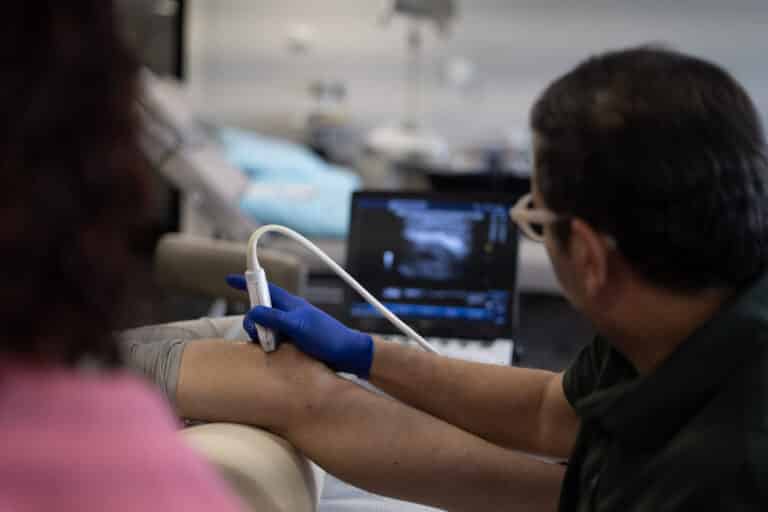
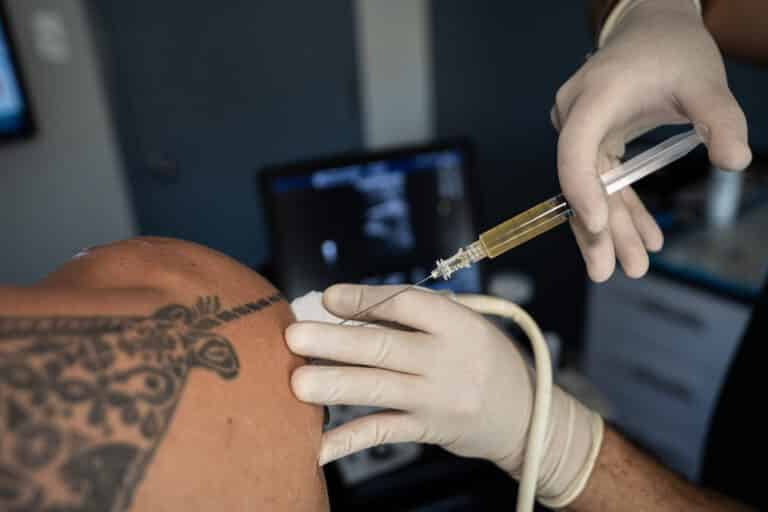
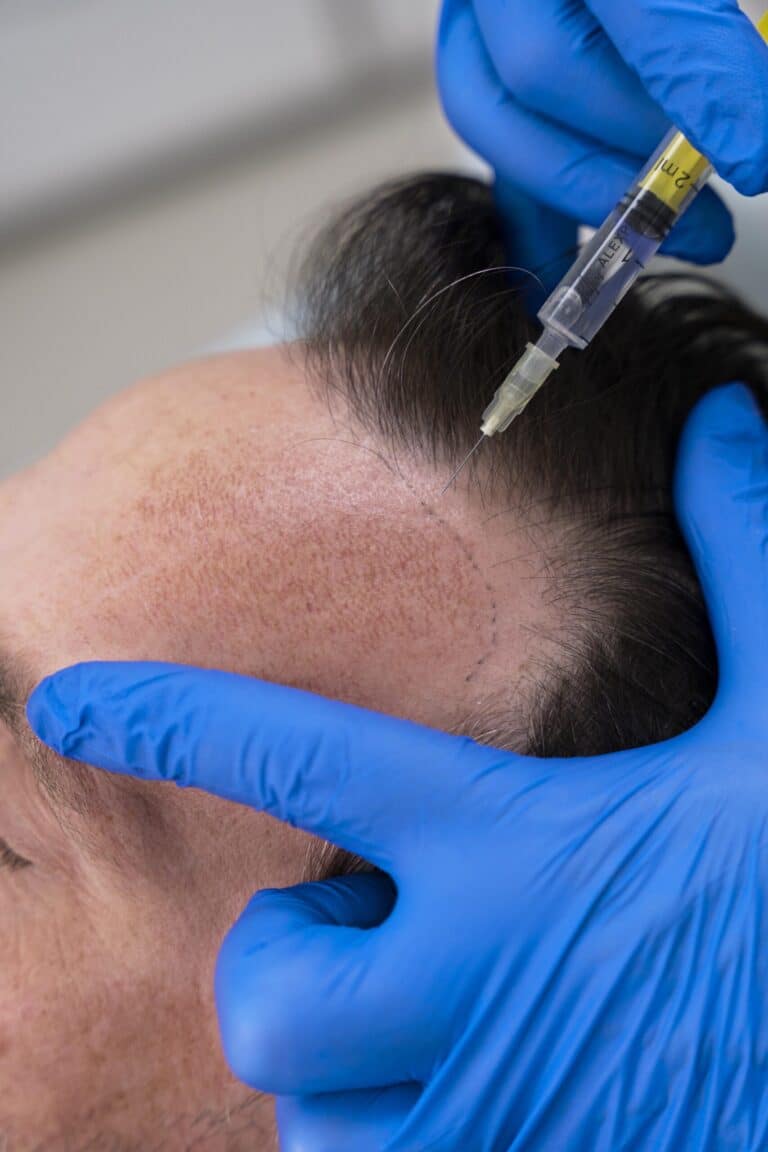
The hands-on day is in person, at an instructor’s practice or inside yours.



Common questions
What New York providers ask before they book.
How much does training in New York cost?
Training inside your own practice in New York starts at $10,000, with the instructor's travel and lodging included. Training at an instructor's location starts at $5,000. Both are starting points. The quote depends on the discipline, the instructor, how many people are training and how much of the curriculum is built around you.
Does New York's tissue bank law reach my practice?
It can. State guidance says a practice that receives tissue just in time and transplants it or sends it back within 24 hours, still in its transport packaging, is not storing tissue. A practice that keeps tissue products on the shelf for weeks needs its own tissue bank license, and umbilical cord and some amniotic products need FDA documentation before they can be used in New York at all. Whether a given product counts is a question for the state's Tissue Resources Program and your counsel. Our New York reading, with its sources, is on the rules by state page.
Can a New York NP or PA do the hands-on part?
Inside your New York scope, yes. A nurse practitioner works in collaboration with a physician under a written agreement and protocols, or, past 3,600 hours of practice, under documented collaborative relationships. A physician assistant works under continuous physician supervision, inside the supervising physician's own scope. Bring your agreement or supervision terms when we plan the day, and we build the hands-on work to fit them before you book.
I'm not licensed in New York. Can I train in New York?
Tell us where you hold your license when you ask for a date. If the instructor comes to you, the session runs in your own practice under the license you already hold there. If you would rather train at an instructor's own practice, what you can do hands on depends on your licensure in the state where that practice is, and we settle that with you before you book.
My practice is in New Jersey or Connecticut. Which rules apply?
The rules of the state where you practice and hold your license. A practice in Hoboken or Hackensack works under New Jersey law, and one in Stamford or Greenwich under Connecticut law, so the New York sections on this page are not yours. Our reading of each is on the rules by state page: New Jersey and Connecticut.
Request a date now
Tell us about your practice and when you'd like to train.
Ready to add PRP or another regenerative procedure in New York? A few quick questions, one screen at a time. Nothing here commits you to a date. A person reads every request and calls you back within one business day.
From the blog
Read it here, then do it in a course.
What do I need to offer PRP injections in my practice?
Read the postWritten by Oscar Tellez, founder of Regen Med Academy. Oscar is not a clinician. This post is education…

What is PRP therapy, in plain terms?
Read the postWritten by Oscar Tellez, founder of Regen Med Academy. Oscar is not a clinician. This post is education…
The role of growth factors in regenerative medicine: a clinical primer
Read the postPlatelet count is not the dose. A primer on the growth factors that do the work, why preparation…
Important information
Read this before you book.
Know what a course is not before you book. It won’t make you a specialist. It carries no CMEs, credit hours or accreditation, and it doesn’t cover your malpractice: you arrange that yourself. No one can promise you outcomes. It is education for licensed providers, not medical or legal advice, and some products and modalities discussed are not FDA approved or cleared for the uses discussed. The Certificate of Completion is not a license or a board certification, and it does not expand your scope of practice. Read the full notes.