
Where we train
Regenerative Medicine Course for Los Angeles Professionals
Regenerative medicine training for licensed providers across Los Angeles and Orange County, plus the Inland Empire and Ventura. It’s private and hands-on. You’re on a consenting patient with one instructor. And your hands are on the procedure.

Live patients
Private training
Practicing clinicians
U.S. based, worldwide
Training in Los Angeles
Los Angeles practices cover a lot of ground: the Westside and Beverly Hills, the San Fernando Valley, Pasadena and the San Gabriel Valley, the South Bay and Long Beach, with Orange County to the south. Ventura is about an hour up the 101 from downtown, Irvine is about an hour down the 5 when the freeway is clear, and the Inland Empire opens up to the east along the 10 and the 60.
Training runs one of two ways. An instructor comes into your practice and teaches you and your team on your own patients and equipment, with travel folded into the quote. Or you go to an instructor’s own working practice and train in their room. Both formats are private, both use a real, consenting patient, and the scope is agreed before you book.
Who can train? Anyone legally able to provide the treatment in California. Your license decides that, and California handles each license its own way. The next two sections set out how, code section by code section.

Local detail
Los Angeles at a glance.
The airports the instructor uses, the ground a Los Angeles session covers, and the hospitals and schools around you.
Getting here
For a session inside your practice, the instructor flies into Los Angeles International Airport (LAX) or Hollywood Burbank Airport (BUR), or into Long Beach Airport (LGB) or John Wayne Airport (SNA) when the practice is in the South Bay or Orange County. The nearest one to your door is the one we book, and travel and lodging are in the quote.
The area a Los Angeles session covers
Los Angeles, Orange and Ventura counties: Santa Monica, Beverly Hills, Burbank, Glendale, Pasadena, Torrance, Long Beach, Thousand Oaks, Anaheim, Irvine, Newport Beach and the towns between them. Inland Empire practices are covered here too, and in more detail on the Riverside page. San Diego County has its own page at San Diego, and Northern California starts at San Francisco.
Academic medicine in Los Angeles
Cedars-Sinai describes itself as a nonprofit academic healthcare organization serving the diverse Los Angeles community. UCLA Health brings together the UCLA Hospital System and the David Geffen School of Medicine at UCLA. The Keck School of Medicine of USC opened in 1885 in a former winery. Charles R. Drew University of Medicine and Science, a private, nonprofit, community-founded institution, was founded in 1966 in the aftermath of the Watts uprising and sits in the Watts-Willowbrook neighborhood of South Los Angeles.
The county hospital and Orange County
Los Angeles General Medical Center dates to 1878, when the County of Los Angeles opened a 100-bed hospital on Mission Road, and the County affiliated with the USC medical school in 1885. In Orange County, UCI Health calls itself the only academic health system in the county; its flagship, UCI Health, Orange, is the primary teaching hospital for the UC Irvine School of Medicine. Hoag, in its own words a nonprofit, faith-based hospital, began when Hoag Memorial Hospital Presbyterian opened on September 15, 1952.
Worth knowing
On December 7, 1930, Hollywood actress Mary Pickford dedicated the 8-ton cornerstone for a modern Los Angeles County General Hospital on State Street. The building opened in 1933. Source
California scope
What each California license allows.
Your license decides what you do hands on, in California as anywhere. Below is how California law reads for each license we train, as of October 2026, with the code section linked. Read it as a starting point, not legal advice.
It is your responsibility to confirm the modality is legal in your state for your license. Do that before you book. The authority on your own scope is your licensing board, not us.
Physicians, MD and DO
California physicians hold a physician’s and surgeon’s certificate from the Medical Board of California, or from the Osteopathic Medical Board of California for DOs. State policy gives M.D. and D.O. degrees “equal professional status and privileges as licensed physicians and surgeons.” Source The certificate authorizes the holder “to use drugs or devices in or upon human beings and to sever or penetrate the tissues of human beings.” Source How we read it: the hands-on work we teach sits inside a physician’s license, and the stem cell notice and tissue bank rules in the next section still apply.
Nurse practitioners
California has restricted practice for nurse practitioners, according to the AANP. Source An NP furnishes or orders drugs and devices under standardized procedures or protocols developed with a supervising physician, who must be reachable by telephone when the patient is examined but need not be on site. Source Under AB 890, an NP who finishes a transition to practice of 4,600 hours or three full-time equivalent years can work without standardized procedures in listed group settings as a “103 NP,” and a “104 NP” can practice without them outside a group setting. Source The 104 step needs at least three more years in practice. Source
Physician assistants
The Physician Assistant Board licenses PAs. A California PA performs medical services under the supervision of a licensed physician and surgeon and under a practice agreement that meets Section 3502.3. Source Supervision does not require the physician to be physically present, but the physician must be available by telephone or other electronic means when the PA examines the patient. Source One physician may supervise no more than eight PAs at a time. Source The Medical Board’s own FAQ says physicians may direct registered nurses or physician assistants to inject Botox under their supervision. Source
Registered nurses
The Board of Registered Nursing licenses RNs. California’s Nursing Practice Act counts as nursing “the administration of medications and therapeutic agents, necessary to implement a treatment, disease prevention, or rehabilitative regimen ordered by and within the scope of licensure of a physician, dentist, podiatrist, or clinical psychologist,” and “the withdrawal of human blood from veins and arteries.” Source The Medical Board adds that no unlicensed person, such as a medical assistant, may inject Botox. Source How we read it: an RN’s part, from the draw to the injection, starts from an order inside the ordering practitioner’s own scope.
Chiropractors
The Board of Chiropractic Examiners licenses California chiropractors. Its regulations say a chiropractic license does not authorize the holder “to practice surgery or to sever or penetrate tissues of human beings,” or “to use any drug or medicine included in materia medica.” Source How we read it: the injection work in our courses sits outside a California chiropractic license. If you are weighing a course anyway, put the question to the board in writing before you book.
Physical therapists
The Physical Therapy Board of California licenses PTs. California defines physical therapy by its methods, from heat, light, water and electricity to massage and exercise, and the license does not authorize the diagnosis of disease. Source The one tissue penetration the code allows a PT is for evaluating neuromuscular performance, on a physician’s authorization and with board certification. Source A 2026 Senate background paper on the board notes that the Physical Therapy Practice Act does not authorize dry needling. Source How we read it: injections are outside a California PT license.
California law
The California rules that touch regenerative medicine.
State law in this field changes, sometimes more than once a year. Our reading of each state, with its sources and the date we checked, is on the rules by state page. It is a starting point, not legal advice.
SB 512, the stem cell notice (2017)
SB 512, approved on October 2, 2017, added section 684 to the Business and Professions Code. Source A licensed practitioner who performs a stem cell therapy that is subject to FDA regulation but not FDA approved must give patients this notice: “THIS NOTICE MUST BE PROVIDED TO YOU UNDER CALIFORNIA LAW. This health care practitioner performs one or more stem cell therapies that have not been approved by the United States Food and Drug Administration. You are encouraged to consult with your primary care physician prior to undergoing a stem cell therapy.” It goes up where patients can see it and at the office entrance, and to each patient in writing before the first therapy, each copy at least 8.5 by 11 inches in no less than 40-point type. Source
What section 684 covers
Stem cell therapy here means a therapy involving HCT/Ps, as the federal regulations define them, leaving out therapies that meet 21 CFR 1271.10 or qualify for an exception in 21 CFR 1271.15. The notice rule does not apply to a practitioner with FDA approval for an investigational new drug or device exemption. The licensing board can cite and fine up to one thousand dollars per violation, though not on a first complaint. Source
Tissue bank license (Health and Safety Code 1635.1)
Every tissue bank operating in California must hold a current state tissue bank license. A physician and surgeon who collects tissue from, or implants tissue into, their own patient is exempt, but that exemption does not cover processing or storing the tissue. A separate exemption covers a licensed physician or podiatrist who stores an HCT/P that is an FDA approved device or biologic, obtained from a California-licensed tissue bank and used only on their own patients, if the practice notifies the state in writing. Source
Right to Try Act (AB 1668)
California’s Right to Try Act came from AB 1668, approved and filed on September 27, 2016. Source It reaches drugs, biological products and devices that have completed phase one of an FDA approved clinical trial but are not approved for general use and are still under investigation. An eligible patient has an immediately life-threatening disease or condition, has considered all FDA approved options, has a recommendation from a primary and a consulting physician, and has given written informed consent. Source
Federal rules still apply
California law sits on top of federal law, not in place of it. The FDA’s rules for human cells, tissues, and cellular and tissue-based products apply in every state. Our summary is in the federal section of the rules by state page.
Formats and pricing
Two ways to train in Los Angeles, and both are private.
The hands-on work with a consenting patient is the same either way. What changes is whose room it is, and who from your practice is in it. Both prices are starting points: the quote depends on the course, how many people are training and how much of the curriculum is built around you.
At an instructor location
From $5,000
You come to us, at an instructor’s own working practice.
At your own practice
From $10,000
We come to you, anywhere in California, with the instructor’s travel and lodging inside the quote. What on-site training includes.
Cancel or refund any time up to thirty days out. Inside thirty days, no refund.
On a refund, covering card processing and office costs.
To move your date, covering the travel that moves with it.
Questions about dates, format or fit? Talk to us.
Training courses we offer
Every course runs in Los Angeles.
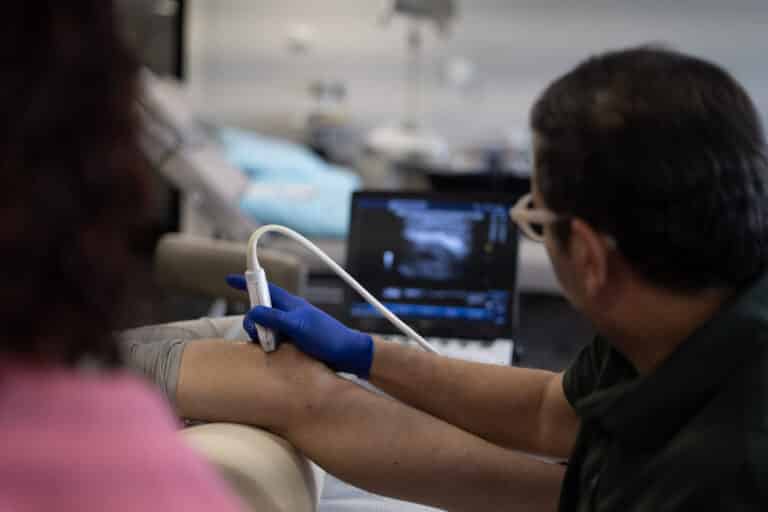
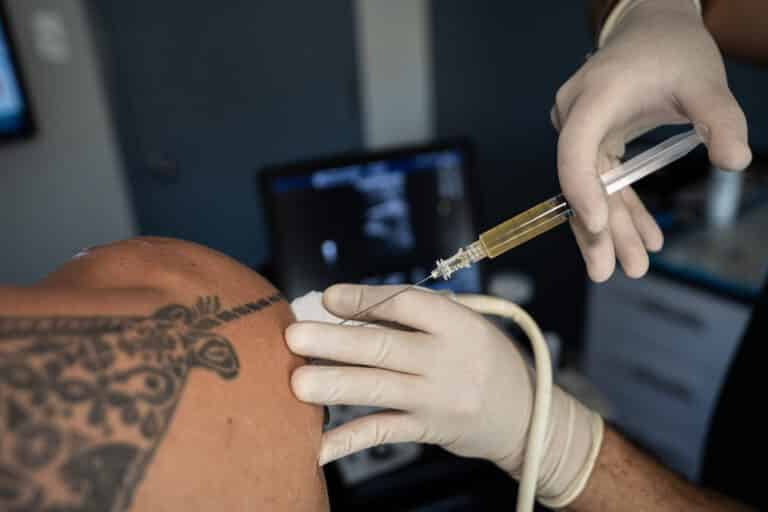
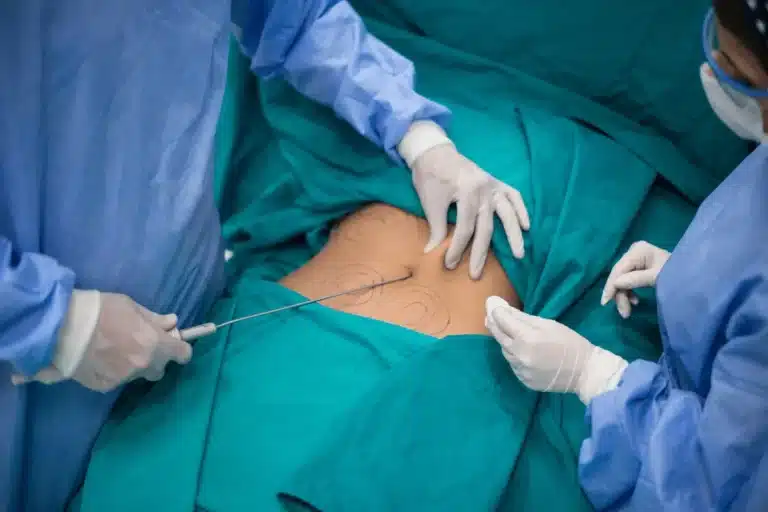
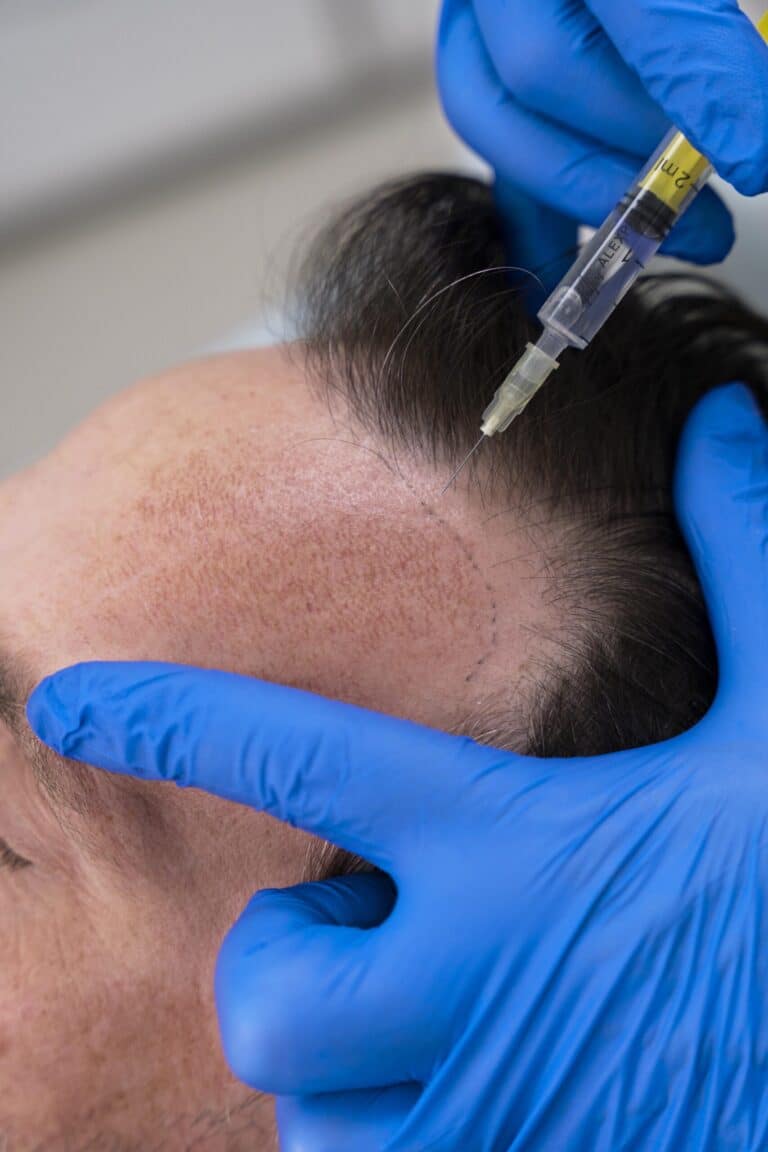
The hands-on day is in person, at an instructor’s practice or inside yours.


Common questions
What Los Angeles providers ask before they book.
How much does training in Los Angeles cost?
Training inside your own practice in Los Angeles starts at $10,000, with the instructor's travel and lodging included. Training at an instructor's location starts at $5,000. Both are starting points. The quote depends on the discipline, the instructor, how many people are training and how much of the curriculum is built around you.
Does California's stem cell notice law cover PRP?
Section 684 is written for stem cell therapy, defined as a therapy involving HCT/Ps under the federal definition, minus the therapies that meet 21 CFR 1271.10 or an exception in 1271.15. It does not mention platelet-rich plasma. Whether your product or procedure is covered is a call for your counsel and your board, not for us. Our reading, with its source, is on the rules by state page.
Can a California NP or PA do the hands-on part?
Within your California scope, yes. A nurse practitioner works under standardized procedures with a supervising physician, unless qualified as a 103 or 104 NP under AB 890, which can work without them in the settings the law allows. A PA works under physician supervision and a practice agreement. Send us your standardized procedures or practice agreement when we plan the session, and the hands-on plan is built to fit them before you book.
I'm not licensed in California. Can I train in Los Angeles?
Say so when you request a date. When the instructor comes to you, you train in your own practice, under the license you hold there. When you come to an instructor's location in California, your California licensure decides what you do hands on, and we agree that plan with you before you book.
Request a date now
Tell us about your practice and when you'd like to train.
Ready to add PRP or another regenerative procedure in Los Angeles? A few quick questions, one screen at a time. Nothing here commits you to a date. A person reads every request and calls you back within one business day.
From the blog
Read it here, then do it in a course.
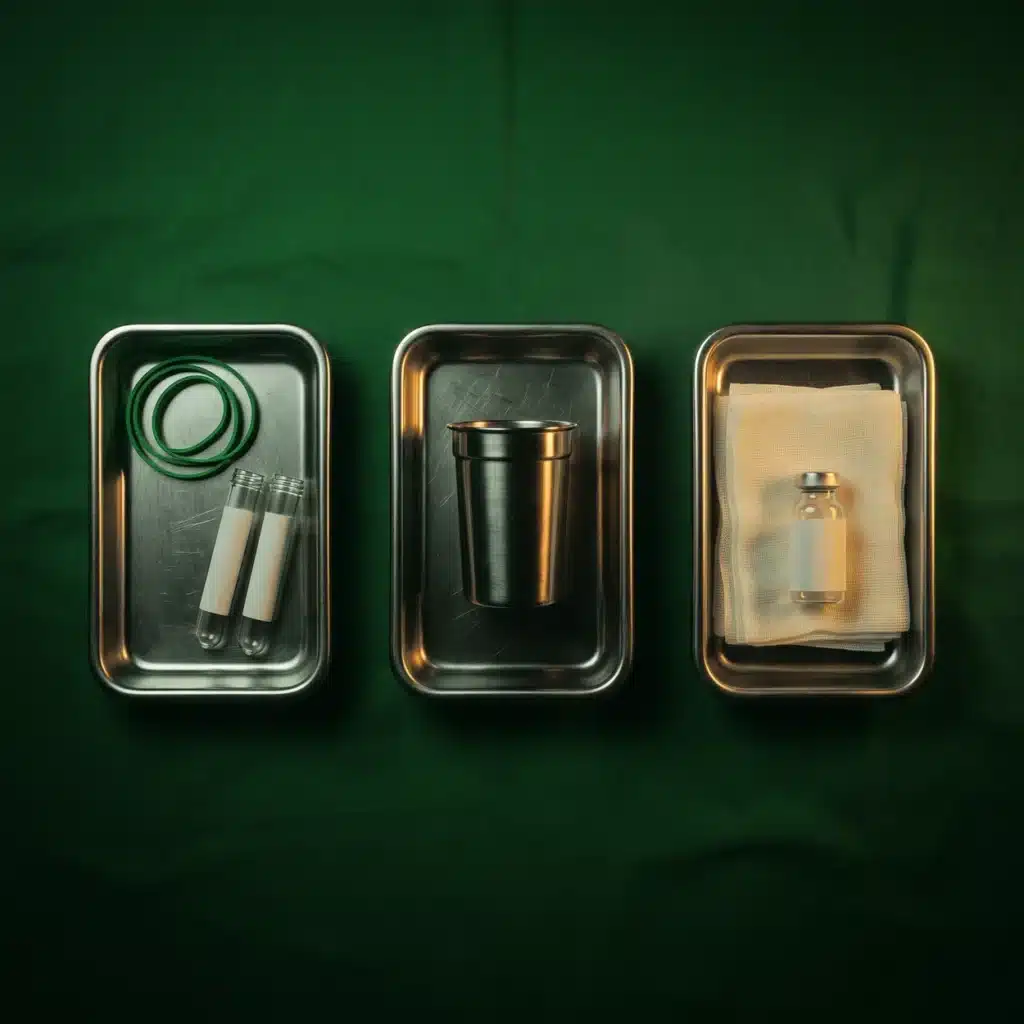
Who on my staff can draw, spin and inject PRP?
Read the postWritten by Oscar Tellez, founder of Regen Med Academy. Oscar is not a clinician. This post is education…
What PRP equipment does a clinic need to start?
Read the postWritten by Oscar Tellez, founder of Regen Med Academy. Oscar is not a clinician. This post is education…
What do I need to offer PRP injections in my practice?
Read the postWritten by Oscar Tellez, founder of Regen Med Academy. Oscar is not a clinician. This post is education…
Important information
Read this before you book.
Know what a course is not before you book. It won’t make you a specialist. It carries no CMEs, credit hours or accreditation, and it doesn’t cover your malpractice: you arrange that yourself. No one can promise you outcomes. It is education for licensed providers, not medical or legal advice, and some products and modalities discussed are not FDA approved or cleared for the uses discussed. The Certificate of Completion is not a license or a board certification, and it does not expand your scope of practice. Read the full notes.