
Where we train
Regenerative Medicine Course for Boston Professionals
Private, hands-on regenerative medicine training for licensed providers in Boston and across New England. You work on a consenting patient with one instructor beside you. The room is a working practice, ours or your own. How much you perform depends on your license, the state and the patient’s consent.

Live patients
Private training
Practicing clinicians
U.S. based, worldwide
Training in Boston
A Boston session can reach practices in a wide ring around the city: Cambridge, Newton and the inner suburbs, the North Shore and the South Shore, and out along the Mass Pike to Worcester, about an hour west. Southern New Hampshire and Rhode Island are close as well, though practices there are licensed in their own states.
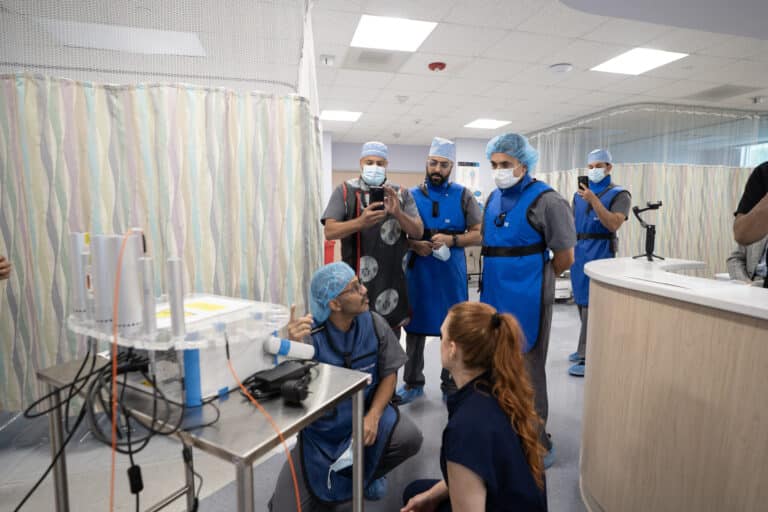
Training happens one of two ways. An instructor comes to your practice and teaches you and your team on the equipment you already use, with travel folded into the quote. Or you train at an instructor’s own working practice. In both, the session is private, the patient is real and has given consent, and the scope is fixed before you book.
Who can train? Anyone legally able to provide the treatment in Massachusetts. Each license reads differently under the General Laws, so the two sections below go license by license and then through the state law, with every source linked.

Local detail
Boston at a glance.
Where the instructor lands, the ground a Boston session covers, and the hospitals and schools around it.
Getting here
For training inside your practice, the instructor flies into Boston Logan International Airport (BOS). For practices in southern New Hampshire or the Merrimack Valley, Manchester-Boston Regional Airport (MHT), about 50 miles north of Boston, can be the shorter drive. Either way, travel and lodging come inside the quote.
The area a Boston session covers
Suffolk, Middlesex, Norfolk, Essex and Plymouth counties, with Worcester County to the west: Boston, Cambridge, Somerville, Brookline, Newton, Quincy, Waltham, Framingham, Lynn, Salem, Plymouth and Worcester itself. Practices on Cape Cod and elsewhere in New England are reached the same way. If you practice closer to Manhattan, start with the New York page.
Health systems in Boston
Boston providers practice alongside Mass General Brigham, an integrated academic healthcare system with 14 hospitals, whose two founding members are Brigham and Women’s Hospital and Massachusetts General Hospital. Mass General was chartered by the Massachusetts legislature in 1811 and took its first patient in 1821. Boston Medical Center is the principal teaching affiliate of Boston University Chobanian & Avedisian School of Medicine, and Beth Israel Lahey Health brings together academic medical centers and teaching hospitals with specialty and community hospitals.
The medical schools
Harvard Medical School counts 15 affiliated hospitals and research institutes. Tufts University School of Medicine sits on a downtown Boston Health Sciences Campus. Boston University Chobanian & Avedisian School of Medicine dates its founding to 1873, when the New England Female Medical College joined the university. In Worcester, UMass Chan Medical School, founded in 1962, is the commonwealth’s first and only public academic health sciences center.
Worth knowing
The first public demonstration of surgical anesthesia was given at Massachusetts General Hospital by William T.G. Morton and John Collins Warren in 1846. Source
Massachusetts scope
What each Massachusetts license allows.
What you do hands on in Massachusetts depends on the license you hold, and each license has its own board and its own section of the General Laws. Here is how we read them for the licenses we train, as of October 2026, with the law linked on every line. Read it as a first step, not as legal advice.
It is your responsibility to confirm the modality is legal in your state for your license. Do that before you book. The authority on your own scope is your licensing board, not us.
Physicians, MD and DO
The Board of Registration in Medicine handles the licensing, regulation and discipline of Massachusetts physicians. Its rules define the practice of medicine to include “diagnosis, treatment, use of instruments or other devices, or the prescribing, administering, dispensing or distributing of drugs.” Source A physician may supervise physician assistants. Source A physician may also be the supervising physician whose guidelines a nurse practitioner follows during the NP’s first two years of supervised practice. Source How we read it: a physician who supervises someone else on the hands-on day should have that arrangement in writing before the session.
Nurse practitioners
Massachusetts has full practice for nurse practitioners, according to the AANP. Source Under the statute, an NP gains independent authority to issue prescriptions and medication orders and to order tests and therapeutics once the NP “has completed not less than 2 years of supervised practice following certification from a board-recognized certifying body.” Until then, that work follows guidelines agreed with a supervising nurse practitioner who has independent practice authority, or with a supervising physician. Source How we read it: if you are inside those first two years, bring your guidelines to the planning call.
Physician assistants
Physician assistants are licensed by the Board of Registration of Physician Assistants. The statute lets a PA “perform medical services when such services are rendered under the supervision of a registered physician,” and says that supervision “shall be continuous but shall not require the personal presence of the supervising physician or physicians.” Source How we read it: the PA does not need the physician in the room, but every service, including a hands-on procedure learned in training, runs under that physician’s supervision.
Registered nurses
Massachusetts counts as registered nursing practice “the administration of medication, therapeutics and treatment prescribed by duly authorized nurses in advanced roles,” including nurse practitioners, and by dentists, physicians and physician assistants. Source How we read it: an RN gives what an authorized prescriber has ordered. The RN does not decide on the procedure, and a question about a particular injection belongs with the Board of Registration in Nursing.
Chiropractors
Massachusetts defines chiropractic around locating and removing interference with nerve transmission by correcting misalignments or subluxations. The definition “shall exclude operative surgery, prescription or use of drugs or medicines, the practice of obstetrics, the treatment of infectious diseases, and internal examinations,” with a narrow allowance for X-ray and analytical instruments used in chiropractic examination. Source How we read it: injecting a substance sits outside that definition. Take any doubt to the Board of Registration of Chiropractors before you book.
Physical therapists
Physical therapists are licensed by the Board of Allied Health Professions. The statute lists the methods a physical therapist may use, from therapeutic exercise, mobilization and traction to temporary splinting and bracing, massage, heat, cold, water, radiant energy, electricity and sound. Injections are not on the list. Source How we read it: a Massachusetts PT should confirm with the board, in writing, before booking any course that involves a needle and a substance.
Massachusetts law
The Massachusetts rules that touch regenerative medicine.
State law in this field changes, sometimes more than once a year. Our reading of each state, with its sources and the date we checked, is on the rules by state page. It is a starting point, not legal advice.
Chapter 111L, the biotechnology law
Massachusetts’ biotechnology law, Chapter 111L, is mainly a research statute. It states that “research and clinical applications involving the derivation and use of human embryonic stem cells, including somatic cell nuclear transfer, human adult stem cells from any source, umbilical cord cells, parthenotes and placental cells shall be permitted.” Research that derives human embryonic stem cells needs the written approval of an institutional review board. Source The chapter prohibits human reproductive cloning Source and directs the Department of Public Health, in partnership with the University of Massachusetts Medical School at Worcester and subject to appropriation, to keep a public bank for umbilical cord blood and placental tissue donated by maternity patients. Source
No state notice or consent rule
We found no Massachusetts law that requires a patient notice or consent form for stem cell or regenerative products, as of September 2026. How we read it: Chapter 111L does not take the place of federal oversight, and the FDA says it regulates regenerative medicine products. Source
Federal rules still apply
Massachusetts law sits on top of federal law, not in place of it. The FDA’s rules for human cells, tissues, and cellular and tissue-based products apply in every state. Our summary is in the federal section of the rules by state page.
Formats and pricing
Two ways to train in Boston, and both are private.
The hands-on work with a consenting patient is the same either way. What changes is whose room it is, and who from your practice is in it. Both prices are starting points: the quote depends on the course, how many people are training and how much of the curriculum is built around you.
At an instructor location
From $5,000
You come to us, at an instructor’s own working practice.
At your own practice
From $10,000
We come to you, anywhere in Massachusetts, with the instructor’s travel and lodging inside the quote. What on-site training includes.
Cancel or refund any time up to thirty days out. Inside thirty days, no refund.
On a refund, covering card processing and office costs.
To move your date, covering the travel that moves with it.
Questions about dates, format or fit? Talk to us.
Training courses we offer
Every course runs in Boston.
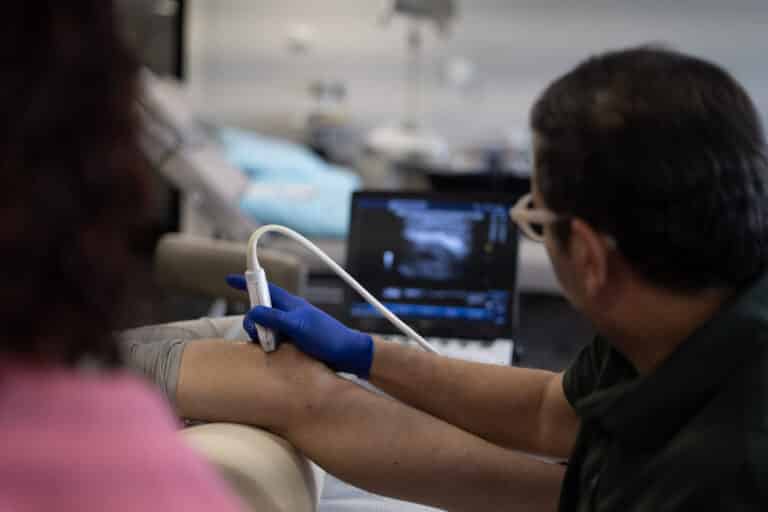
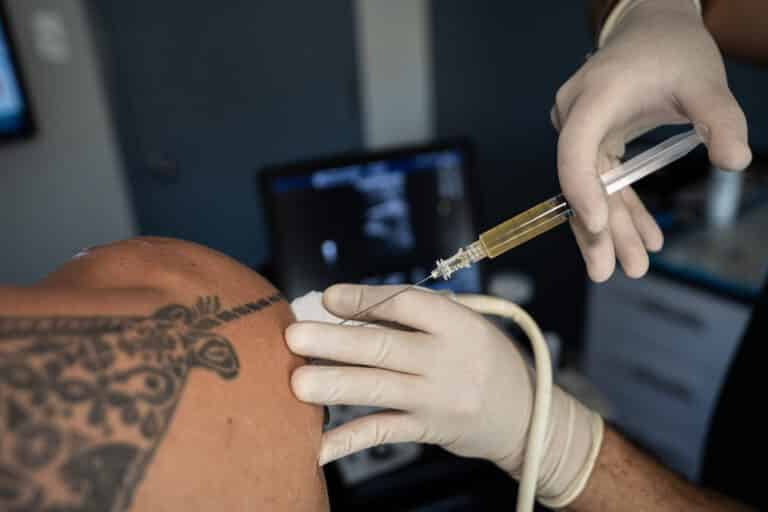
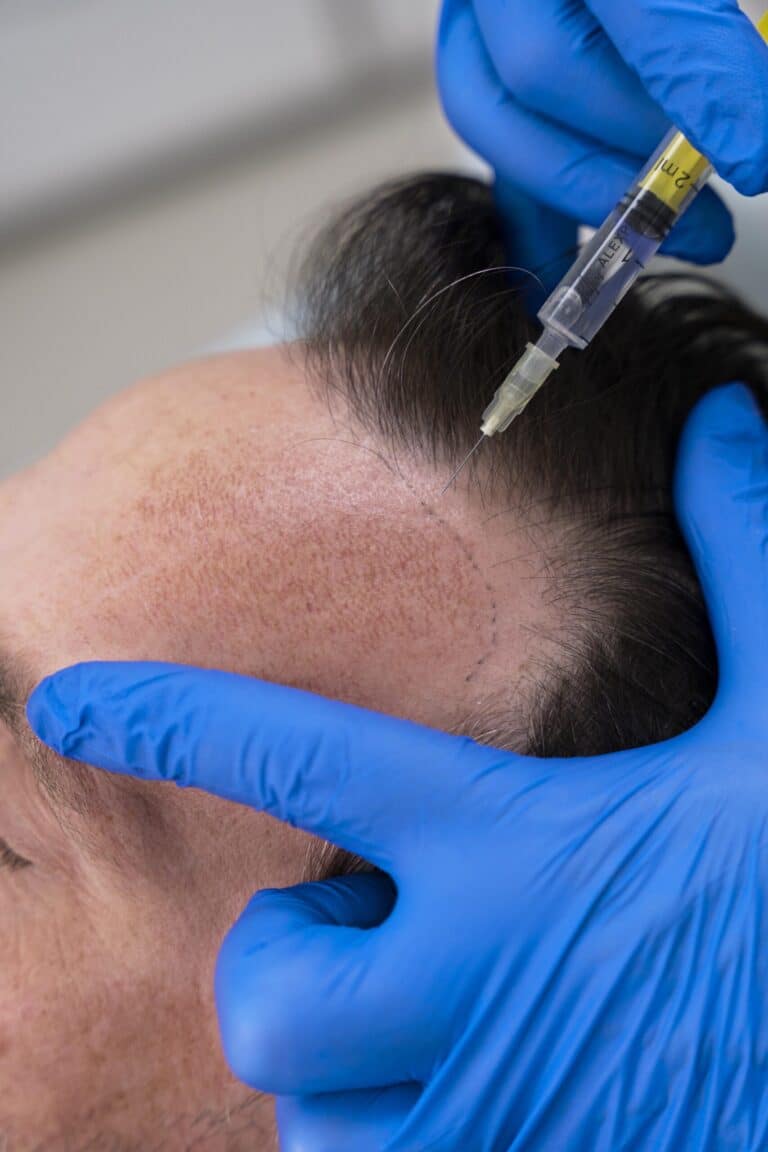
The hands-on day is in person, at an instructor’s practice or inside yours.




Common questions
What Boston providers ask before they book.
How much does training in Boston cost?
Training inside your own practice in Boston starts at $10,000, with the instructor's travel and lodging included. Training at an instructor's location starts at $5,000. Both are starting points. The quote depends on the discipline, the instructor, how many people are training and how much of the curriculum is built around you.
Does Massachusetts have its own stem cell law?
Yes, though it is mainly a research and biotechnology law. Chapter 111L permits research and clinical applications involving several kinds of stem cells and sets research rules, such as review board approval for deriving embryonic stem cells. We found no Massachusetts law that requires a patient notice or consent form for stem cell or regenerative products, so the FDA's rules and your own license do most of the work. Whether a product you plan to use meets them is a question for your counsel and your board. Our reading is on the rules by state page.
Can a Massachusetts NP or PA do the hands-on part?
Within your Massachusetts scope, yes. A nurse practitioner past two years of supervised practice orders and prescribes independently; one inside those two years works under agreed guidelines with a supervising NP or physician. A physician assistant works under continuous physician supervision, in person or not. Share your guidelines or supervision terms when we plan the day, and the hands-on plan is built around them before you book.
I'm not licensed in Massachusetts. Can I train in Boston?
Say so when you ask for a date. When the instructor comes to you, the training happens in your own practice, under the license you hold where you practice. When you go to an instructor's practice instead, your hands-on role depends on whether you are licensed in the state where it is, and we work that out with you before you book.
My practice is in New Hampshire or Rhode Island. Do these rules apply?
No. Your scope follows the state where you practice and hold your license, so a practice in Nashua runs under New Hampshire law and one in Providence under Rhode Island law. Our reading of each is on the rules by state page: New Hampshire and Rhode Island.
Request a date now
Tell us about your practice and when you'd like to train.
Ready to add PRP or another regenerative procedure in Boston? A few quick questions, one screen at a time. Nothing here commits you to a date. A person reads every request and calls you back within one business day.
From the blog
Read it here, then do it in a course.

Who on my staff can draw, spin and inject PRP?
Read the postWritten by Oscar Tellez, founder of Regen Med Academy. Oscar is not a clinician. This post is education…

What PRP equipment does a clinic need to start?
Read the postWritten by Oscar Tellez, founder of Regen Med Academy. Oscar is not a clinician. This post is education…
What do I need to offer PRP injections in my practice?
Read the postWritten by Oscar Tellez, founder of Regen Med Academy. Oscar is not a clinician. This post is education…
Important information
Read this before you book.
Know what a course is not before you book. It won’t make you a specialist. It carries no CMEs, credit hours or accreditation, and it doesn’t cover your malpractice: you arrange that yourself. No one can promise you outcomes. It is education for licensed providers, not medical or legal advice, and some products and modalities discussed are not FDA approved or cleared for the uses discussed. The Certificate of Completion is not a license or a board certification, and it does not expand your scope of practice. Read the full notes.