
Two of the most common injections used for joint pain and tendon problems work in completely different ways. Corticosteroid shots calm down inflammation quickly. PRP, or platelet-rich plasma, sends biological signals that may support tissue repair. This guide walks clinicians through what current research actually shows about each option, where each one fits in real practice, and why insurance coverage often drives patient choice more than the science.
TLDR: Corticosteroids are FDA-approved drugs that work fast but do not heal tissue, and repeated doses can damage cartilage and tendons. PRP devices are FDA-cleared only for bone graft handling, so musculoskeletal PRP injections are off-label. PRP usually takes four weeks or more to take effect and may need more than one injection. Across many conditions, corticosteroids beat PRP in the first six weeks. PRP often pulls ahead at six months and beyond. Insurance covers steroids and rarely covers PRP, which shapes most patient decisions. Outcomes vary in every patient.
Important Disclaimer
Regenerative Medicine Academy (RMA) is an education company providing training for licensed clinicians. This article is educational and does not constitute medical advice, legal counsel, or any guarantee of clinical outcomes. Techniques discussed may involve off-label use of FDA-cleared devices and are subject to state and federal regulations. Clinicians are responsible for understanding FDA regulatory status, scope of practice, informed consent, and malpractice implications before using any technique. Individual clinical judgment and patient-specific factors must guide all clinical decisions.
Two patients walk into your clinic on the same morning. Both have knee pain. Both want an injection. The first wants what their neighbor got, a steroid shot that worked in three days. The second saw an athlete on social media who tried PRP and asks about that instead. Neither knows that these two injections do almost opposite things at the cell level.
Many primary care physicians and even some orthopedic clinicians have not caught up with what the research now shows. Steroid shots are still offered as if they were a lasting answer. They are not. Steroids calm inflammation, then wear off, and the underlying problem usually returns. Repeated doses can also damage cartilage and tendons over time. PRP, in contrast, signals possible tissue repair but works on a much slower clock and is rarely covered by insurance.
This guide gives clinicians a fair, side-by-side look at what each injection does, what the most recent evidence shows, and how to talk to patients about the tradeoffs. The goal is honest counseling, not advocacy for either option.
FDA regulatory status: the place to start
Before talking about results, clinicians need to know how each injection sits with the FDA. This shapes everything from informed consent to malpractice exposure.
Several injectable corticosteroids are FDA-approved drugs with labeled uses for intra-articular and soft-tissue injection. The most common ones in active US use are methylprednisolone acetate (Depo-Medrol), triamcinolone acetonide (Kenalog), and betamethasone (Celestone Soluspan). The FDA also approved an extended-release triamcinolone product, Zilretta, in October 2017 for osteoarthritis pain of the knee. Triamcinolone hexacetonide (Aristospan) was previously available but was discontinued in the US around 2020. When clinicians use these drugs within their labeled uses, they are using FDA-approved therapy.
PRP sits in a different place. PRP preparation devices reach the market through the FDA’s 510(k) pathway, which is a clearance, not a drug approval. The current 510(k) language clears these devices for producing platelet-rich preparations to be mixed with bone graft materials to enhance bone graft handling properties in orthopedic surgical procedures. When clinicians inject PRP into a joint, tendon, or any other musculoskeletal tissue, that is off-label use.
What this means in practice: A corticosteroid injection for knee osteoarthritis uses an on-label drug. A PRP injection for knee osteoarthritis uses an off-label application of a device cleared for a completely different purpose. Both need informed consent. The PRP consent must clearly note the off-label nature, the mixed evidence, and that outcomes vary. PRP for any musculoskeletal indication should never be described as “FDA-approved.”
How corticosteroids work, and why the relief does not last
Corticosteroids are powerful anti-inflammatory drugs. They bind to a receptor inside cells called the glucocorticoid receptor. Once bound, they suppress inflammatory signals like interleukin-1, interleukin-6, and tumor necrosis factor alpha. They also block phospholipase A2, which lowers production of prostaglandins and leukotrienes (the chemicals that drive pain and swelling). The end result is fast pain relief, usually within a few days.
Note what is happening here. The drug suppresses inflammation. It does not rebuild tissue. It does not repair cartilage. It does not heal a tendon. It pushes the inflammation signal down for a while.
When the drug clears the tissue, usually after a few weeks, the inflammation often comes back. The underlying joint or tendon problem is still there. This is why so many patients describe a steroid shot as great for about a month, then the pain returned. The FDA label for triamcinolone (Kenalog) actually uses the phrase “short-term administration to tide the patient over an acute episode or exacerbation,” which captures the intended use better than how steroids are often prescribed in real-world practice.
Repeated dosing carries another concern. Lab studies, animal data, and clinical research all point to dose-related harm to cartilage and tendon cells with repeated exposure. Cells exposed again and again to corticosteroids tend to die off or produce weaker matrix. This is no longer a theoretical risk. It now appears in major clinical guidelines, which we cover later.
What this means in practice: A steroid injection is a short-term anti-inflammatory tool. It is useful when a patient needs fast relief for a flare or a specific event. It is not designed to heal anything, and giving it over and over may make the joint or tendon worse.
How PRP works, and why it takes weeks, not days
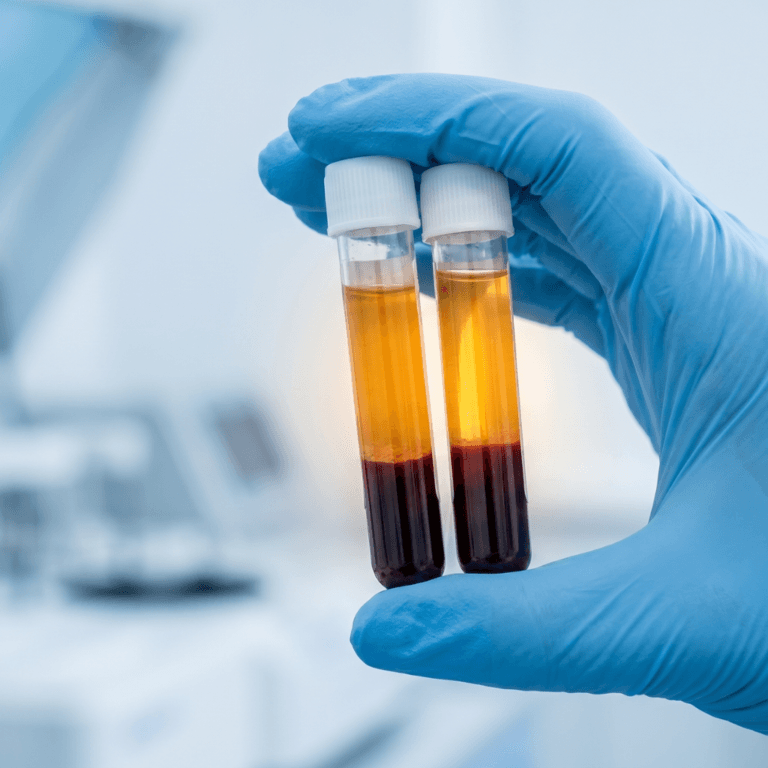
PRP is made from the patient’s own blood. A clinician draws a small amount of blood and runs it through a centrifuge to concentrate platelets. Platelets are tiny cell fragments that carry growth factors and signaling proteins.
When platelets activate, they release a wide range of bioactive proteins. A 2004 proteomics study published in Blood identified more than 300 of these proteins released after activation. The best-known ones include platelet-derived growth factor (PDGF), transforming growth factor beta (TGF-β), vascular endothelial growth factor (VEGF), fibroblast growth factor (FGF), and epidermal growth factor (EGF). Insulin-like growth factor 1 (IGF-1) also appears in PRP, mostly from the plasma fraction rather than from platelet alpha granules.
These growth factors act as signals. They recruit repair cells, promote new blood vessel formation (angiogenesis), and shape the local inflammation response rather than just suppressing it. Tissue-level changes take time. Most patients do not feel meaningful relief in the first week or two. Many start to notice improvement around four to six weeks. Some patients need more than one injection to reach a useful response, depending on the injury and the specific preparation.
What this means in practice: PRP is the opposite of a quick fix. It signals possible repair but works on a slow clock. A patient who needs relief for an event next weekend should not expect PRP to deliver. A patient willing to wait several weeks for a chance at longer-lasting benefit may be a better candidate.
The crossover effect: a pattern across conditions
The most consistent finding in recent comparative research can be stated simply. Corticosteroids tend to win in the first four to six weeks. PRP often pulls ahead at six months and beyond. This crossover pattern shows up in study after study across multiple conditions.
A 2025 meta-analysis by Maroun and colleagues, published in Clinics in Shoulder and Elbow, pooled 26 randomized controlled trials (RCTs) covering 1,877 patients with lateral epicondylitis (tennis elbow). Below two months, corticosteroids beat PRP on the visual analog scale (VAS) for pain by about 0.67 points. Between two and six months, the two were similar. Beyond six months, PRP was clearly better, with a mean difference of -1.60 (95% CI -2.01 to -1.20). An independent 2024 analysis by Xu and colleagues in the American Journal of Sports Medicine, covering 11 RCTs and 730 patients, reached almost the same conclusion.
The same pattern shows up in plantar fasciitis. A 2025 meta-analysis in the American Journal of Physical Medicine and Rehabilitation, covering 24 RCTs and 1,653 patients, found PRP better than corticosteroids on VAS at three and six months. By twelve months, the pain advantage narrowed and was no longer statistically significant, though function scores still favored PRP. For rotator cuff tendinopathy, a 2026 meta-analysis in Knee Surgery, Sports Traumatology, Arthroscopy reported a modest but durable PRP advantage in shoulder function scores at six months. For carpal tunnel syndrome, the available data show PRP and corticosteroids similar at one month and PRP showing greater symptom relief on the Boston Carpal Tunnel Questionnaire at six months and beyond.
What this means in practice: The honest answer to which injection works is “which one are you trying to make work, and over what time horizon?” For symptom control measured in weeks, corticosteroids hold up. For symptom relief measured in months, PRP has built up enough positive evidence to take seriously in the right patient.
Evidence by condition: an honest look
The crossover direction is consistent. The size of the effect and the strength of the evidence vary by condition. Here is a fair summary.
Knee osteoarthritis: the most contested area
Knee osteoarthritis has the largest and most conflicting literature. The 2021 RESTORE trial, published in JAMA, randomized 288 patients to three weekly PRP injections or saline. At twelve months, PRP was not better than saline for pain or for medial tibial cartilage volume. This was a high-quality, placebo-controlled trial that pulled PRP enthusiasm back to earth.
At the same time, several recent network meta-analyses have ranked PRP favorably for knee osteoarthritis. A 2024 network meta-analysis by Jawanda and colleagues, published in Arthroscopy, looked at 48 studies covering 9,338 knees. PRP ranked highest by SUCRA score for combined pain and function at six months or more, ahead of bone marrow aspirate concentrate, hyaluronic acid, corticosteroids, and placebo. A more skeptical 2025 Bayesian network meta-analysis in Osteoarthritis and Cartilage, looking only at large RCTs, found that only triamcinolone showed short-term pain relief above the minimum clinically important threshold. PRP showed a moderate effect size at twelve weeks but did not clearly beat that threshold in this analysis.
Meanwhile, corticosteroids face a meaningful safety signal in this joint. The 2017 McAlindon trial in JAMA gave 140 patients 40 mg of triamcinolone every 12 weeks for two years versus saline. The corticosteroid group lost more cartilage thickness (-0.21 mm versus -0.10 mm; P=0.01), with no pain advantage over placebo. Kompel and colleagues, in a 2019 Radiology paper, reported that 8% of 459 patients getting hip or knee corticosteroid injections developed adverse joint events, including faster osteoarthritis progression, subchondral insufficiency fracture, osteonecrosis complications, and rapid joint destruction. A larger 2022 series of fluoroscopy-guided injections by Graf and colleagues reported a 1% complication rate. The truth is somewhere in this range, but the overall signal has been strong enough to change major guideline language.
Lateral epicondylitis: the cleanest pattern
Lateral epicondylitis (tennis elbow) shows some of the cleanest PRP data. The pattern repeats across studies. Steroids win at one month. PRP wins at six to twelve months. Current clinical thinking supports leukocyte-rich PRP for this indication. Steroid injections also carry a real concern for repeated tendon dosing, since intratendinous corticosteroid exposure can weaken the tissue and raise rupture risk.
Plantar fasciitis: similar story in the foot
Foot data mirror the elbow pattern. Steroids give faster early relief. PRP shows slower onset and more durable benefit at three to twelve months. Neither injection produces consistent structural changes in the fascia itself, so pain relief, not tissue reorganization, is the realistic goal.
Rotator cuff tendinopathy: pattern holds, durability less certain
For rotator cuff tendinopathy, corticosteroids work faster for short-term pain. PRP shows modest but durable benefits in function at six months in the most recent meta-analyses. The 2025 AAOS rotator cuff clinical practice guideline now recommends only a single corticosteroid injection rather than serial injections, particularly when surgery is being considered, because repeated injections may raise infection risk and weaken tendon quality.
Carpal tunnel syndrome: emerging area
For mild to moderate carpal tunnel syndrome, PRP and corticosteroids look similar in the first month. PRP appears to produce greater improvement on the Boston Carpal Tunnel Questionnaire at six months and beyond. The data set is smaller than the osteoarthritis or tendinopathy literature but follows the same general pattern.
Achilles tendinopathy: an honest counterweight
Not every PRP indication has held up. A 2025 meta-analysis in Clinical Orthopaedics and Related Research, covering six RCTs and 422 patients, found that PRP did not outperform placebo for Achilles tendinopathy on the VISA-A score at three, six, or twelve months. This is an important counterpoint. PRP is not a guaranteed answer, and the Achilles data should make clinicians cautious about expectations in this tendon. Steroids, separately, are generally avoided for Achilles tendinopathy due to rupture risk.
Summary table
| Condition | Short-term winner | Long-term winner | Strength of evidence |
| Knee osteoarthritis (KL grades 1 to 3) | Corticosteroid | PRP (contested; some negative trials) | High but conflicting |
| Knee osteoarthritis (KL grade 4) | Corticosteroid (short-term only) | Neither shows clear durable benefit | Moderate |
| Lateral epicondylitis | Corticosteroid | PRP | High |
| Plantar fasciitis | Corticosteroid or equivalent | PRP | Moderate to high |
| Rotator cuff tendinopathy | Corticosteroid | PRP (modest, durable) | Moderate |
| Carpal tunnel syndrome (mild-moderate) | Equivalent | PRP | Moderate, emerging |
| Achilles tendinopathy | Limited; steroids generally avoided | PRP did not beat placebo (2025 meta-analysis) | Moderate (negative for PRP) |
| Hip osteoarthritis | Corticosteroid (with safety caveats) | Insufficient PRP evidence | Low for PRP |
What this means in practice: The crossover pattern holds across most musculoskeletal conditions studied, but the evidence is not equally strong everywhere. Lateral epicondylitis and plantar fasciitis are the cleanest. Knee osteoarthritis is the most contested. Achilles tendinopathy is a fair example of where PRP may not deliver. Honest counseling means presenting all of this, not just the supportive studies.
Safety: what to know about each
Both injections have clear safety profiles. Neither is risk-free. Patients deserve a balanced picture.
Corticosteroid risks
Short-term risks are well known. About 5 to 10% of patients get a post-injection flare in the first 24 to 72 hours. Skin or fat atrophy at the injection site can happen. Skin lightening can occur, especially in patients with darker skin tones. Tendon weakening is a real risk if the drug is injected directly into a tendon. Patients with diabetes can see short bursts of high blood sugar. One 2024 study in Clinical Diabetes found 15.7% of patients had an A1C rise of 0.5% or more after an intra-articular corticosteroid injection. Septic arthritis is rare, around 1 in 10,000 injections.
The bigger long-term concern is cartilage harm. The McAlindon 2017 JAMA trial and the Kompel 2019 Radiology series pushed this concern from case reports into mainstream guidelines. The 2021 AAOS knee osteoarthritis guideline now lists corticosteroids as offering only short-term relief. The 2025 AAOS rotator cuff guideline recommends a single corticosteroid injection rather than a series, especially before planned surgery. There is also evidence that corticosteroid injections in the months before joint replacement may raise periprosthetic joint infection risk.
PRP risks
PRP’s safety record is cleaner. Because it is the patient’s own blood, the immune risk is essentially zero. A 2024 systematic review in the Journal of Experimental Orthopaedics looked at 91 RCTs covering 5,914 PRP knee injections and found zero septic joint infections. Reported side effects are mostly limited to injection-site soreness, temporary post-injection flare, and rare pseudoseptic reactions, which can mimic infection but are sterile. No meta-analysis has found a serious adverse event signal for PRP.
The real concern with PRP is variability. Leukocyte-rich versus leukocyte-poor preparations, platelet concentrations from two to eight times baseline, activation methods, and injection volumes all differ across studies. PRP is not one product. It is a family of products. This is the biggest reason guideline bodies disagree on its role.
Safety at a glance
| Safety consideration | Corticosteroid | PRP |
| Post-injection flare | 5 to 10% | Common, usually 24 to 72 hours |
| Septic arthritis | About 1 in 10,000 | Very rare; 0 in 5,914 RCT injections |
| Skin or fat atrophy | Documented | Not reported |
| Hyperglycemia in diabetes | Documented | Not reported |
| Tendon weakening with repeat tendon injection | Documented | Not reported |
| Cartilage harm with repeat dosing | Documented; now in guidelines | Not reported |
| Preparation variability | Standardized FDA-approved drugs | High; no single agreed protocol |
What this means in practice: A single steroid injection is generally well tolerated. The safety case shifts when injections are repeated over years, especially in joints where cartilage matters. PRP carries a cleaner long-term safety profile, with the main caveat that PRP is not one thing.
Cost and insurance: the real-world driver
The clinical comparison assumes both options are equally available. They are not. Cost and insurance often decide the outcome before the science does.
Generic corticosteroids are inexpensive. Triamcinolone acetonide 40 mg/mL costs roughly 11 to 14 dollars per vial. Methylprednisolone and betamethasone are in a similar range. The procedure is universally covered by Medicare and commercial insurance under standard joint injection codes. Most patients pay only a copay. The clinician gets paid through the standard procedure and drug codes. There is no financial barrier on either side.
PRP for musculoskeletal indications is almost always cash-pay. The CPT code 0232T is a Category III tracking code with zero RVUs. Medicare deems it investigational. Most commercial insurers do not cover it. TRICARE ended PRP coverage for musculoskeletal indications in September 2024. Out-of-pocket cost runs from about 500 to 2,500 dollars per injection, depending on the system and the region. A full course of one to three injections may run 1,500 to 6,000 dollars or more.
This reality shapes what most patients actually choose. A steroid injection is what insurance pays for. Many patients pick it for that reason alone. Many clinicians offer it for the same reason. This is not a clinical judgment about long-term tissue health. It is a coverage decision. Honest counseling should name this directly so the patient can weigh the tradeoff with eyes open.
What this means in practice: Cost is part of informed consent. For a patient with limited resources who needs short-term relief, a steroid injection is the practical choice. For a patient with mild-to-moderate disease, active goals, and the ability to pay out of pocket, PRP may offer a different risk-benefit-cost picture. Pretending the financial side does not exist is not honest counseling.
A clinical perspective on choosing between the two
The following vignette is a fictional composite created for educational purposes. It does not represent a real patient.
A 58-year-old accountant comes in with bilateral knee pain that has been getting worse over 18 months. Imaging shows Kellgren-Lawrence grade II changes on the right knee and grade III on the left. She has tried physical therapy, weight loss, oral anti-inflammatories, and topical diclofenac with modest help. She plays pickleball three times a week and does not want to stop. Her orthopedic surgeon says she is not yet a joint replacement candidate and offered corticosteroid injections.
Dr. Kim, a family medicine physician with advanced PRP training, walks her through the options. A single steroid injection in each knee would likely give her real relief in days, last two to three months, and cost her a 40 dollar copay. Repeating the injections every three to four months for several years would carry a real risk of faster cartilage loss, which matters because she wants to put off knee replacement as long as she can. A PRP series of two to three injections per knee would likely take four to eight weeks to reach full effect, may last six to twelve months, and would cost her about 2,500 dollars per knee out of pocket.
Dr. Kim documents the off-label nature of PRP for knee osteoarthritis. She walks through the major guideline positions, including the ACR strong recommendation against PRP for knee osteoarthritis, the ESSKA-ORBIT consensus that supports PRP for KL grades 1 to 3, the RESTORE trial showing PRP no better than saline at twelve months, and the McAlindon cartilage-loss data on repeated steroids. The patient asks questions, weighs the cost, and decides to try PRP on the more painful left knee while taking a single steroid injection on the right knee for fast relief before an upcoming trip.
This vignette shows several principles. The clinician disclosed the regulatory status. She presented both supportive and contradictory evidence. She integrated cost and time horizon into the decision. She documented the shared decision. The two injections are not really competitors here. They are sequential tools serving different goals.
Patient selection: who tends to do better with which
These are general patterns, not rules. They are starting points for shared decisions, not algorithms.
A corticosteroid injection may make sense as the first choice when the patient needs relief in days, has a short-term event or rehabilitation goal to reach, faces real financial constraints, or has a clearly inflammatory presentation like acute bursitis or a flare of inflammatory arthritis. It is also reasonable when the patient is close to joint replacement and long-term cartilage preservation is no longer the priority.
PRP may make more sense when the patient is younger or active, has mild to moderate structural disease where cartilage or tendon preservation still matters, has failed or wants to avoid repeated steroid injections, has diabetes or another condition where steroid side effects raise extra concern, or values longer-lasting symptom relief and can absorb the cost. PRP is also a reasonable consideration for chronic tendinopathy, where steroid injection into the tendon itself may weaken the tissue.
Neither injection is clearly indicated when structural disease is too far gone to respond, when the diagnosis is unclear and more workup is needed, or when the patient has expectations that no injection can meet. Honesty here protects both the patient and the clinician.
What this means in practice: Frame these as different tools for different goals. A short-acting anti-inflammatory and a slow-acting repair signal are not interchangeable. Clinicians who want a deeper grounding in the technical and regulatory side of these procedures often turn to structured musculoskeletal regenerative medicine training to build that foundation safely.
What professional societies say
Major society positions disagree, and that disagreement is real, not sloppy science. Clinicians should know where each one stands.
The 2019 ACR and Arthritis Foundation guideline strongly recommends intra-articular corticosteroids for knee osteoarthritis and conditionally recommends them for hip osteoarthritis. The same guideline strongly recommends against PRP for both knee and hip osteoarthritis, citing preparation heterogeneity and inconsistent evidence.
The 2021 AAOS knee osteoarthritis clinical practice guideline lists corticosteroids as offering only short-term relief, in light of the McAlindon cartilage data. It gives PRP a limited recommendation, acknowledging that some patients see pain and function improvement.
The 2025 AAOS rotator cuff clinical practice guideline, approved in August 2025, recommends a single corticosteroid injection over serial injections, particularly before planned surgery.
The 2024 ESSKA-ORBIT consensus on injectable orthobiologics for knee osteoarthritis, published in Knee Surgery, Sports Traumatology, Arthroscopy, is the most PRP-supportive of the recent guideline documents. Three of its 28 statements received Grade A, including the statement that PRP is effective for symptomatic knee osteoarthritis, with the most consistent benefit in KL grades 1 to 3. A separate ESSKA-ICRS RAND/UCLA appropriateness panel in 2024 deemed PRP appropriate for KL 0 to III patients up to age 80 after failed conservative care, but not appropriate as first-line therapy or in KL IV disease.
The AAOS Orthobiologics Registry, announced in December 2025, is now beginning to gather real-world outcome data. This is meant to address the long-standing PRP standardization gap.
| Society | Year | Corticosteroid position | PRP position |
| ACR / Arthritis Foundation | 2019 | Strong for knee; conditional for hip | Strong against for both knee and hip |
| AAOS (knee osteoarthritis) | 2021 | Short-term relief only | Limited recommendation |
| AAOS (rotator cuff) | 2025 | Single injection preferred over serial | Not standard recommendation |
| ESSKA-ORBIT | 2024 | Short-term option | Grade A support for symptomatic knee osteoarthritis, consistent in KL 1 to 3 |
| ESSKA-ICRS RAND/UCLA | 2024 | Standard option | Appropriate for KL 0 to III after failed conservative care |
What this means in practice: Guideline disagreement is real. European bodies are ahead of North American bodies on PRP. Clinicians should cite the relevant guideline in documentation rather than pretending one consensus exists.
Evidence gaps to acknowledge
Honest practice means saying what is not yet settled.
PRP preparation is still not standardized. Leukocyte content, platelet concentration, anticoagulant choice, and activation method all vary across studies. No single classification system has been clinically validated as predicting outcomes. PRP from one device or protocol is not necessarily equivalent to PRP from another. Newer evidence, including a 2024 study in the American Journal of Sports Medicine by Boffa and colleagues, shows that higher platelet concentrations correlate with better knee osteoarthritis outcomes, suggesting that protocol matters more than the field has acknowledged.
Long-term comparative data beyond two years is thin for both injections. Most studies follow patients six to twelve months. The durability of PRP benefit over multiple years and the cumulative cartilage risk of repeated steroid dosing beyond McAlindon’s two-year window remain underexplored.
Patient stratification is still developing. No validated biomarker tells you in advance which patient will respond to PRP, which will respond to steroids, and which will not respond to either. Trial-and-error remains the practical reality.
Cost-effectiveness modeling is limited. The question of whether PRP’s higher up-front cost is offset by fewer future injections or later joint replacement has not been firmly answered.
Frequently asked questions
Are corticosteroid injections safer than PRP?
For a single injection, both have favorable safety profiles, though PRP carries a lower documented risk of infection and no signal of cartilage harm. For repeated injections over time, PRP has the cleaner long-term safety profile, especially in joints where cartilage preservation matters.
Can both injections be used in the same patient?
Yes. Many clinicians now use them sequentially rather than as substitutes. A common pattern is a single steroid injection for an acute flare, followed by a PRP series for longer-term management. The two have different mechanisms and there is no inherent pharmacologic reason to keep them apart, though most clinicians space them by several weeks.
How soon can corticosteroids and PRP be given after each other?
Most clinicians wait at least one month after a steroid injection before giving PRP in the same area. Steroids may suppress the inflammatory response that PRP is designed to activate. The reverse sequence (PRP first, then steroid) is less commonly a concern, though specific protocols vary.
How many injections per year are reasonable?
Steroid injections are typically limited to three to four per joint per year because of cartilage and tendon concerns. The 2025 AAOS rotator cuff guideline recommends a single injection in that setting. PRP courses usually involve one to three injections, and there is less evidence on how often a course can reasonably be repeated, though every six to twelve months is common in practice.
Do patients need to stop NSAIDs before either injection?
For PRP, most clinicians hold NSAIDs (anti-inflammatory drugs like ibuprofen and naproxen) for at least 48 hours before the procedure, and some protocols use a one to two week window. For steroid injections, NSAIDs do not typically need to be stopped. Patients on aspirin or other antiplatelet drugs for cardiac reasons should check with the prescribing provider before stopping anything.
Does insurance cover either injection?
Steroid injections are universally covered by Medicare and commercial insurance. PRP for musculoskeletal indications is almost never covered. Out-of-pocket cost runs from about 500 to 2,500 dollars per injection.
Which injection is better for an acute pain flare?
Steroids. They work in days, have a well-known short-term effect, and are inexpensive. PRP takes weeks to take effect and is not the right choice when fast relief is the goal.
Which injection is better for a young athlete with chronic tendinopathy?
PRP is generally the more evidence-supported choice for this profile. Repeated steroid injection into a tendon can weaken the tissue, and younger patients with chronic tendinopathy usually want durable relief rather than temporary suppression. Outcomes vary in every patient.
Why do most doctors still default to steroids first?
Several reasons. Insurance covers steroids. Steroids work fast. They are familiar from training. Some clinicians may not be fully up to date on the cartilage data from McAlindon and Kompel or on the recent comparative meta-analyses. The 2025 AAOS rotator cuff guideline shift toward a single injection rather than serial dosing is an example of the field starting to catch up.
Key takeaways
- Corticosteroids are FDA-approved drugs for intra-articular use. PRP for musculoskeletal injection is off-label use of devices cleared only for bone graft handling, and informed consent must reflect this clearly.
- Steroids relieve pain and inflammation fast but do not heal tissue. Relief usually wears off in weeks. Repeated dosing carries documented cartilage and tendon harm.
- PRP signals possible repair but takes four weeks or more to take effect, and may need more than one injection. Outcomes vary, and PRP does not work for every condition.
- Across multiple conditions, recent comparative meta-analyses show a crossover pattern. Steroids win in the first six weeks. PRP often wins at six months and beyond.
- Insurance coverage drives most patient and clinician decisions. Steroids are covered. PRP is almost always cash-pay. Acknowledging this is part of honest counseling.
- The two injections are different tools for different goals. Treating them as competitors misleads patients. Sequential use is increasingly common.
- Clinicians who want to offer PRP responsibly should complete structured musculoskeletal orthobiologic training to ensure proper technique, patient selection, and compliant documentation.
About Regenerative Medicine Academy
Regenerative Medicine Academy (RMA) is a medical education company providing hands-on, small-group regenerative medicine training for licensed healthcare professionals. RMA does not provide clinical treatments or medical services. All course content is educational and designed to help clinicians make informed, evidence-based decisions within their scope of practice. To learn more about upcoming training dates and online education, visit regenmedacademy.com.
Off-label use note
The PRP procedures discussed in this article involve off-label use of FDA-cleared devices. Off-label use means the FDA has not specifically approved the device for the described indication. Clinicians may use FDA-cleared devices off-label in their clinical judgment, but must obtain informed consent, discuss evidence, risks, and alternatives, and document thoroughly. Corticosteroid injections discussed in this article refer to FDA-approved drugs used within their labeled indications.
Platform and jurisdiction note
Scope of practice, supervision requirements, and corporate practice of medicine rules vary by state. Clinicians should consult their state medical board, malpractice carrier, and legal counsel about compliance in their jurisdiction before offering regenerative procedures.
For clinicians who want to go deeper
Clinicians who want to deepen their knowledge of orthobiologic techniques and the evidence base behind them can review the full RMA course catalog, which covers musculoskeletal, cosmetic, sexual health, and adipose tissue applications. RMA also offers online regenerative medicine education on FDA regulatory and legal foundations for clinicians who want to study the compliance landscape before stepping into hands-on training.