Adipose tissue is one of the most versatile autologous sources in regenerative medicine, but it is also one of the most regulated, and the regulatory rules shape every clinical decision that follows. This guide walks through the biology, harvesting and processing techniques, clinical applications, safety profile, and training requirements, with the regulatory framing placed first because it determines what is legally and clinically defensible in practice.
TLDR: Adipose tissue contains a rich mix of cells and matrix, including adipose-derived stem cells within what is called the stromal vascular fraction (SVF), which makes it a practical autologous source for regenerative applications. The single most important regulatory line in this field is the difference between mechanical processing (legal in the United States within the established framework) and enzymatic processing (not legal as a clinical treatment in the United States). MFAT, microfat, and nanofat are mechanical preparations that break adipose tissue into smaller pieces without enzymes; they sit in the legal mechanical-processing pathway. Enzymatic SVF, produced by digesting adipose tissue with collagenase, has been ruled by two federal appellate courts to be a drug requiring FDA approval, which makes clinic-prepared SVF offered as a treatment illegal in the United States outside of an authorized clinical trial. RMA’s training programs cover mechanical processing methods (MFAT, microfat, and nanofat) and do not cover SVF preparation or clinical use. Outcomes vary in every patient.
Important Disclaimer
Regenerative Medicine Academy (RMA) is an education company providing training for licensed clinicians. This article is educational content only and does not constitute medical, legal, business, tax, or financial advice, nor a guarantee of clinical or financial outcomes. Adipose tissue harvesting, processing, and reinjection are subject to FDA regulation, state scope-of-practice rules, and professional society standards. Many techniques discussed are used off-label. Enzymatically digested SVF is considered a drug by the FDA and clinic-prepared SVF offered as a treatment is not legal in the United States; RMA does not train on SVF. Clinicians are responsible for verifying FDA device and biologic status, state scope-of-practice requirements, informed consent obligations, malpractice coverage, corporate-practice-of-medicine rules, and applicable advertising laws before performing any adipose-based procedure. Individual clinical results vary. Consult qualified legal, compliance, and medical professionals before acting.
Adipose tissue has a long history in medicine, starting as a surgical problem (how to get rid of it) and evolving into a surgical resource (how to harvest and use it carefully). Over the past two decades, cellular and regenerative science has added another chapter, one where the same fat that surgeons once discarded is now studied as a source of therapeutic cells, extracellular matrix, and growth factors.
The excitement around adipose-based regenerative medicine is real, and so is the potential for a practice to get in trouble. The same modality can sit in very different regulatory boxes depending on how it is processed. A clinician who understands this landscape can build a legally defensible, clinically credible service line. A clinician who does not can inadvertently step into enforcement risk, malpractice exposure, and marketing language that invites regulatory letters.
This guide lays out the terrain: the biology that makes adipose useful, the regulatory map that governs how you can use it, the harvesting and processing techniques, the clinical applications supported by published evidence, the safety profile, the training pathway, and the common pitfalls. The thread running through all of it is simple: match your technique to the legal pathway, and match your marketing to the evidence.
Why adipose tissue? The biology in plain language
Adipose tissue is more than stored energy. Only about two-thirds of the cells in a sample of fat are mature adipocytes (the cells that store fat). The rest are a mixed population of blood-derived cells, pericytes (cells that surround small blood vessels), smooth muscle cells, endothelial cells, immune cells, and, most relevant to regenerative work, adipose-derived stem cells within the stromal vascular fraction.
Three practical features make adipose attractive as an autologous source. It is plentiful, even in lean patients. It is accessible through relatively standardized liposuction technique. And it contains a high density of mesenchymal-type cells compared with other tissue sources like bone marrow, with generally lower donor-site morbidity in most patients.
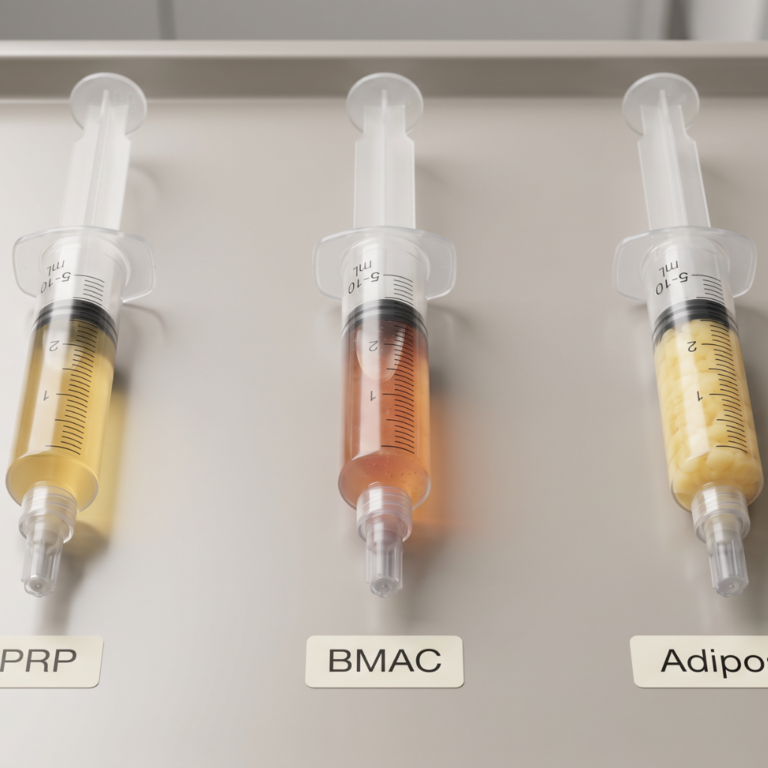
It is worth pausing on the vocabulary, because the words are not interchangeable, and U.S. regulators treat them differently. Autologous fat graft refers to fat moved from one site to another in the same patient. Microfat and nanofat are mechanically processed preparations used mostly in aesthetic applications. Microfragmented adipose tissue (MFAT) is fat that has been broken down into smaller clusters through a closed-system mechanical device, without enzymes. Stromal vascular fraction (SVF) is what you get when you digest adipose tissue with an enzyme like collagenase: a concentrated, cell-rich aqueous fraction. Adipose-derived stem cells (ADSCs) are a purified or culture-expanded population of cells isolated from the SVF. These terms describe a gradient, from whole tissue at one end to isolated cells at the other, and the gradient maps almost perfectly onto how the FDA categorizes these products.
The regulatory reality clinicians must understand first
The single most important question in this field is mechanical or enzymatic. That one distinction sits at the center of what U.S. clinicians can legally offer to patients.
The framework: minimally manipulated and homologous, or not
Under Section 361 of the Public Health Service Act and 21 CFR Part 1271, human cells, tissues, and cellular and tissue-based products (HCT/Ps) that meet four criteria are regulated as tissue rather than as drugs. Those criteria are minimal manipulation, homologous use (using tissue for the same basic function it served in the donor), autologous or family-donor use, and performance within a single surgical procedure (the so-called 21 CFR 1271.15(b) exception). Products that meet these criteria do not require pre-market FDA approval, though establishment registration and good tissue practices may still apply.
Products that do not meet all four criteria fall under Section 351 of the Public Health Service Act and the Federal Food, Drug, and Cosmetic Act, which regulates them as biologic drugs requiring an Investigational New Drug (IND) application and a Biologics License Application (BLA) before marketing.
In practical terms, the FDA has drawn a clear line between mechanical processing (which generally keeps a product in the 361 tissue framework or under a 510(k)-cleared device pathway) and enzymatic processing (which the FDA considers more than minimal manipulation, moving the product into the Section 351 drug framework).
Mechanical processing: the legal pathway
MFAT, microfat, and nanofat are all mechanical processing approaches. They differ in particle size, intended application, and the specific equipment used, but they share the same key feature for U.S. regulatory purposes: none of them use enzymes.
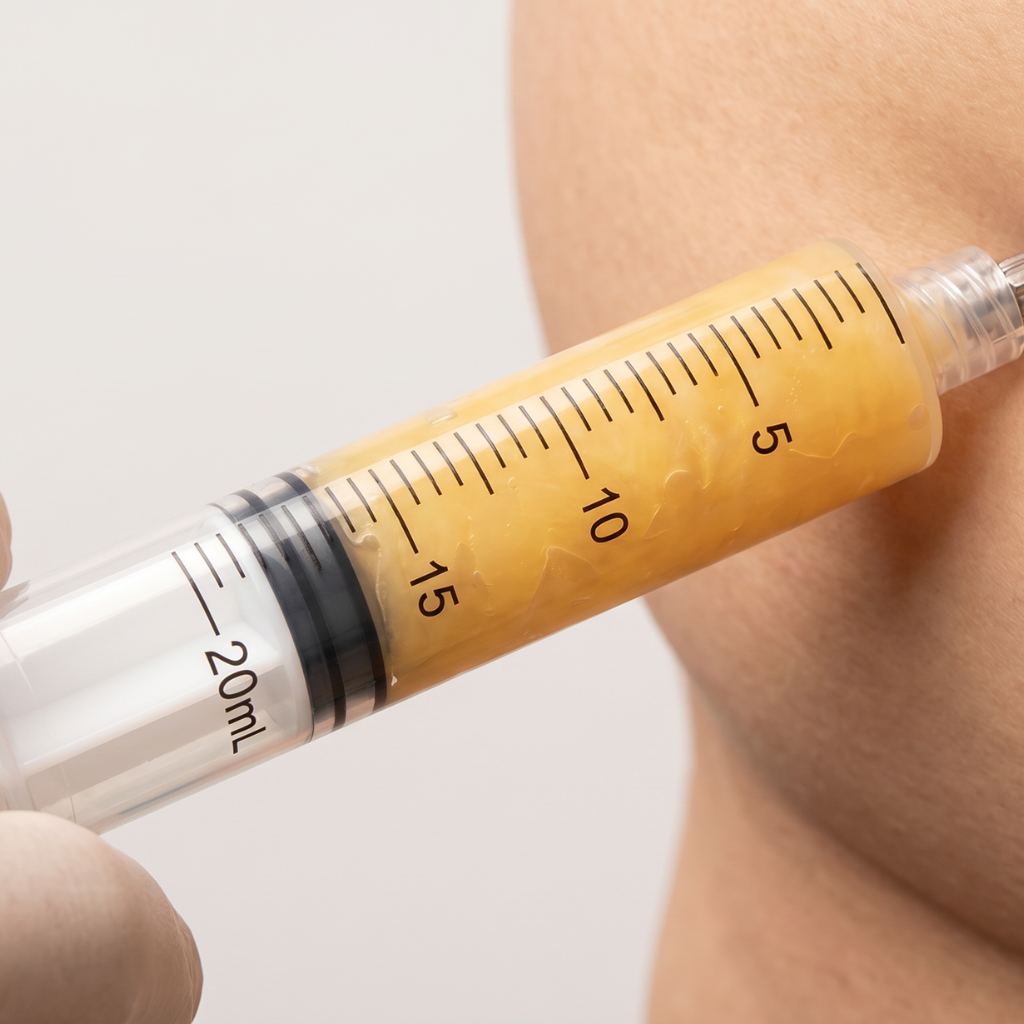
MFAT is typically produced through a closed-system mechanical device, such as the 510(k)-cleared Lipogems system, which has been cleared since 2014 as a device for adipose tissue handling in general orthopedic, arthroscopic, and several other specialty applications. Microfat is a smaller-particle mechanical preparation often used for aesthetic facial work. Nanofat is mechanically emulsified through syringe-to-syringe shuffling and filtration to produce a cell-rich, largely matrix-depleted fluid used for skin quality and superficial applications. The common thread across all three is that the tissue is broken into smaller pieces by physical means, with no enzymatic digestion involved.
This mechanical-processing pathway is what U.S. clinicians can legally offer within the established regulatory framework. Use of MFAT for a specific named indication like knee osteoarthritis remains off-label until pivotal trials such as the Lipogems ARISE study lead to a specific FDA-cleared indication. Marketing language matters here: “510(k)-cleared device used to process adipose tissue” is accurate; “FDA-approved for knee osteoarthritis” is not. The two statements are not close substitutes legally.
Enzymatic SVF: not legal in the United States
SVF is fundamentally different. It is produced by digesting adipose tissue with an enzyme (typically collagenase) to release a cell-rich aqueous fraction. The use of enzymes is what the FDA considers more than minimal manipulation, which removes the product from the Section 361 same-surgical-procedure exception and places it under Section 351 as a biologic drug.
Two federal appellate courts have now affirmed this position. The U.S. Court of Appeals for the Eleventh Circuit, in U.S. v. US Stem Cell Clinic (2021), agreed with the FDA that enzymatically digested SVF is a drug requiring approval. The U.S. Court of Appeals for the Ninth Circuit reached the same conclusion in U.S. v. California Stem Cell Treatment Center (2024), reversing a lower court and unanimously rejecting the argument that SVF qualifies for the same-surgical-procedure exception.
In plain language: clinic-prepared enzymatic SVF offered as a treatment for any indication is not legal in the United States outside of an authorized clinical trial conducted under an Investigational New Drug application. Two federal circuits now back this position, covering a large share of U.S. practice geography, and the federal posture is effectively settled.
What RMA’s training covers
For these reasons, RMA’s adipose-tissue training programs cover mechanical processing methods (MFAT, microfat, and nanofat) and do not cover SVF preparation or clinical use. The reasoning is direct: U.S. clinicians cannot legally offer clinic-prepared SVF as a treatment, so training on SVF preparation does not translate into a legally defensible service line. RMA’s curriculum focuses on the techniques that clinicians can actually use in U.S. practice today.
The table below summarizes how the major adipose-based product categories map to their regulatory pathway and to compliant language.
| Product type | FDA regulatory status | Compliant framing |
| Autologous fat graft (structural, Coleman-style) | 361 when minimally manipulated, homologous, autologous, same procedure | “Autologous fat grafting,” “minimally manipulated autologous adipose” |
| Microfat or nanofat (mechanical processing) | 361 when the same criteria are met | “Mechanically processed autologous adipose,” “microfat,” “nanofat” |
| MFAT via 510(k)-cleared device (e.g., Lipogems) | Class II 510(k) cleared as a device for tissue handling | “510(k)-cleared device used to process adipose tissue,” off-label for specific indications |
| Enzymatic SVF prepared in clinic | Drug requiring FDA approval per FDA, Eleventh Circuit (2021), and Ninth Circuit (2024); not legal as a clinical treatment in the U.S. | “Investigational only; FDA classifies as a drug requiring approval” |
| Culture-expanded adipose-derived stem cells | Biologic drug under Section 351 | “Investigational only” |
The FDA 510(k) Premarket Notification database is the primary source for verifying the cleared scope of any specific device. Reading the cleared indication in a 510(k) record is also a useful corrective: cleared indications are typically narrower than how devices are sometimes marketed.
What this means in practice: regulatory framing is not an afterthought. It determines which products you can legally offer, how you can describe them, and what consent language you need. Clinicians building an adipose-based service line should anchor on this framing before they decide on a cannula.
Harvesting techniques: the mechanics of moving fat safely
Once the regulatory foundation is in place, the harvesting conversation can begin. Every regenerative adipose technique starts with tumescent anesthesia, followed by a liposuction method chosen to match the intended end product, followed by a processing method that maps back to the legal pathway.
Tumescent anesthesia
Tumescent anesthesia involves infiltrating a large volume of dilute lidocaine and epinephrine in isotonic crystalloid into the subcutaneous tissue before aspiration. The classic Klein formulation uses dilute lidocaine (at or below 1 g/L) with dilute epinephrine (at or below 1 mg/L). Historical literature cited a safe tumescent lidocaine ceiling of 35 mg/kg, and peer-reviewed work has subsequently supported up to 55 mg/kg in liposuction settings when appropriately monitored.
Two pharmacology points matter for safe practice. First, tumescent lidocaine plasma levels peak approximately 12 to 14 hours after infiltration, meaning that local anesthetic systemic toxicity (LAST) can occur well after the patient has left the procedure room. Second, common medications that inhibit CYP3A4, such as sertraline and certain benzodiazepines, can slow lidocaine metabolism and raise toxicity risk. A careful medication review is part of adipose harvest, not a formality.
Liposuction methods for regenerative harvest
The liposuction method shapes the cellular profile and integrity of the product. Suction-assisted lipoaspiration (SAL) is the standard approach for adipose harvest in regenerative work; published evidence supports that SAL preserves cell viability and multi-lineage differentiation capacity comparable to resected fat. Power-assisted liposuction (PAL) adds mechanical cannula oscillation to reduce operator fatigue in high-volume harvests, with similar cell viability in most studies.
For aesthetic volumization, the Coleman structural fat grafting technique remains the reference standard: low-pressure syringe aspiration through 2 to 3 mm cannulas, followed by centrifugation. Microfat harvest uses low suction pressures through specialized small-bore multiport cannulas to produce a finer graft suitable for delicate facial work. Nanofat preparation mechanically emulsifies the graft through syringe-to-syringe shuffling and filters it through nylon membranes to produce a cell-rich, largely matrix-depleted fluid used for skin-quality applications.
MFAT harvest feeds directly into a 510(k)-cleared closed-system device that mechanically fragments the tissue without enzymes, producing clusters small enough for injection through a smaller-bore needle while preserving the perivascular niche.
The table below summarizes the main harvest techniques, their typical applications, and the points the published literature most often raises.
| Technique | Typical application | Key points from the literature |
| Suction-assisted lipoaspiration (SAL) | Standard for regenerative adipose harvest | Preserves cell viability and differentiation capacity comparable to resected fat |
| Power-assisted liposuction (PAL) | High-volume regenerative or aesthetic harvest | Similar viability profile to SAL in most comparative studies |
| Coleman structural fat grafting | Aesthetic volumization | Low-pressure syringe aspiration, 2 to 3 mm cannulas, centrifugation |
| Microfat | Fine aesthetic grafting | Low suction pressure through specialized small-bore multiport cannulas |
| Nanofat | Skin quality and superficial applications | Mechanical emulsification and filtration; cell-rich, largely matrix-depleted |
| MFAT through 510(k)-cleared device | Orthopedic and other tissue-handling applications | Closed-system mechanical fragmentation without enzymes |
Donor sites and harvest volume
Common donor sites include the abdomen, flanks, thighs, hips, and back. Typical harvest volumes for regenerative applications range from roughly 60 to 250 mL, depending on the intended product and target indication, with larger volumes for volumetric aesthetic grafting. Patient-specific factors shape the realistic volume: body composition, prior abdominal surgery, connective tissue characteristics, and bleeding risk all influence both yield and safety.
Processing methods: where biology meets regulation
Processing is where the regulatory pathway becomes concrete. The same aspirate can stay within the legal mechanical-processing framework or move into the illegal enzymatic-drug framework depending on what you do to it next.
Decantation and washing are the simplest mechanical approaches, separating blood and tumescent fluid from the fat by gravity or gentle agitation. They produce variable graft quality and are used mostly as a prelude to other steps. Centrifugation, popularized by Coleman, separates the aspirate into layered fractions and concentrates the usable fat layer. Mechanical emulsification methods, including the family of nanofat, SEFFI, and SNIF preparations, use syringe-to-syringe shuffling and filtration to break down the graft without enzymes. Closed-system MFAT devices mechanically fragment the tissue through defined internal geometries to produce a consistent microfragmented product for tissue handling.
All of these are mechanical processing methods. None of them use enzymes. They sit within the legal U.S. regulatory framework, either under the 361 tissue exception when the four criteria are met, or as the output of a 510(k)-cleared device used within its cleared scope.
Enzymatic digestion with collagenase is the line that changes everything. Adding a digestive enzyme to break down adipose tissue and release a cell-rich aqueous fraction (SVF) is what the FDA considers more than minimal manipulation. The Eleventh Circuit affirmed this position in 2021, and the Ninth Circuit affirmed it again in 2024. Clinic-prepared enzymatic SVF offered as a treatment for any indication is not legal in the United States outside of an authorized clinical trial.
Some newer mechanical-only methods (sometimes called M-SVF or SVM) aim to produce SVF-like cell-rich fractions without enzymes, generally at lower cell yields. The regulatory status of any specific mechanical SVF approach depends on its particular processing steps and how the FDA characterizes it. Clinicians considering these methods should verify the FDA framing for the specific system, consult counsel before marketing, and not assume that “mechanical” automatically removes regulatory questions in this gray area.
What this means in practice: the processing decision is not purely a clinical one. It is the single choice that most clearly determines whether your service line sits in the legal mechanical-processing pathway (MFAT, microfat, nanofat) or in territory that two federal circuits have ruled is not legal (enzymatic SVF). RMA’s training is built around the legal pathway and does not cover SVF preparation.
Clinical applications: what the published evidence supports, and what it does not
Adipose-based regenerative applications span musculoskeletal, wound care, aesthetic, and emerging uses. Evidence quality varies significantly across categories, and accurate framing matters for each.
In musculoskeletal medicine, MFAT for knee osteoarthritis has been the most actively studied single indication. More than thirty peer-reviewed publications now describe pain, function, and quality-of-life outcomes, with follow-up extending up to four years in the most durable cohorts. A 2025 cohort reported predicted long-term benefit in roughly two-thirds of knee osteoarthritis patients at four-year follow-up. The Lipogems ARISE randomized controlled trial, conducted under an Investigational Device Exemption, is the pivotal U.S. study designed to establish rigorous comparative efficacy. Until that trial is complete, knee osteoarthritis use of MFAT remains off-label, and the appropriate clinical framing is that the product is being studied for symptom support with mixed and evolving evidence. Broader orthobiologic context is available through the American Academy of Orthopaedic Surgeons, whose Orthobiologics Registry, announced in December 2025, is gathering real-world outcome data on knee osteoarthritis orthobiologic interventions. Related professional society work, including the 2024 ESSKA-ORBIT consensus, shapes how clinicians think about orthobiologics in knee osteoarthritis more broadly.
In wound healing, adipose-derived products are being studied for chronic and refractory wounds, with proposed mechanisms involving macrophage modulation, angiogenesis, and epithelialization. The preclinical base is expanding faster than the clinical base, and the most careful framing describes adipose-based approaches as investigational in this setting.
In aesthetic and plastic surgery, autologous fat grafting has a long clinical track record for facial volumization, periorbital rejuvenation, breast reconstruction, and other volume-restoration indications. Microfat and nanofat preparations have added techniques for finer facial work, periorbital pigmentation, superficial skin quality, and scar remodeling. Long-term volume retention remains the perennial challenge, and recent systematic reviews continue to analyze ways to improve retention and functional outcomes.
In urology and sexual health, adipose-derived approaches have been studied for conditions such as male stress urinary incontinence in small trials. Most of these studies use cell-enriched preparations that, in the United States, would fall within the regulatory framework that requires an IND. In rheumatologic, gastrointestinal, and cardiac medicine, investigational uses exist but remain early-stage and are best described as experimental outside of properly regulated clinical trials.
The PubMed database is the most reliable starting point for verifying specific claims and tracking new publications across all of these areas.
What this means in practice: when you describe clinical applications to patients or in marketing, match your language to the evidence tier for each indication. A mature indication like facial volumization deserves different language than an early-stage one like a chronic wound or sexual-health application. Blanket “stem cell therapy” language blurs those distinctions in exactly the way regulators object to.
Safety profile: what the literature reports
Safety of adipose harvest and adipose-based therapies can be discussed at two levels: the mechanical safety of the harvest itself, and the biological safety of the product being reintroduced.
Lipoaspiration safety depends heavily on technique, tumescent management, and patient selection. A meta-analysis of autologous fat grafting to the periorbital and facial region across more than 4,000 patients reported an overall complication rate near 8 percent, with edema, chemosis (swelling of the membrane covering the eye), and contour irregularity leading the list. A separate facial fat grafting systematic review reported a complication rate closer to 2.3 percent, with asymmetry and skin irregularities most common. Donor-site findings in musculoskeletal regenerative harvests are typically low-grade and self-limited, including bruising, numbness, contour changes, firmness, and minor scarring, most resolving within six months. Major complications are rare but serious and include fat embolism, venous thromboembolism, abdominal perforation, and wound infection. Local anesthetic systemic toxicity remains the most serious intraoperative pharmacologic risk and is the single reason to take tumescent dosing and drug interaction screening seriously.
Cell-therapy safety across adipose-derived approaches has been examined in systematic reviews covering more than 1,400 patients across 70 studies, with a generally favorable overall profile and rare systemic events. Reporting inconsistencies across the literature mean that safety signals are only as good as the outcome-ascertainment methods used, so practices should adopt structured adverse-event logging from the start rather than relying on passive reporting.
A composite clinical vignette: matching technique to indication and regulation
The following is a fictional composite based on patterns described in the published literature. It does not describe a real patient or practice.
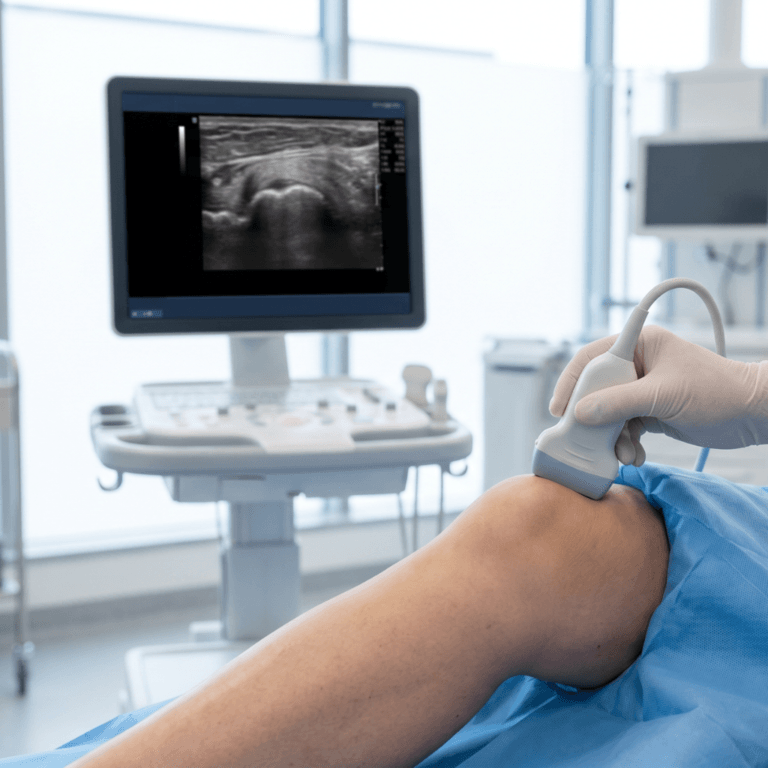
A 64-year-old with bilateral medial compartment knee osteoarthritis has completed conservative care, prior corticosteroid injections with diminishing return, and remains hesitant about total knee arthroplasty. Her orthopedic clinician discusses autologous adipose-based options. The practice offers MFAT using a 510(k)-cleared closed-system mechanical device. Consent language clearly states that while the processing device is FDA-cleared for adipose tissue handling in orthopedic applications, use for knee osteoarthritis specifically is off-label and evidence remains mixed. Harvest is performed under tumescent anesthesia from a standard abdominal donor site, yielding a harvest volume within the range commonly reported in the literature. Processing is closed-system and mechanical, with no enzymes used. The injection is ultrasound-guided and targets the intra-articular space. The patient is enrolled in the practice’s outcome-tracking program using a validated measure at baseline, three months, six months, and one year.
Contrast this with a second composite. A different practice offers what it advertises as “stem cell therapy for arthritis” using clinic-prepared enzymatic SVF. Consent is a single-page form signed at check-in. The marketing website describes the treatment as “FDA-approved stem cell therapy for knee pain.” Within a year, the practice faces correspondence from the state medical board about advertising content and inquiries from a patient’s counsel about informed consent adequacy. The deeper problem is that the underlying procedure (clinic-prepared enzymatic SVF) is not legal in the United States as a clinical treatment, a position now confirmed by two federal appellate courts.
The difference between the two practices is almost entirely about regulatory understanding, language discipline, processing choice, and consent quality. The first practice could defend every word in its patient-facing materials and consent forms. The second could not, and faces enforcement and legal risk that no clinical outcome can offset.
Training: what a defensible pathway looks like
A credible adipose-harvesting training pathway covers clinical technique, pharmacology, regulation, and practice integration. On the clinical side, that means patient selection and preoperative screening, tumescent pharmacology and LAST recognition, sterile technique and procedure-room setup, cannula selection and harvest technique across indication types, processing decisions and their regulatory implications, injection technique across anatomic targets, and emergency management for both local and systemic complications. On the operational side, it means informed consent, documentation, advertising compliance, outcome tracking, and adverse event logging.
RMA’s adipose-tissue curriculum is built explicitly around mechanical processing. The training covers MFAT, microfat, and nanofat techniques across orthopedic, aesthetic, and supporting clinical contexts, along with tumescent pharmacology, harvest technique, processing decisions, and the documentation practices that support a defensible service line. RMA does not provide training on enzymatic SVF preparation or clinical use, because clinic-prepared SVF offered as a treatment is not legal in the United States. The curriculum reflects what U.S. clinicians can actually offer in legal, evidence-informed practice.
The format mix matters. Didactic learning builds the biology, pharmacology, and regulation foundation. Live-patient, supervised practice develops the cannula handling, tumescent infiltration technique, and processing workflow that simulation cannot fully replicate. For clinicians building or refining their skills, hands-on musculoskeletal regenerative medicine training provides the supervised procedural experience that separates didactic knowledge from clinical competence in orthopedic adipose applications. Didactic foundations can be covered in regenerative medicine e-learning courses. Clinicians planning to offer aesthetic adipose procedures will often benefit from cosmetic regenerative medicine training with specific attention to facial, periorbital, and superficial applications.
Malpractice carriers and hospital credentialing committees routinely request documented training when a new procedural service line is added, which is one practical reason to favor accredited programs that generate a clear, portable credential.
Common pitfalls when integrating adipose-based services
A few patterns appear across struggling adipose-based service lines.
The single biggest legal exposure in U.S. practice is offering clinic-prepared enzymatic SVF as a treatment. The FDA’s longstanding position is now backed by two federal appellate courts: the Eleventh Circuit in U.S. v. US Stem Cell Clinic (2021) and the Ninth Circuit in U.S. v. California Stem Cell Treatment Center (2024). Together these rulings cover a large share of U.S. practice geography and make the federal posture effectively settled. Clinic-prepared SVF offered outside of an authorized clinical trial conducted under an Investigational New Drug application is not legal in the United States, and enforcement patterns support that position. Practices that have built service lines around enzymatic SVF have faced FDA correspondence, state medical board attention, and patient-led legal inquiry. RMA does not train on SVF for these reasons.
The next most common pitfall is marketing language that implies FDA approval for off-label indications, or that blurs the line between a 510(k)-cleared device and an approved indication. Saying a Lipogems device is “FDA-approved for knee osteoarthritis” is regulatorily inaccurate and creates exposure even when the underlying procedure is mechanically and clinically sound. Related to this is treating the words “stem cells,” “SVF,” and “MFAT” as interchangeable. They are not. They sit in different regulatory categories, and using them as synonyms creates both clinical confusion and regulatory risk.
Other common pitfalls include inadequate tumescent pharmacology (including insufficient attention to delayed lidocaine peaks and CYP3A4 interactions), single-page generic consent that will not hold up if outcomes disappoint, and a failure to track outcomes with validated measures, which leaves the practice without defensible internal data when questions arise.
How structured training closes the gaps
Each of the pitfalls above is a training gap as much as an operational one. A strong program builds the regulatory fluency that keeps marketing disciplined, the pharmacology fluency that keeps tumescent infiltration safe, the procedural fluency that keeps harvest and injection accurate, and the documentation fluency that protects the practice later.
Clinicians evaluating an adipose-based integration, or refining an existing one, can explore hands-on curriculum, didactic foundations, and aesthetic-focused programs through RMA. The curriculum design reflects the integrated nature of the work: regulation, biology, technique, and workflow taught together rather than as separate modules, and built around the legal mechanical-processing pathway that U.S. clinicians can actually use.
Frequently asked questions from clinicians
Is adipose-based regenerative therapy FDA-approved for knee osteoarthritis or other musculoskeletal conditions?
No. The Lipogems system is FDA 510(k)-cleared as a device for adipose tissue handling in general orthopedic and several other specialty applications. Use for a specific indication like knee osteoarthritis remains off-label pending completion of pivotal trials such as the ARISE study. Marketing should describe the device accurately as “510(k)-cleared for adipose tissue handling” and should not imply FDA approval for named conditions.
What is the legal status of enzymatic SVF prepared in a clinic, and does RMA train on it?
Clinic-prepared enzymatic SVF is not legal in the United States as a clinical treatment. The FDA’s longstanding position, affirmed by the Eleventh Circuit in 2021 and the Ninth Circuit in 2024, is that enzymatically digested SVF is a drug requiring approval through an Investigational New Drug application and a Biologics License Application. Offering enzymatic SVF as a treatment for any indication outside of an authorized clinical trial sits outside what the FDA and federal courts have said is legally permissible. RMA does not train on SVF preparation or clinical use, because U.S. clinicians cannot legally offer it. Practices considering any SVF-related service should consult counsel before proceeding.
How does MFAT differ from SVF and from culture-expanded ADSCs?
MFAT is adipose tissue mechanically fragmented into smaller clusters, without enzymes, through a closed-system device. Microfat and nanofat are also mechanical preparations, used mostly in aesthetic applications. SVF is an enzymatically prepared aqueous fraction concentrated in cells. Culture-expanded ADSCs are a purified, expanded cell product. The mechanical preparations (MFAT, microfat, nanofat) sit in the legal U.S. pathway. The enzymatic SVF and culture-expanded ADSCs do not, outside of an authorized clinical trial. Using these terms as synonyms is both clinically imprecise and regulatorily dangerous.
What is a safe tumescent lidocaine dose?
Published literature supports safe tumescent lidocaine dosing at up to 55 mg/kg in liposuction settings when the classic dilute lidocaine-and-epinephrine formulation is used and the patient is appropriately selected and monitored. The dose ceiling depends on technique and patient factors, not on a universal number. Plasma peak occurs 12 to 14 hours after infiltration, and medications that inhibit CYP3A4 can shift the safety window. Clinicians should work from published formulations, calculate doses patient by patient, and monitor for LAST signs during and after the case.
Which harvesting technique should we choose?
Match technique to product. For volumetric aesthetic grafting, Coleman-style harvest remains the reference. For fine facial work, microfat. For skin quality and superficial applications, nanofat. For musculoskeletal use of a device-based product, MFAT through a 510(k)-cleared closed-system device. Working backward from the intended end product is more useful than picking a favorite harvest method and trying to make every indication fit it.
How do we handle marketing for adipose-based services?
Use precise language. “510(k)-cleared device used to process adipose tissue,” “off-label for specific indications,” “evidence is mixed and individual results vary,” and “autologous tissue” are generally safe framings. Avoid “FDA-approved,” “cures,” “guarantees,” and “stem cell therapy” used as a generic synonym for any adipose product. Apply Federal Trade Commission endorsement and testimonial rules, including clear disclosure of material connections and avoidance of review suppression. Marketing language tied to enzymatic SVF or culture-expanded ADSCs as a treatment is exposure that no marketing disclaimer can fully cover.
What training should clinicians complete before offering adipose harvest?
Plan on a combination of didactic foundations in biology, pharmacology, and regulation, plus supervised live-patient procedural practice covering tumescent infiltration, harvest technique, processing decisions, and injection technique appropriate to the intended indications. Confirm malpractice coverage for the specific procedures you plan to offer, and document your training thoroughly for credentialing and carrier requests.
Can clinicians legally participate in SVF research?
Yes, within the proper regulatory framework. Conducting SVF research under an FDA-authorized Investigational New Drug application is legal, because the FDA’s IND framework is the legitimate pathway for studying products that the agency considers drugs. What is not legal is offering clinic-prepared enzymatic SVF to patients as a treatment outside of that authorized framework. RMA’s training is focused on clinical service lines clinicians can legally offer today, not on running an IND-authorized trial.
Key takeaways
- The single most important regulatory line in adipose-based regenerative medicine is mechanical versus enzymatic processing. Mechanical processing (MFAT, microfat, nanofat) sits in the legal U.S. pathway. Enzymatic processing (SVF) does not.
- Two federal appellate courts (Eleventh Circuit 2021, Ninth Circuit 2024) have confirmed that enzymatically digested SVF is a drug requiring FDA approval. Clinic-prepared SVF offered as a treatment is not legal in the United States outside of an authorized clinical trial.
- RMA’s training programs cover mechanical processing methods (MFAT, microfat, and nanofat) and do not cover SVF preparation or clinical use.
- MFAT produced by a 510(k)-cleared closed-system device is a cleared device for tissue handling, not an approved treatment for any specific indication. Use for named conditions like knee osteoarthritis is off-label.
- Tumescent pharmacology, including delayed lidocaine peaks and CYP3A4 interactions, is central to safe harvesting.
- Match harvest technique to the intended end product: Coleman for structural volumization, microfat for fine aesthetic work, nanofat for skin quality, MFAT for device-based orthopedic applications.
- Clinical evidence is strongest in aesthetic volumization and growing in musculoskeletal applications, with wound care and other indications still early-stage.
- Training that covers regulation, pharmacology, technique, and documentation together closes the gaps that drive most adipose-service-line problems.
RMA Disclosure
Regenerative Medicine Academy (RMA) is an education company that provides clinician training in mechanical adipose processing methods (MFAT, microfat, and nanofat), along with the broader regulatory, pharmacologic, and procedural foundation needed to offer these techniques in U.S. practice. RMA does not provide training on enzymatic SVF preparation or clinical use, because clinic-prepared SVF offered as a treatment is not legal in the United States. This article is educational and does not constitute a claim of clinical superiority, a guarantee of outcomes, or a substitute for individual clinical judgment.
Off-label use note
Procedures discussed in this article involve off-label use of FDA-cleared devices. The 510(k) clearance for devices like Lipogems covers adipose tissue handling in specified surgical applications. Use of MFAT for specific named indications like knee osteoarthritis is off-label until pivotal trials lead to a specific FDA-cleared indication. Clinicians may use FDA-cleared devices off-label based on clinical judgment but must obtain informed consent, discuss evidence, risks, and alternatives, and document thoroughly.
Platform and jurisdiction note
Scope of practice, supervision requirements, and corporate practice of medicine rules vary by state. Clinicians should consult their state medical board, malpractice carrier, and legal counsel regarding compliance in their jurisdiction before offering adipose-based regenerative procedures.
For clinicians ready to take the next step
Clinicians evaluating an adipose-based service line, or refining an existing one, can explore hands-on procedural curriculum, didactic foundations, and aesthetic-focused programs through RMA’s full course catalog. The catalog covers musculoskeletal, cosmetic, sexual health, and adipose tissue applications, all built around the legal mechanical-processing pathway that U.S. clinicians can actually use in practice today.